
When hearing aid prices get quoted, they are almost always quoted per pair. That single convention causes a surprising amount of confusion: buyers compare a $2,400 “per device” online price against a $4,800 “per pair” clinic price and think the clinic is doubling the price, when the two numbers may describe nearly the same thing.
This guide unpacks the average cost of hearing aids per pair, explains why two quotes for “the same” hearing aids can differ by thousands, and shows you how to read any quote like a pro.
The Average Cost Per Pair in 2026
Across independent clinics, the average price for a pair of prescription hearing aids in 2026 sits near $4,600, or about $2,300 per device. That average hides a wide spread:
| Technology Tier | Avg. Per Device | Avg. Per Pair |
|---|---|---|
| Essential / entry-level | $1,000 – $1,400 | $2,000 – $2,800 |
| Advanced / mid-range | $1,600 – $2,200 | $3,200 – $4,400 |
| Premium / top-tier | $2,400 – $3,200 | $4,800 – $6,400 |
| OTC (self-fitted) | $50 – $750 | $100 – $1,500 |
For the complete pricing landscape, including hidden costs and ways to save, read our full 2026 hearing aid price breakdown.
Why Per-Pair Is the Standard Quote
About two-thirds of hearing aid wearers need amplification in both ears. Hearing loss is usually bilateral, and the brain does its best work with input from both sides: locating where sounds come from, following conversation in noise, and keeping overall volume comfortable. Providers quote per pair because a pair is what most patients actually buy.
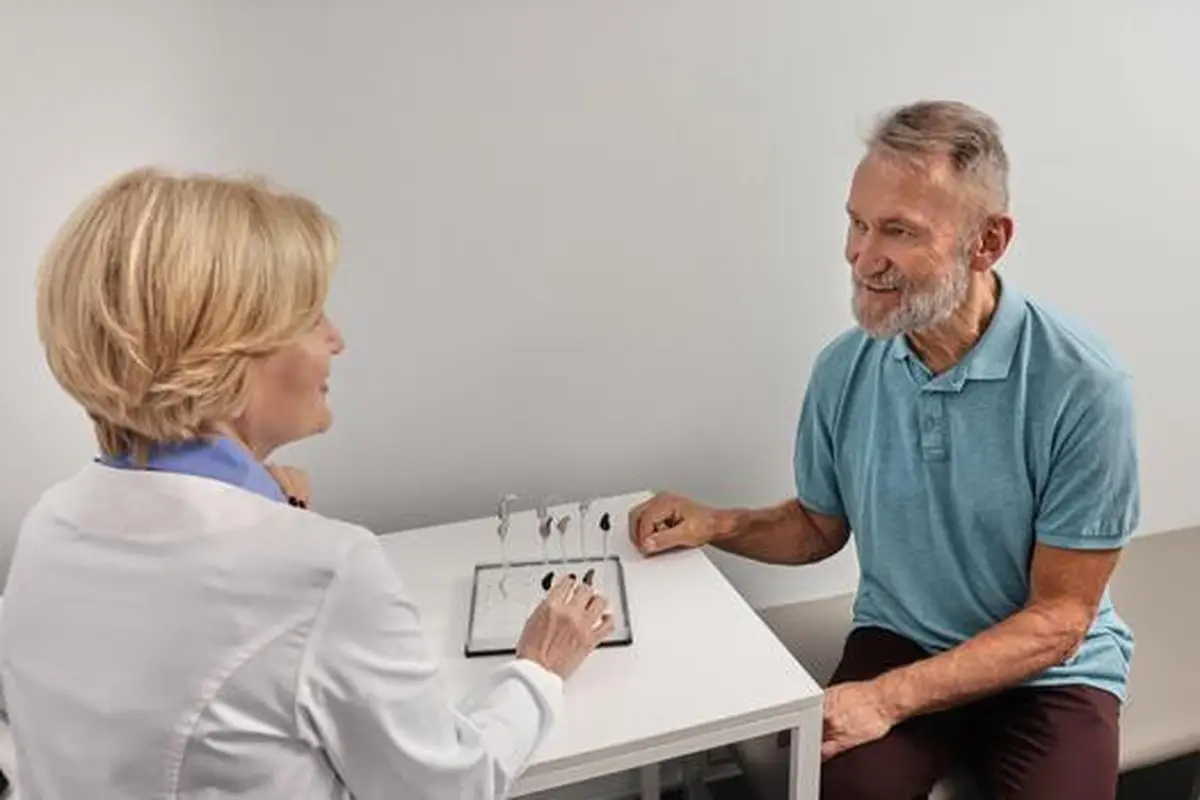
That said, per-pair pricing bundles two different things: hardware (the devices themselves) and services (the test, the fitting appointment, programming tweaks, and follow-up visits). In a typical $4,800 pair, roughly $2,800 to $3,400 reflects the devices and the rest covers professional care over one to three years. Neither part is a scam, but you deserve to know the split.
Five Reasons the Same Pair Costs Different Amounts
1. Bundled vs. unbundled pricing
The biggest source of quote shock. Clinic A quotes $5,200 “all-inclusive” with three years of visits. Clinic B quotes $3,900 for devices plus $150 per follow-up visit. Over three years with four adjustments, Clinic B may cost more. Always ask: what exactly is included, and for how long?
2. Provider type
Independent audiology clinics have the highest overhead and the most personalized care. ENT-affiliated practices are similar. Warehouse clubs like Costco sell brand-name aids for $1,500 to $2,800 per pair with competent but streamlined fitting. Online and OTC sellers strip out services almost entirely, which is how MDHearing and Audien hit their price points.
3. Technology tier within the same model
A Phonak or Oticon aid comes in several software tiers inside identical-looking shells. The premium tier can cost $1,500 more per pair than the essential tier of the same device. Ask which tier you are being quoted; many buyers do fine one tier below the flagship.
4. Geography
Practices in high-cost metro areas charge more, sometimes $1,000+ above the national average for the same pair. If you live in an expensive market, getting a quote from a nearby smaller city (or considering warehouse/online options) can be worthwhile.
5. Negotiation and timing
Hearing aid prices are negotiable more often than buyers expect. End-of-model-year clearances, manufacturer rebates, and competing quotes give you leverage. A polite “Clinic B quoted me $600 less for the same tier, can you match it?” works surprisingly often.
One Aid or Two? The Math That Matters
Buying a single aid cuts the quote roughly in half, which tempts budget-conscious shoppers. Resist the temptation unless your hearing test shows normal hearing in one ear. Research consistently shows that two aids outperform one for speech understanding in noise, sound localization, and listening comfort. A pair of $1,600 mid-range aids will serve you better day to day than a single $3,000 flagship.
The one exception: single-sided deafness, where one ear has little or no usable hearing. Even then, solutions like CROS systems (covered in our types of hearing aids guide) differ from simply buying one standard aid. Get a proper test before deciding.
How to Read Any Hearing Aid Quote
Use this checklist on every quote you receive:
- Device make, model, and technology tier, in writing. “Premium digital hearing aids” is not a model name.
- Per-device and per-pair pricing, itemized separately from services.
- Services included: hearing test, fitting, number of follow-up visits, and the time window (1 year? 3 years? lifetime?).
- Warranty length and what it covers (manufacturer defect vs. loss and damage are different).
- Trial period and return policy, including any restocking fee. Most states mandate a trial period; reputable providers offer 30 to 60 days.
- Battery or charging details and expected ongoing costs. See our battery guide for realistic annual costs.
Bring these questions to every appointment. Our 15 questions to ask before buying expands this into a printable-style checklist.
Bringing the Per-Pair Cost Down
If the average pair price stings, you have legitimate ways to lower it. Check Medicare coverage rules and Medicare Advantage allowances, look into VA benefits if you served, and see whether your FSA or HSA can cover the purchase with pre-tax dollars. Financing plans spread the cost, and assistance programs exist for those who qualify. And do not overlook the OTC route: our OTC vs prescription comparison helps you decide if a $300 pair could meet your needs.
Three Realistic Quotes, Decoded
Numbers make more sense with examples. Here are three quotes a buyer might collect for the same mid-range technology, decoded line by line:
Quote 1: Independent clinic, $4,800 per pair. Devices $3,200, fitting and real-ear verification $400, three years of unlimited follow-up visits $900, three-year warranty with one-time loss replacement $300. This is the classic bundle. It looks expensive until you price the services separately; bought a la carte, the same care would cost more.
Quote 2: Warehouse club, $2,600 per pair. Brand-name devices $2,100, in-house fitting $300, one year of follow-ups $200. The devices are genuinely comparable to Quote 1’s. What you give up: the provider’s brand choice is limited, appointments are shorter, and after year one, visits cost extra. For a straightforward loss and a self-sufficient wearer, this is excellent value.
Quote 3: Online seller, $1,800 per pair. Devices $1,800, no fitting, no follow-ups, email support only. The hardware may be fine, but programming is self-directed through an app, and if the fit is wrong you are troubleshooting alone. Reasonable for mild loss; risky for anything complex.
Notice what the quotes share: the devices in Quotes 1 and 2 might differ by only a few hundred dollars in wholesale cost. The gap is services, and services are worth real money when you need them and wasted money when you do not. Your job is to predict which buyer you are. First-time wearer with moderate loss? You will need the appointments. Experienced wearer replacing a familiar pair? You might not.
Frequently Asked Questions
What is a fair price for a pair of hearing aids?
For fitted prescription aids with professional care included, $2,500 to $4,500 per pair is the fair-value zone for most buyers in 2026. Below $2,000, verify what services are included. Above $5,500, make sure you are getting premium technology and a generous service bundle, not just a premium brand name.
Why do online hearing aids cost so much less per pair?
Online and OTC sellers remove the clinic: no hearing test, no in-person fitting, no follow-up appointments. The devices themselves are also simpler. That is a fair trade for mild loss and tech-comfortable buyers, but a risky one for complex hearing profiles. The FDA notes that OTC aids are intended only for adults with perceived mild to moderate loss.
Do I really need two, or is my provider upselling me?
If your audiogram shows loss in both ears, two is the evidence-based recommendation, not an upsell. Binaural fitting improves speech clarity in noise and reduces the volume each ear needs. Ask your provider to show you the audiogram results for each ear; our audiogram guide helps you read it yourself.
How long will a pair of hearing aids last?
Typically 3 to 7 years, depending on build quality, maintenance, and how fast technology moves on. Divide the per-pair price by the expected years to get your true annual cost. A $4,000 pair lasting five years costs $800 per year, or about $2.20 per day. Details in how long hearing aids last.
The Bottom Line
Per-pair pricing makes sense once you know it bundles devices plus professional care. The national average of roughly $4,600 per pair is a starting point, not a verdict: your fair price depends on your hearing loss, your lifestyle, and how much service you want wrapped around the devices. Get itemized quotes from at least two providers, check your insurance coverage first, and never skip the trial period. Next, make sure you know the signs you actually need hearing aids before spending anything at all.