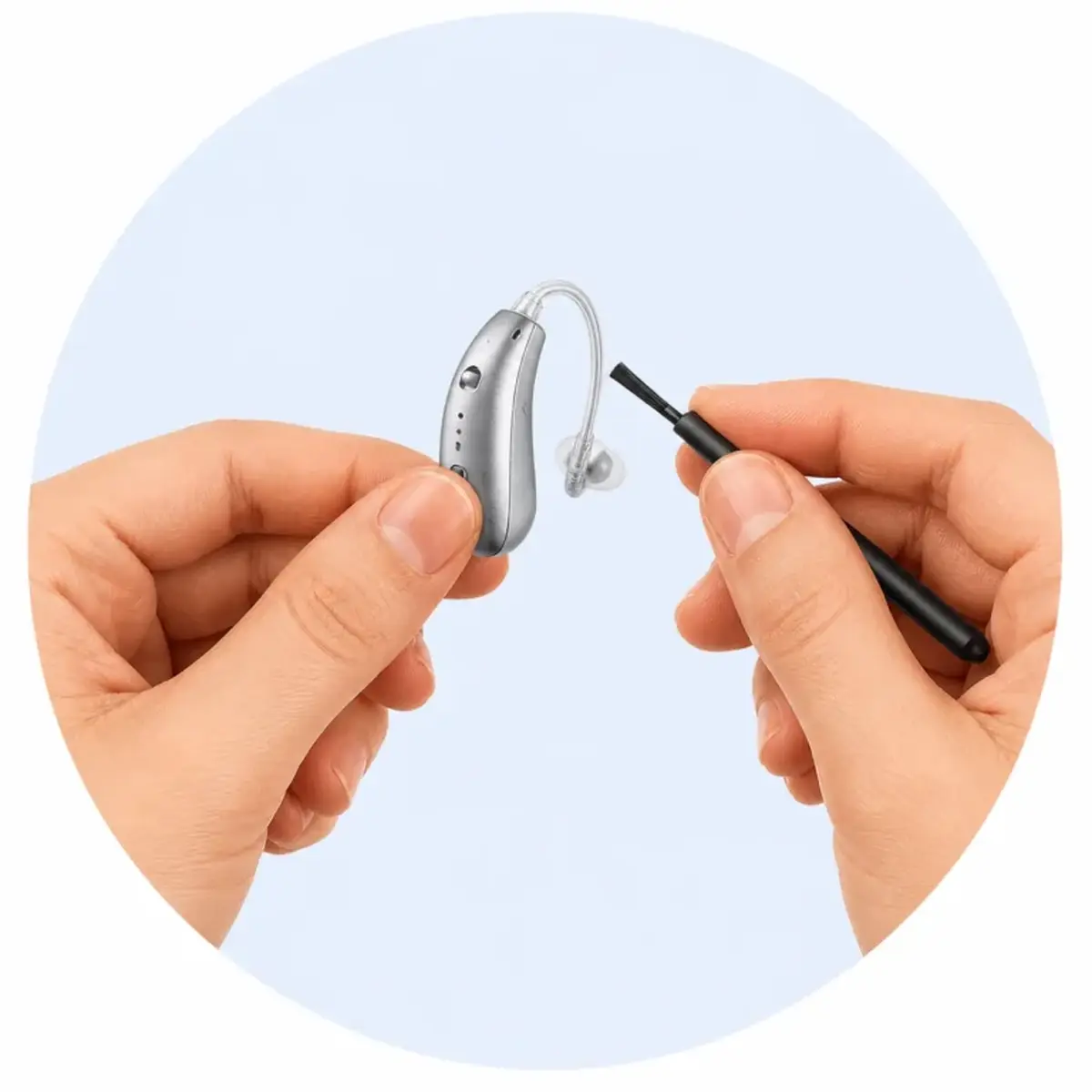
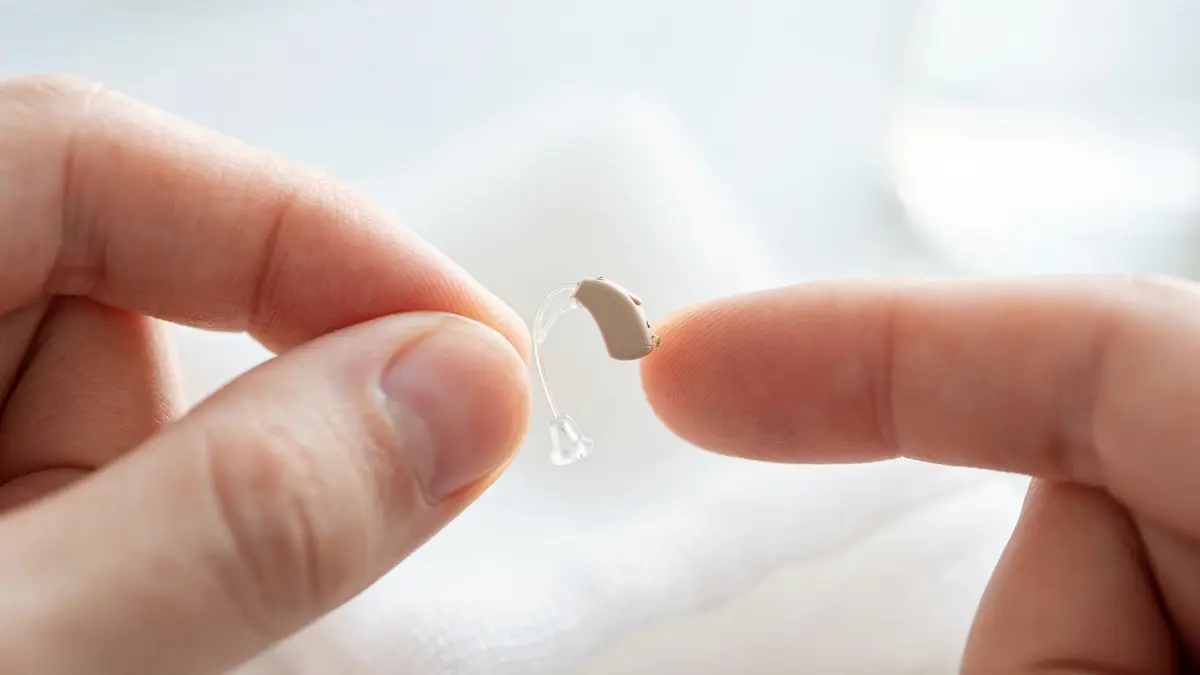

You are at a family dinner. Everyone laughs at something your grandson just said, and you laugh too, half a second late, because you caught the punchline from the context, not from his actual words. Later your wife asks why the television is so loud. You had not realized you turned it up again.
Then the hearing test comes back: mild hearing loss. The audiologist mentions hearing aids, and your first thought is: really? Already? For this?
If that sounds familiar, you are in good company. Mild loss is the most common kind, and the kind people argue with longest. Here is what mild actually means, why waiting quietly costs you, and what your options look like while the loss is still small. If your symptoms feel borderline, check our rundown of signs you need hearing aids first.
What “Mild” Means on Your Audiogram
The numbers behind the label
An audiogram measures the softest sounds you can hear at different pitches, in decibels (dB). Roughly: normal hearing runs up to about 25 dB, mild loss is 26 to 40 dB, and it climbs from there into moderate, severe, and profound. Our guide on how to read an audiogram decodes every symbol on your chart.
Here is the catch: those bands describe volume, not clarity. Two people with the same “mild” result can have very different daily experiences, which is why the label alone should never be the whole story. The type of hearing loss matters too.
Why mild loss still causes real problems
Most mild loss starts in the high frequencies, which is exactly where consonants live: s, f, th, sh, k. Vowels carry the volume of speech, but consonants carry the meaning. Take them away and “show me your face” starts sounding like “show me your faith.” You hear someone talking. You just cannot always tell what they said.
That is why mild loss complaints are so specific: fine one on one in a quiet room, lost in a restaurant. Phone calls feel harder. You ask the grandkids to repeat themselves and they sigh. None of this reads as “cannot hear,” so people assume you are distracted, and eventually you assume it too.
Why So Many People Wait
The “not bad enough yet” trap
Almost everyone with mild loss sets a private threshold: I will act when it gets worse. But hearing loss creeps. It shaves a little clarity off each year while your brain quietly rewrites what “normal” sounds like, and surveys have found people often wait years between first noticing trouble and getting help. Mild loss is where most of that waiting happens.
Stigma plays a role too, though it is fading. The beige bananas of twenty years ago are gone; today’s devices are tiny, and half the population wears earbuds all day anyway. Still, “I am not old enough for those” keeps sensible people stuck.
What waiting quietly costs
Waiting is not free. The first price is listening fatigue: the bone-deep tiredness after a dinner party, caused by your brain working overtime to decode half-heard speech. Then comes the social tax. You decline the restaurant invitations. You nod along instead of participating. Nobody stages an intervention over mild loss, so the withdrawal happens one declined invitation at a time.
There is also a practical cost. Ears that go unaided for years can lose some of their ability to make sense of amplified sound later, a phenomenon audiologists call auditory deprivation. It does not mean waiting ruins your chances, but it does mean the adjustment tends to be bumpier the longer you postpone it.
The Case for Getting Help Early
Adjustment is easier when the change is small
Every new hearing aid wearer goes through an adjustment period while the brain relearns sounds it had been missing: the refrigerator hum, footsteps on tile, the crinkle of a chip bag. When your loss is mild, that relearning curve is gentler, because there is less missing sound to reintroduce. People who start early often describe the first weeks as mildly strange rather than overwhelming, which makes them far more likely to keep wearing the devices.
You stay in the conversation
This is the benefit nobody puts on a spec sheet. Hearing well keeps you socially in the game: the jokes at dinner, the asides in meetings, the quiet comments from the back seat of the car. Those small moments are the texture of a connected life, and mild loss erodes them before you notice they are gone. Acting early is less about fixing a medical number and more about protecting the parts of your week you actually enjoy.
A careful word about the brain research
You may have seen headlines linking untreated hearing loss to cognitive decline. The honest version: researchers have found associations in large studies, but cause and effect is still being worked out. The U.S. National Institute on Deafness and Other Communication Disorders (NIDCD) continues to fund research into how hearing and cognition interact. What is not disputed is that straining to hear all day is exhausting, and exhaustion is terrible for thinking clearly. You do not need a scary headline to justify acting early. If cognitive concerns are on your mind, raise them directly with your audiologist or doctor.
Your Options When the Loss Is Mild
OTC devices: a low-pressure starting point
Since late 2022, the FDA has allowed hearing aids to be sold over the counter for adults with perceived mild to moderate loss. An OTC device lets you try amplification for a few hundred dollars instead of a few thousand, with no appointments. For straightforward mild loss, that can be a reasonable first step. Our comparison of OTC vs prescription hearing aids breaks down where each shines.
If you go this route, buy from a reputable brand with a real return policy, and check our FDA-registered OTC hearing aids list before you spend anything. The OTC shelf has legitimate products and genuine junk sitting side by side.
When prescription aids make more sense
OTC is not for everyone. Big differences between ears, sharp drops at certain frequencies, bothersome tinnitus, a history of ear infections or surgeries, or dizziness alongside the hearing trouble all point toward a professionally fitted pair. A good clinician verifies the fitting with real-ear measurements and tunes the devices to your exact loss. Bring our questions to ask before buying hearing aids to that appointment.
Whatever you try, give it a real trial
Here is where most mild-loss experiments fail: someone tries a device for three days, finds it weird, and quits. Three days is not a trial. Commit to all waking hours for at least a month before judging, since return windows are typically 30 to 45 days for exactly this reason. Keep a simple note on your phone: what sounded better, what annoyed you, which situations still felt hard. That log is gold at your follow-up.
Still Not Sure? Watch for These Signs
If you are on the fence, stop grading your hearing and start grading your behavior. The behaviors are more honest than the audiogram. Consider acting sooner if several of these sound like you:
- You keep your phone on speaker or max volume for calls.
- Subtitles are on for everything now, and you get annoyed when they are not available.
- Family members repeat themselves regularly, or you have stopped asking them to.
- You avoid noisy restaurants or group gatherings you used to enjoy.
- You feel drained after social events in a way you did not five years ago.
- You bluff: nodding, laughing, and hoping nobody asks a follow-up question.
None of these means your loss is severe. They mean it is already shaping your life, which is the only threshold that really matters.
Frequently Asked Questions
Will wearing a hearing aid make my mild loss worse?
No. Properly fitted aids have output limits that keep sound at safe levels. What can feel like worsening is the contrast effect: after your brain adapts to amplified sound, everything seems quieter when you take the aids out. Your actual thresholds have not changed. The one real risk is a badly fitted or overly loud device, which is why professional verification matters.
Can I just get one hearing aid for mild loss in one ear?
If the loss is genuinely one-sided, one aid can be right. But with mild loss in both ears, two aids almost always win: better sound localization, better speech understanding in noise, less work per ear. If cost is the objection, OTC options can make a pair affordable.
Are OTC hearing aids good enough for mild hearing loss?
Often, yes; this is the use case OTC was designed for. Look for a reputable brand, a trial period of at least 30 days, and features like feedback management. If your loss has unusual features, or OTC still leaves you struggling, see an audiologist for a prescription fitting.
How long should I trial hearing aids before deciding they are not for me?
Give it a full month of consistent, all-day wear. The first week or two is the adjustment period: your own voice may sound odd and background sounds seem loud. Most people hit a turning point around week three or four. Still unhappy after a month plus a follow-up adjustment? Then it is fair to reconsider.
My audiogram says mild, but I struggle a lot. Why?
Because the audiogram measures thresholds in a quiet booth, not real life. Speech-in-noise ability and auditory processing affect how much you struggle, and a basic audiogram captures neither well. This mismatch is common and a legitimate reason to seek help. Describe your real-world difficulties; a good provider treats your symptoms, not just your chart.
The Bottom Line
Mild hearing loss is small enough to argue with and big enough to quietly reshape your days. You do not need to wait for it to worsen, and starting early usually means an easier adjustment and more of your social life intact. Try something, wear it consistently for a month, and judge by your real life, not the label on your audiogram.