

Hearing aids cost thousands, and if you are on a fixed income, that price tag can feel like a locked door. But there is a lesser-known network of charities, nonprofits, and government programs whose entire mission is opening that door. Thousands of people get hearing aids free or nearly free every year through these programs. Here are nine worth knowing about, plus how to actually get approved.
1. Lions Clubs International
Your local Lions Club may be the fastest local option. Many chapters run hearing aid programs that collect used devices, refurbish them, and provide them to people in need, sometimes free and sometimes at a small cost. Because Lions Clubs are local, the process is personal: you talk to real people in your community. Find your nearest chapter through the Lions Clubs website and ask specifically about their hearing aid assistance.
2. Hearing Aid Project (and Similar Nonprofits)
Several national nonprofits accept donated hearing aids, refurbish them, and match them to low-income applicants. These programs typically ask for proof of income, a recent hearing test, and a short application. The devices are used but professionally reconditioned, which makes them a genuine solution rather than a stopgap. Search for hearing aid donation programs operating nationally to find the currently active ones, since organizations in this space change over time.
3. State Vocational Rehabilitation Programs
Every state runs a vocational rehabilitation (VR) program that helps people with disabilities work, and hearing loss counts. If hearing aids would help you get or keep a job, your state VR agency may pay for the evaluation, devices, and fittings. This is one of the most underused resources in hearing care. Eligibility focuses on employment impact rather than strict income limits, so working-age adults who do not qualify for charity programs should look here first. Find your state agency by searching for your state name plus “vocational rehabilitation.”
4. Medicaid (in States With Adult Coverage)
As we explain in our Medicaid state-by-state guide, many states cover hearing aids for qualifying adults, including devices, fittings, and sometimes batteries. If your income qualifies you for Medicaid, this can be the most complete benefit available, often with zero out-of-pocket cost. Check your state’s rules before assuming you are out of luck.
5. VA Hearing Benefits for Veterans
Veterans enrolled in VA health care can often receive hearing aids, fittings, batteries, and repairs completely free. If you served, this should be your first stop, even before charity applications. Our VA hearing aid benefits guide walks through eligibility and the application process step by step.
6. Sertoma and Other Service Organizations
Sertoma clubs, like Lions Clubs, are community service organizations with a focus on hearing health. Local chapters sometimes fund hearing aids for residents in need or run screening programs that connect people to resources. Kiwanis and Rotary clubs occasionally help too. These are hit-or-miss by location, but a few phone calls cost nothing.
7. University Audiology Clinics
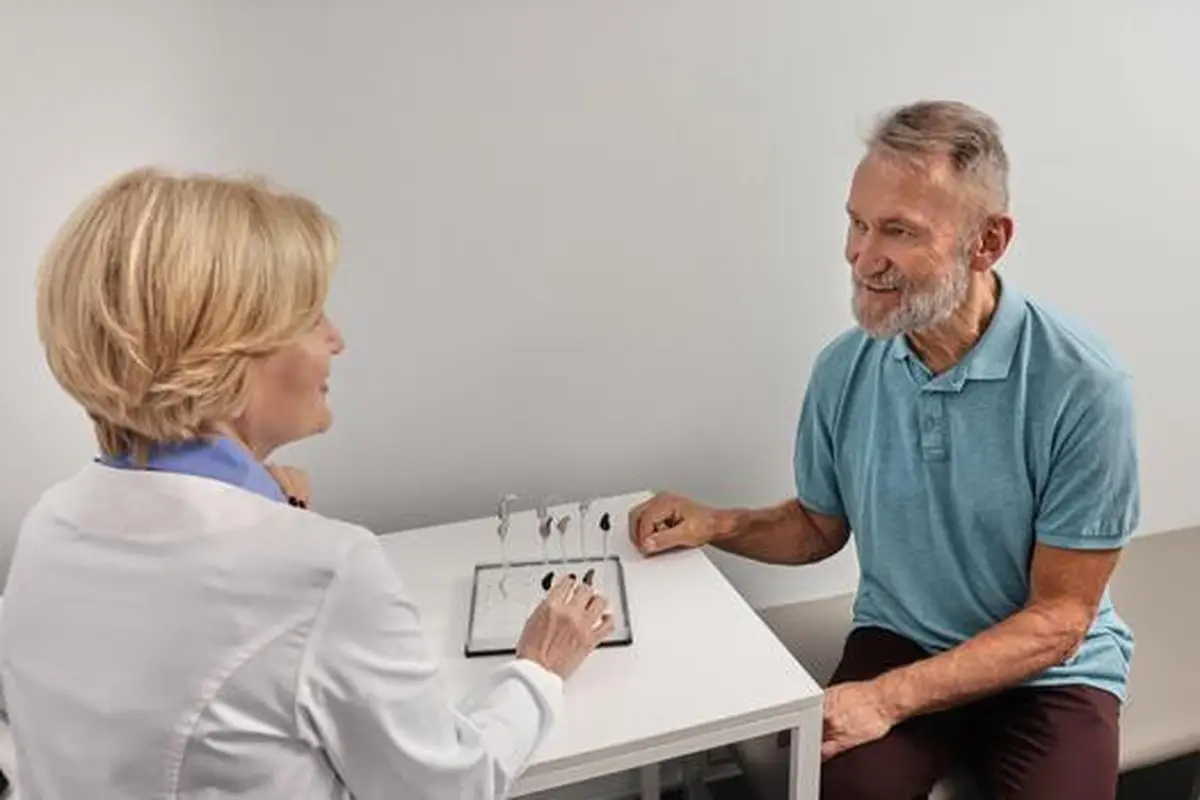
Universities with audiology graduate programs run teaching clinics that offer hearing evaluations and hearing aids at significantly reduced prices. You get care from supervised doctoral students using the same equipment as private clinics. Prices are often 30 to 50 percent below retail, and some clinics have hardship programs. Search for audiology programs at universities near you.
8. Manufacturer and Retailer Assistance
Some hearing aid manufacturers and large retailers run their own assistance or discount programs, particularly for seniors. Costco’s hearing centers, for example, sell quality devices at prices far below typical clinics, which is not free but can cut your cost in half. Ask any provider you visit whether they offer sliding-scale pricing, payment plans (see our financing guide), or refurbished device options.
9. Area Agencies on Aging
Your local Area Agency on Aging connects seniors with community resources, including hearing assistance programs you will not find through a web search. They know which local charities currently have funding, which clinics offer senior discounts, and what state programs you might qualify for. Find yours through the national Eldercare Locator. One phone call can surface options specific to your county.
| Program type | Typical cost to you | Best for | Watch out for |
|---|---|---|---|
| Local service clubs (Lions, Sertoma) | Free to low cost | Anyone in the community | Varies hugely by chapter |
| Hearing aid nonprofits | Free or small fee | Low-income applicants | Waiting lists are common |
| State vocational rehabilitation | Often fully covered | Working-age adults | Must show employment need |
| Medicaid | $0 if covered in your state | Income-qualified adults and all kids | Adult coverage varies by state |
| VA benefits | $0 | Eligible veterans | Enrollment and wait times |
| University clinics | 30 to 50 percent off retail | Anyone near a university | Appointments with students |
| OTC hearing aids (self-pay) | $100 to $500 | Mild to moderate loss | Not for severe loss |
How to Apply Successfully
Getting approved is part paperwork, part persistence. Start by getting a current hearing test from an audiologist; nearly every program requires one, and it also tells you whether OTC or prescription devices fit your loss. Gather proof of income (tax return, Social Security statement, or benefits letter) before you start applying.
Apply to multiple programs at the same time rather than waiting on one. Waiting lists are the norm, not the exception, and a program that takes six months is still worth joining if a faster option falls through. Keep copies of everything you submit, and follow up politely every few weeks. Programs funded by donations help the applicants they hear from.
Avoid anyone who charges large upfront fees to “secure” your free hearing aids. Legitimate charities may ask for a small application or fitting fee, but demands for hundreds of dollars upfront are a red flag. Our hearing aid scams guide lists the warning signs in detail.
What to Do While You Wait
Waiting lists are the hardest part of assistance programs. Six months without hearing help is a long time, and your life does not pause. Here is how to bridge the gap sensibly.
First, consider an affordable OTC hearing aid as a temporary measure. For mild to moderate loss, a $100 to $300 device can make conversations, television, and phone calls dramatically easier while your application moves through the system. This is not settling; it is triage. Our best OTC hearing aids roundup identifies the models worth your money, and our OTC vs prescription guide confirms whether they suit your level of loss.
Second, use free communication strategies that cost nothing. Smartphone apps that amplify sound through earbuds, captioned telephone services (free to qualifying individuals), and TV streamer apps can all help immediately. Ask family members to face you when speaking and to get your attention before starting a conversation. These small adjustments reduce the daily strain while you wait for devices.
Third, keep your application momentum. Follow up with each program every few weeks, update them if your contact information or income changes, and complete any requested paperwork within days, not weeks. Programs notice responsive applicants. And protect your remaining hearing in the meantime: avoid loud noise exposure and get any ear infections or wax buildup treated promptly, since these make hearing worse.
Frequently Asked Questions
Can seniors really get hearing aids completely free?
Yes, it happens every day through the programs above, though “free” usually means qualifying based on income and completing an application process. Veterans, Medicaid recipients in covered states, and charity program recipients routinely pay nothing. Even when devices are not free, university clinics and OTC options can bring costs down to a few hundred dollars.
Are refurbished hearing aids any good?
Professionally refurbished hearing aids from reputable nonprofits are legitimate devices that have been cleaned, tested, and reprogrammed. They will not be the latest model, but for many people they work very well. Make sure the program includes a proper fitting, since an unfitted hearing aid helps no one.
How long do these programs take?
Anywhere from a few weeks to several months. Local Lions Clubs can sometimes move quickly; national nonprofits with waiting lists take longer. Apply broadly and early, and consider an affordable OTC hearing aid as a bridge while you wait.
Do I need insurance to qualify for charity programs?
Usually the opposite: most charity programs serve people without adequate insurance coverage. Having Medicare alone (which excludes hearing aids) generally does not disqualify you. Each program sets its own rules, so read the eligibility criteria carefully.
What if I am denied?
Ask why, fix what you can, and apply elsewhere. Common reasons include incomplete paperwork, income slightly above the limit, or missing hearing test results. A denial from one program says nothing about your chances with another.
The Bottom Line
Not being able to afford hearing aids at retail price does not mean going without hearing. Between charities, government programs, university clinics, and low-cost OTC devices, there is almost always a workable path. Start with the programs that fit your situation, apply to several at once, and keep following up. For the full picture of what hearing aids cost when you do pay out of pocket, see our 2026 price breakdown.
Sources: lionsclubs.org (local chapter programs), eldercare.acl.gov (Eldercare Locator for Area Agencies on Aging).