

When you are about to spend thousands on hearing aids, “how long will they last?” is the question that really matters. The answer affects the true yearly cost of your purchase more than the sticker price does. A $4,000 pair that lasts seven years is cheaper per year than a $2,500 pair that dies in three.
So here is the straight answer: most hearing aids last three to seven years, with five years being the realistic expectation for a well-cared-for device from a major manufacturer. This guide breaks down lifespan by device type, explains what shortens or extends it, and shows you the signs that replacement makes more sense than another repair.
Average Lifespan by Hearing Aid Type
Not all styles age equally. Smaller devices packed with miniaturized components tend to have shorter lives than larger, simpler ones:
| Hearing Aid Type | Typical Lifespan | Why |
|---|---|---|
| Behind-the-ear (BTE) | 5 to 7 years | Larger components, less wax exposure, easier to service |
| Receiver-in-canal (RIC) | 4 to 6 years | Receiver sits in the ear canal; wax and moisture take a toll |
| In-the-ear (ITE) | 4 to 6 years | Custom shell exposed to wax and oils daily |
| Completely-in-canal (CIC) | 3 to 5 years | Deepest placement, most wax and moisture, tiny components |
| OTC / budget devices | 2 to 4 years | Simpler build quality, shorter support windows |
These are averages for devices that receive normal care. A neglected aid in a humid climate can fail in two years. A meticulously maintained one can soldier on for eight or more. The range is wide because care matters enormously, which is why our cleaning guide exists.
What About Specific Brands
Buyers always ask which brand lasts longest, and the honest answer is less dramatic than marketing suggests. The major prescription manufacturers, Phonak, Oticon, Starkey, Signia, ReSound, Widex, all build to similar durability standards, and their flagship devices typically land in the five-to-seven-year band with proper care. No big-six brand has a meaningful, proven longevity advantage over the others in independent data.
Where real differences appear is between tiers, not brands. A manufacturer’s premium line and its budget line often share a brand name but not build quality or component grade. Similarly, ultra-cheap online devices and no-name amplifiers tend to cluster at the two-to-four-year end, with shorter warranty and parts support to match.
The more useful brand question is not “which lasts longest” but “which will still service this in five years.” Established manufacturers maintain repair labs and parts for years after a model is discontinued. Obscure brands may not exist in three years. Longevity is partly about the company behind the device. The FDA notes that buyers should consider the manufacturer’s reputation and support when choosing a device.
What Shortens a Hearing Aid’s Life
Moisture. The number one killer. Sweat, humidity, and condensation corrode internal components slowly and invisibly. People in humid climates or with active lifestyles see shorter lifespans unless they use a drying case nightly.
Earwax. The number two killer. Wax migrates into receivers and microphone ports, and chronic exposure degrades components. Regular wax guard changes are the cheapest life-extension habit there is.
Physical damage. Drops onto hard floors, a curious dog, a trip through the washing machine (it happens more than you would think). Small devices are fragile by nature. Loss and damage insurance exists for a reason.
Battery system wear. In rechargeables, the built-in lithium-ion cell fades after three to five years. The aid may still work, but runtime shrinks until nightly charging no longer gets you through the day. In disposable-battery models, corroded battery contacts from leaking or moisture cause similar grief. See our battery drain guide for the warning signs.
Technology obsolescence. Sometimes the aid still works but the world moves on: new Bluetooth standards your old aid cannot speak, discontinued apps, no more firmware updates. A six-year-old aid can be functionally outdated even if it powers on.
What Extends It
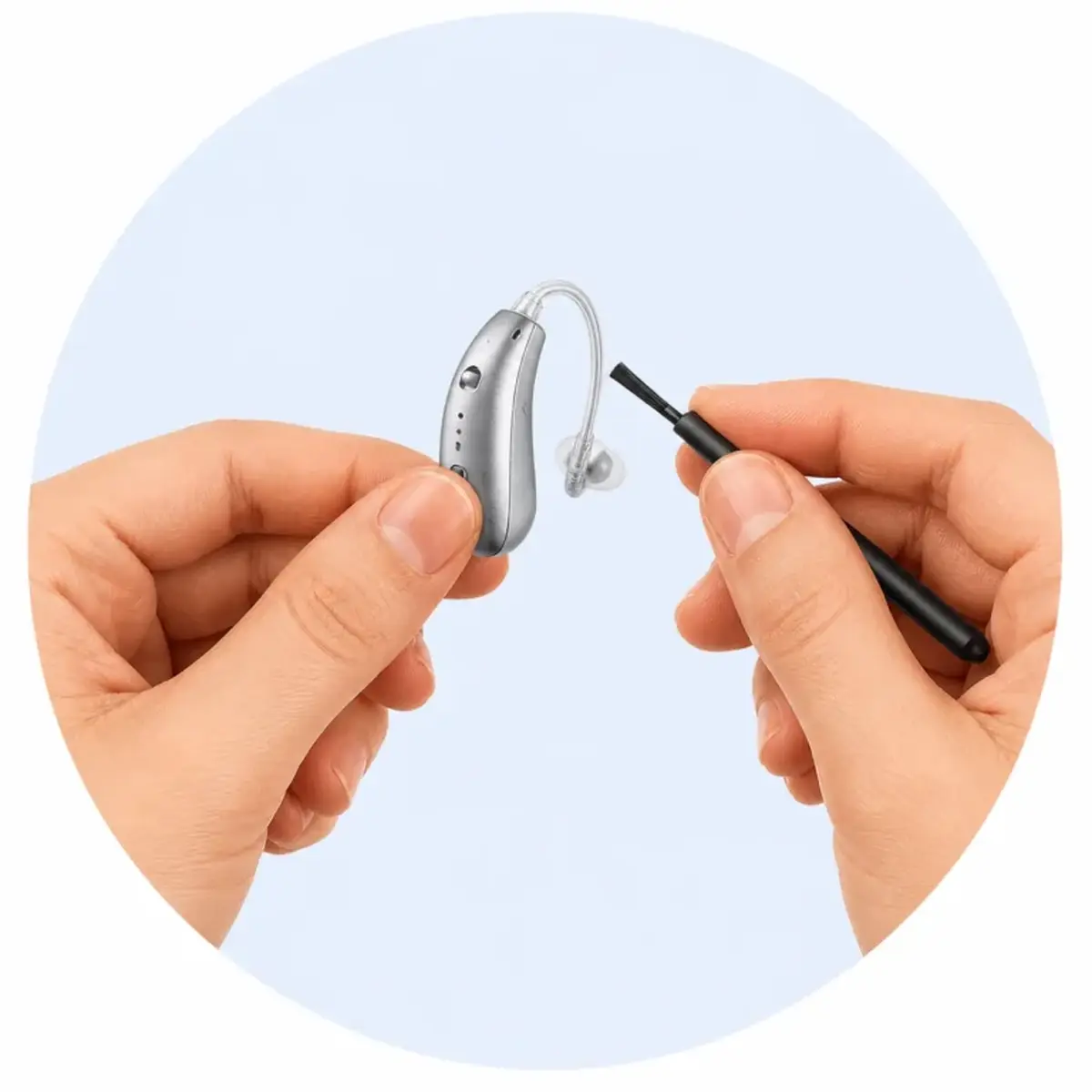
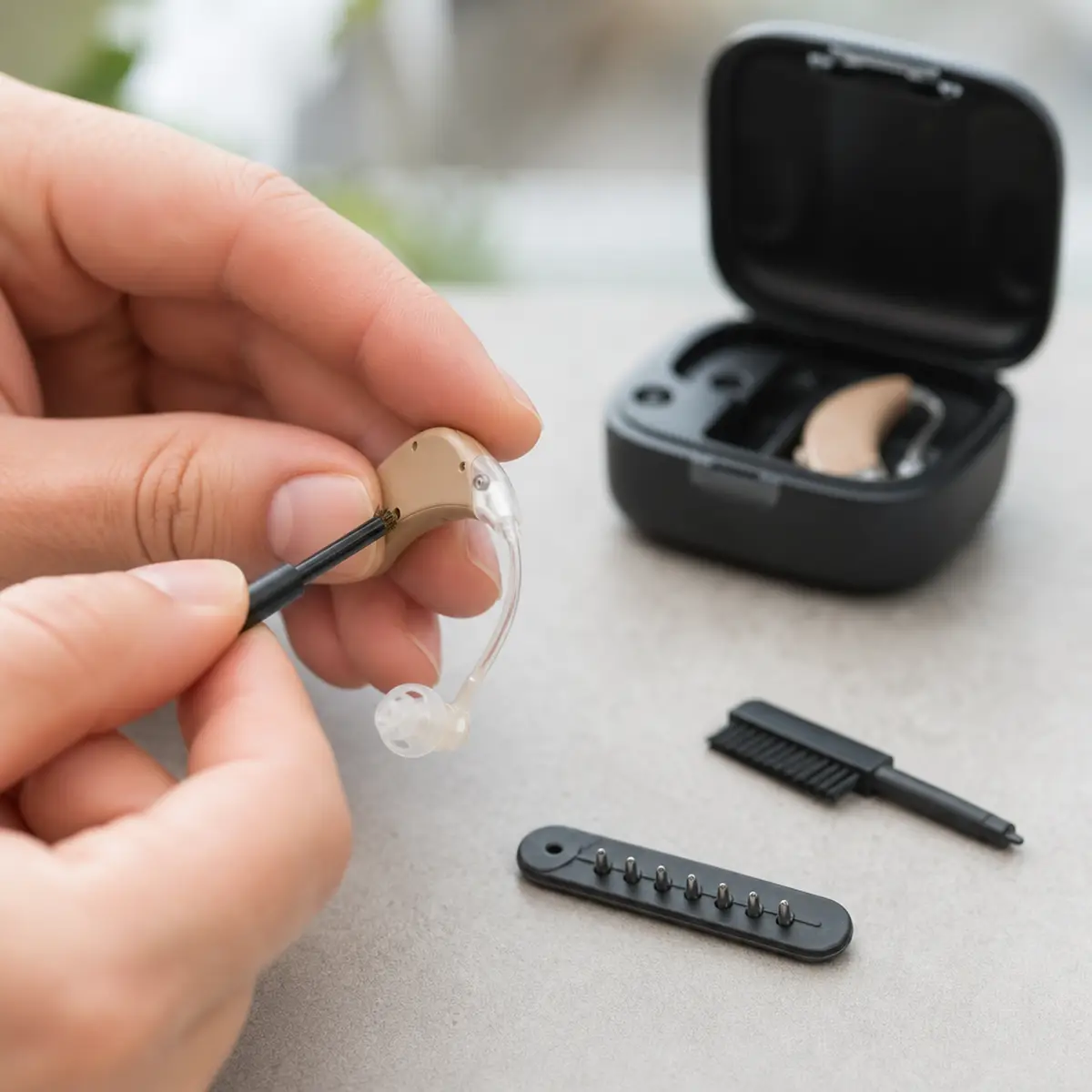
The habits are unglamorous but effective. Clean the aids every evening with a dry cloth and brush. Change wax guards on schedule. Open the battery door nightly or dock rechargeables properly. Run a drying case or dehumidifier, especially in summer. Store aids in their case, never loose in a pocket or bag. Keep up with professional cleanings and checkups, where a provider can spot worn receivers, cracked tubing, or tired domes before they fail.
None of this is complicated. It is the hearing aid equivalent of changing your car’s oil. Owners who do the basics routinely get the top end of every lifespan range in the table above.
Signs It Is Time to Replace, Not Repair
Repair makes sense for a three-year-old aid with a dead receiver. It makes less sense at year six. Watch for these signals:
- Repairs are getting frequent. One repair is maintenance. Three repairs in a year is a pattern, and the bills add up to a down payment on new technology.
- Sound quality has declined despite cleanings. If fresh wax guards, new domes, and professional servicing do not restore clarity, the internal components are likely wearing out.
- Your hearing has changed. Hearing loss often progresses. If your current aids are maxed out on power and you still struggle, you need more capable devices, not repairs.
- Parts are discontinued. When the manufacturer stops supporting your model, repairs become scavenger hunts. That is the market telling you it is time.
- The features lag your life. If you now need Bluetooth streaming, rechargeability, or better noise handling that your old aids cannot provide, an upgrade is about quality of life, not just function.
A good rule of thumb: if a repair costs more than a third of a new equivalent device and the aid is past year five, put the money toward replacement.
The True Yearly Cost
Lifespan reframes every price you see. Consider two options: a $4,500 prescription pair lasting six years costs $750 per year. A $1,200 OTC pair lasting three years costs $400 per year. The “expensive” option is not always the costly one, and the “cheap” one is not always the bargain. When you compare prices in our 2026 cost breakdown, divide by realistic lifespan to see the real comparison.
Also factor in the service bundle. A provider who includes years of adjustments, cleanings, and warranty service is selling longevity, not just hardware. That bundle is a major reason prescription aids bought through clinics often outlive their expected span. The NIDCD similarly stresses that ongoing professional follow-up is part of getting full value from hearing aids.
Frequently Asked Questions
Can hearing aids last 10 years?
Rarely in daily use. A decade-old aid has endured tens of thousands of hours in a warm, waxy, humid environment. Some survive, but most need multiple repairs to get there, and the technology is two generations behind. Five to seven years is the practical planning number.
Do more expensive hearing aids last longer?
Somewhat. Premium models often use better-sealed components and come with longer warranties and service bundles, which extends practical life. But the difference between a $2,500 and a $4,500 aid from the same maker is mostly features, not durability. Care habits matter more than price tier.
Should I repair or replace my five-year-old hearing aids?
Get a repair quote first, then do the math. A modest repair on an otherwise healthy five-year-old aid can buy you another year or two. A major repair approaching half the cost of new is usually better spent on replacement, especially if your hearing needs have changed.
Do OTC hearing aids last as long as prescription ones?
Generally not. Budget OTC devices typically last two to four years, with shorter support windows. That is not necessarily a bad deal at their prices, but plan for a shorter replacement cycle. Our OTC vs prescription guide compares the tradeoffs.
Will my provider tell me honestly when it is time to replace?
A trustworthy one will, and this is a good test of your provider. If every visit ends with a sales pitch for new aids at year three, be skeptical. If they talk you out of new aids and fix what you have, you have found a keeper. Our questions to ask before buying helps you find that kind of provider.
Plan on five years, hope for seven, and earn the top of the range with daily cleaning and regular maintenance. When repairs start outnumbering good days, or your hearing outgrows the devices, replace without guilt. Technology improves meaningfully every few years, and the right new pair beats a heroic old one. Next, understand what happens at the fitting appointment, so your next pair starts its life properly programmed from day one.