

Here is some genuinely good news in the world of hearing aid prices: the money you have already set aside in a Flexible Spending Account (FSA) or Health Savings Account (HSA) can be used to buy hearing aids. Prescription models, over-the-counter models, batteries, repairs, the whole lot. The IRS treats hearing aids as a qualified medical expense, which means you can pay with pre-tax dollars and effectively get a discount equal to your tax rate.
If you are in the 22% tax bracket, that is like getting 22% off a $1,500 pair of hearing aids without clipping a single coupon. For something as expensive as hearing aids, that is real money. Let us walk through exactly what qualifies, how the payment works, and the FSA versus HSA details that trip people up.
Are Hearing Aids FSA and HSA Eligible?
Yes. Hearing aids are listed as an eligible medical expense in IRS Publication 502, the document that defines what counts as medical care for tax purposes. That covers both traditional prescription hearing aids fitted by an audiologist and over-the-counter hearing aids you buy online, because the FDA’s 2022 rule made OTC hearing aids legitimate medical devices for adults with mild to moderate hearing loss. You can read more about that rule on the FDA’s hearing aids page.
You do not need a prescription to use FSA or HSA money for OTC hearing aids. You do not need a doctor’s note either, though keeping your hearing test results on file is smart in case your plan administrator ever asks questions. The purchase just needs to be for medical care, which treating hearing loss clearly is.
This applies whether you buy from a clinic, a big-box store like Costco, or directly from a brand’s website. If the seller accepts your FSA or HSA debit card, the payment goes through like any other card transaction.
What Hearing-Related Costs Qualify?
Hearing aids themselves are the big one, but the eligibility list is broader than most people realize. Here is what typically qualifies:
- Hearing aids, prescription and OTC, for one ear or both
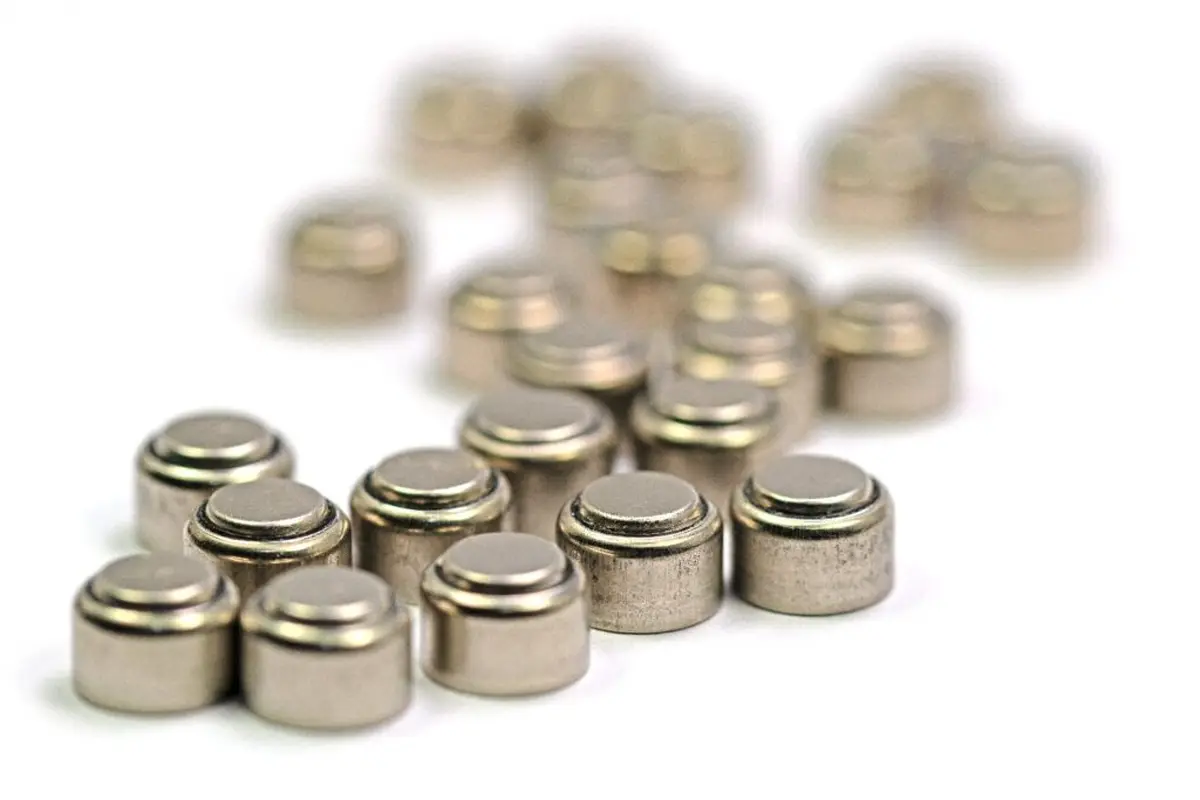
- Batteries, both disposable cells and replacement rechargeable batteries
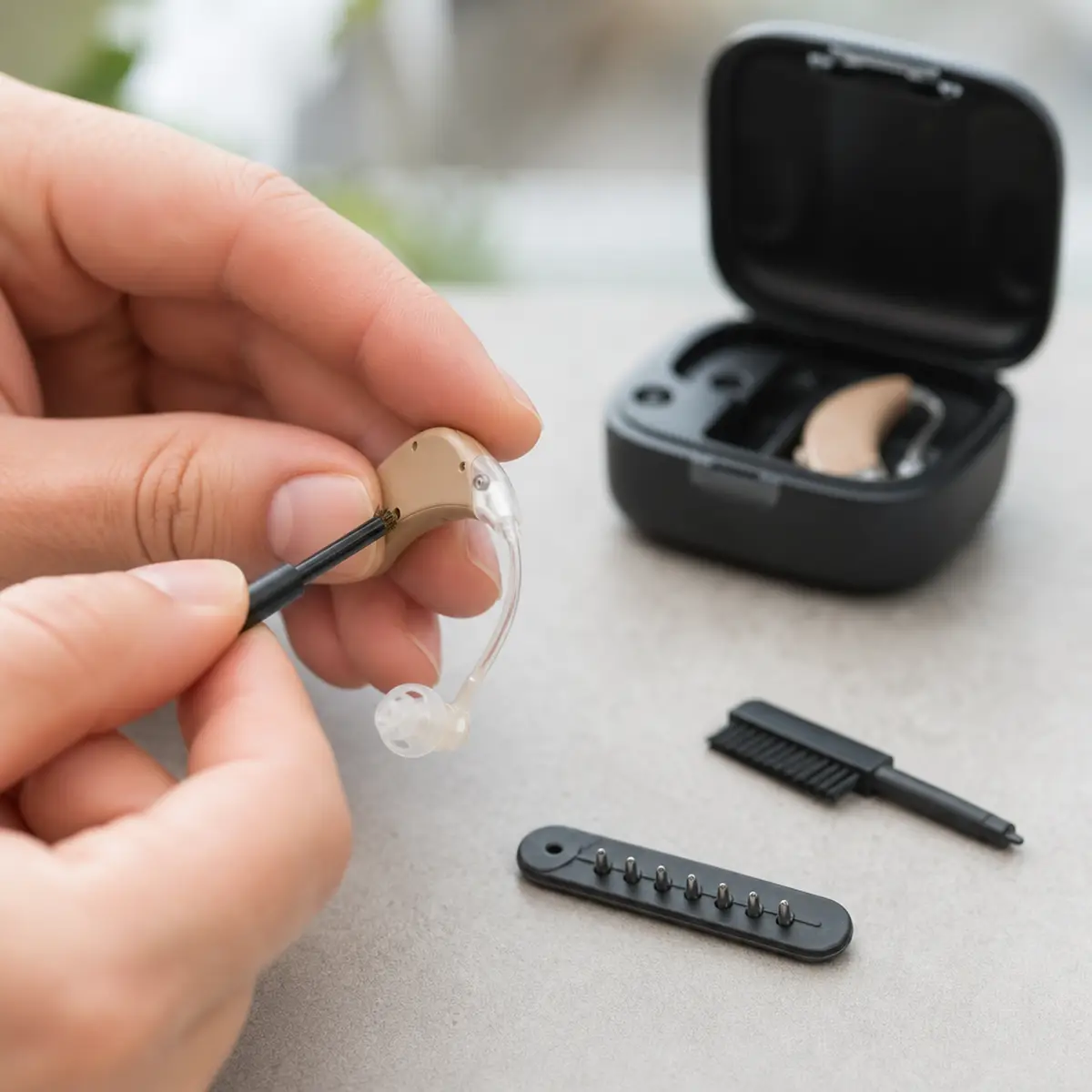
- Repairs and servicing, including manufacturer repair fees and replacement parts
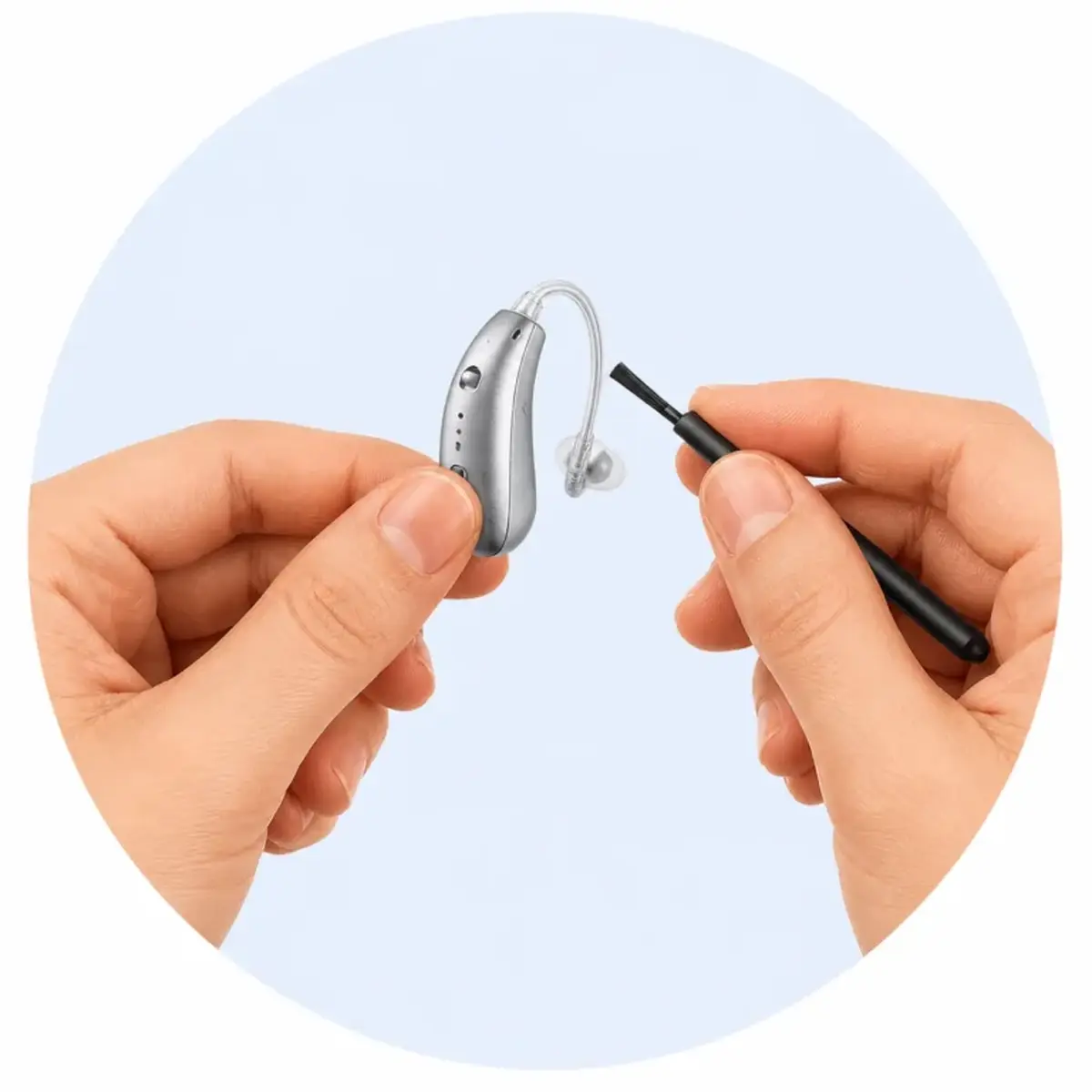
- Wax guards, domes, and eartips, the consumable bits you replace regularly
- Hearing exams and audiologist visits related to diagnosis and fitting
- Accessories tied to hearing care, such as dryers and dehumidifiers for your devices
What does not qualify? General wellness gadgets that are not really hearing aids. A pair of regular wireless earbuds does not count, even if you use them to hear TV better. Personal sound amplifiers that are not FDA-registered hearing aids sit in a gray area, so check with your plan administrator before assuming. If you want the full breakdown of what hearing aids actually cost before you spend, see our guide to how much hearing aids cost in 2026.
FSA vs HSA: Which Works Better for Hearing Aids?
Both accounts let you spend pre-tax dollars, but they behave very differently. The right choice depends on your health plan and your timing.
| Feature | FSA | HSA |
|---|---|---|
| Requires a high-deductible health plan | No | Yes |
| Unused money rolls over | Usually not (limited carryover or grace period) | Yes, indefinitely |
| Full annual amount available on day one | Yes | No, only what has been contributed so far |
| You keep it if you change jobs | No | Yes, it is yours forever |
| Contribution limits (check IRS.gov for the current year) | Set annually by the IRS | Set annually by the IRS, higher for family coverage |
The FSA’s use-it-or-lose-it rule is the one that catches people. Many plans let you carry over a small amount or give you a grace period of a couple of months, but the bulk of unused money disappears at the plan year’s end. That makes December a popular month for hearing aid purchases. If you have been putting off buying and you have FSA money left, a pair of hearing aids is one of the smartest ways to use it.
The HSA is more flexible. The money is yours, it rolls over forever, and you can even invest it. The catch is that only money already in the account can be spent, so if you just opened your HSA in January, you may not have enough saved for a $1,500 purchase yet. One nice trick: you can pay out of pocket now and reimburse yourself from the HSA years later, as long as you keep the receipt.
How to Pay With Your FSA or HSA Card
Paying is refreshingly simple. Here is the process most buyers follow:
- Confirm your balance. Log into your benefits portal or check your card balance so you know what you have available.
- Shop as normal. Add the hearing aids to your cart on the brand’s website or buy them at the clinic counter.
- Use your benefits card at checkout. Enter it like any debit or credit card. Most hearing aid sellers, including Audien, Jabra Enhance, Lexie, and MDHearing, explicitly accept FSA and HSA cards.
- Save everything. Keep the receipt, order confirmation, and ideally a copy of your hearing test. If your administrator flags the charge, this paperwork resolves it fast.
- Split payments if needed. If your account does not cover the full price, pay the rest with a regular card. There is no rule saying the whole purchase must come from one source.
Buying online with an HSA or FSA card works the same as buying anything else. The merchant category code for hearing aid sellers is recognized as medical, so the charge rarely gets questioned. If you are comparing affordable options to buy this way, our Audien Atom review and MDHearing review cover two of the most popular budget-friendly brands.
What to Do If Your Card Is Declined
It happens occasionally, and it is usually fixable. The most common cause is a merchant whose payment processor is not coded as a medical seller. If your card is declined at checkout, do not panic. Pay with a regular credit card, then file for reimbursement through your benefits portal by uploading the receipt.
Reimbursement is your legal right for any eligible expense, regardless of how you paid. Most portals process claims within a week or two. Just make sure the receipt clearly shows what you bought. A line item that says “hearing aids” is perfect. A vague “electronics” description from a marketplace seller might need a supporting invoice, so buy from sellers who itemize properly.
Another tip: if you are buying accessories like batteries or wax guards from a general retailer, those can also be reimbursed the same way. Keep the receipts in a folder, physical or digital, until tax season is over.
Frequently Asked Questions
Do I need a prescription to use FSA or HSA funds for hearing aids?
No. OTC hearing aids do not require a prescription by law, and the IRS does not add one as a condition for eligibility. Your purchase qualifies based on what the product is, not on who recommended it. That said, getting a hearing test first is still wise so you buy the right device for your level of loss.
Can I use my FSA for someone else’s hearing aids?
Yes, for your spouse and tax dependents. You cannot use your FSA for a parent’s hearing aids unless that parent qualifies as your tax dependent. HSA rules are similar. If you are helping an aging parent afford hearing aids, look into programs that provide free or low-cost hearing aids instead.
Are hearing aid batteries and repairs eligible too?
Yes. Disposable batteries, replacement rechargeable cells, manufacturer repairs, wax guards, domes, and eartips all count as medical expenses related to your hearing aids. Our hearing aid battery guide explains which sizes you will be buying.
What happens if I buy hearing aids and then return them?
If you return the devices for a refund, the refunded amount needs to go back into your FSA or HSA. Most sellers refund to the original payment method automatically, which handles this for you. If you received cash or a check instead, deposit it back into the account or report it properly to avoid tax issues.
Can I combine FSA/HSA money with financing?
Absolutely. A common strategy is to put the down payment on your benefits card and finance the rest, or use the FSA/HSA to make monthly payments. Just make sure each payment you claim is documented. Our guide to hearing aid financing options walks through the plans brands actually offer.
The Bottom Line
If you have an FSA or HSA, using it for hearing aids is one of the easiest wins in personal finance. The purchase is eligible, the payment process is no harder than using a credit card, and the tax savings are significant on a purchase this size. Check your balance, watch the FSA deadline if you have one, keep your receipts, and put those pre-tax dollars to work. Your ears and your wallet will both thank you. And if you are also wondering about deducting the remaining cost on your taxes, our guide to whether hearing aids are tax deductible covers that next step.