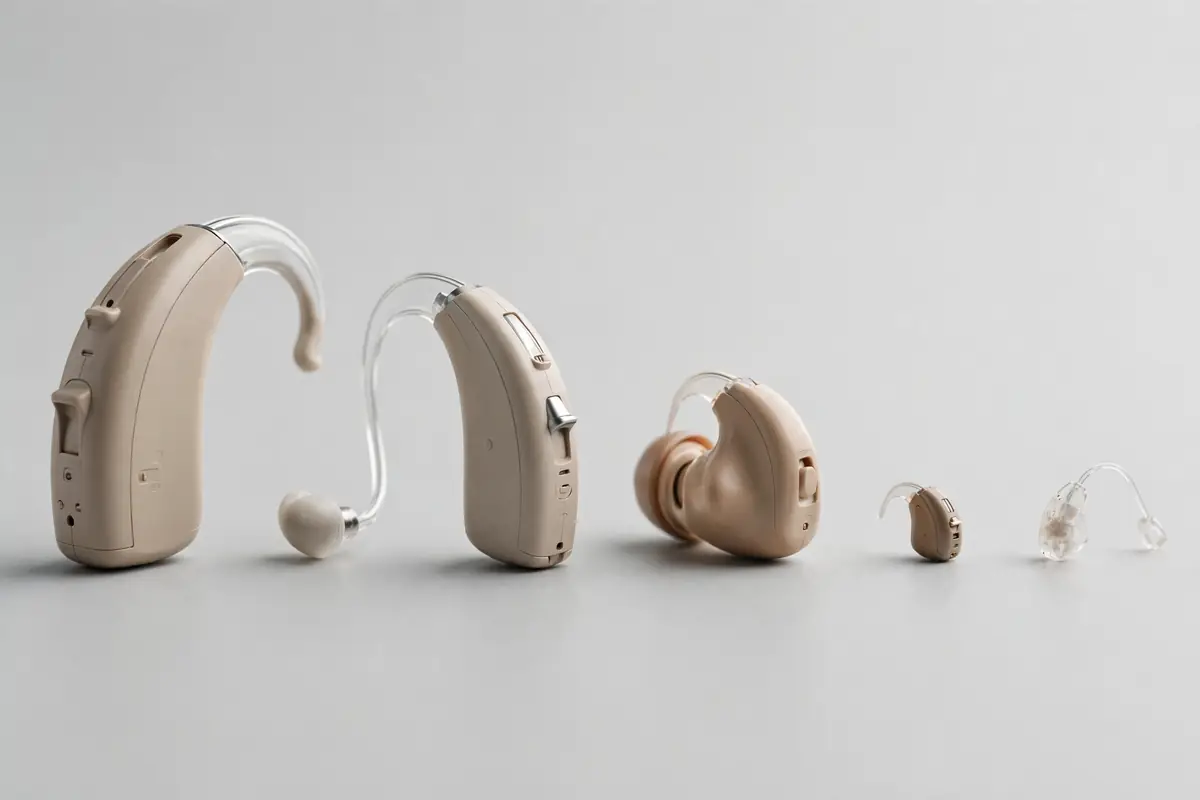

Walk into any hearing aid discussion and you will drown in alphabet soup: BTE, RIC, ITE, ITC, CIC. Manufacturers love their acronyms, but the underlying idea is simple. Hearing aids come in five basic styles, and each is just a different answer to the same question: where do the parts sit on (or in) your ear?
This guide explains all five types of hearing aids in plain English: what they look like, who they suit, and what trade-offs each one makes.
How Hearing Aid Styles Differ
Every hearing aid has the same core parts: a microphone, an amplifier/processor, a speaker (called the receiver), and a battery. The style determines where those parts live. Bigger styles put everything in a case behind or in the outer ear, which allows bigger batteries, more power, and more features. Smaller styles tuck everything into the ear canal, which looks discreet but limits power and battery life.
Here is the quick overview:
| Style | Where It Sits | Visibility | Best For | Typical Pair Price |
|---|---|---|---|---|
| BTE (Behind-the-Ear) | Case behind ear, tube into canal | Most visible | Severe to profound loss, kids | $2,000 – $6,000 |
| RIC (Receiver-in-Canal) | Slim case behind ear, wire to in-canal speaker | Very discreet | Mild to severe loss (most popular) | $2,000 – $6,000 |
| ITE (In-the-Ear) | Fills outer ear bowl | Moderately visible | Mild to severe loss, easy handling | $2,000 – $5,500 |
| ITC (In-the-Canal) | Partially in canal | Slightly visible | Mild to moderate loss | $2,000 – $5,500 |
| CIC (Completely-in-Canal) | Deep in canal | Nearly invisible | Mild to moderate loss | $2,500 – $6,000 |
1. BTE (Behind-the-Ear)
The classic workhorse. A curved case sits behind your ear, connected by a thin tube to an earmold or dome in the canal. BTEs are the largest style, which is actually their strength: big batteries, maximum amplification power, and room for the most advanced features.
Choose BTE if: you have severe to profound loss, you want the longest battery life, or dexterity is a concern (the large size is easy to handle). They are also the standard for children, since the earmold can be replaced cheaply as ears grow.
Downsides: most visible style, and the tube can pick up wind noise outdoors.
2. RIC (Receiver-in-Canal)
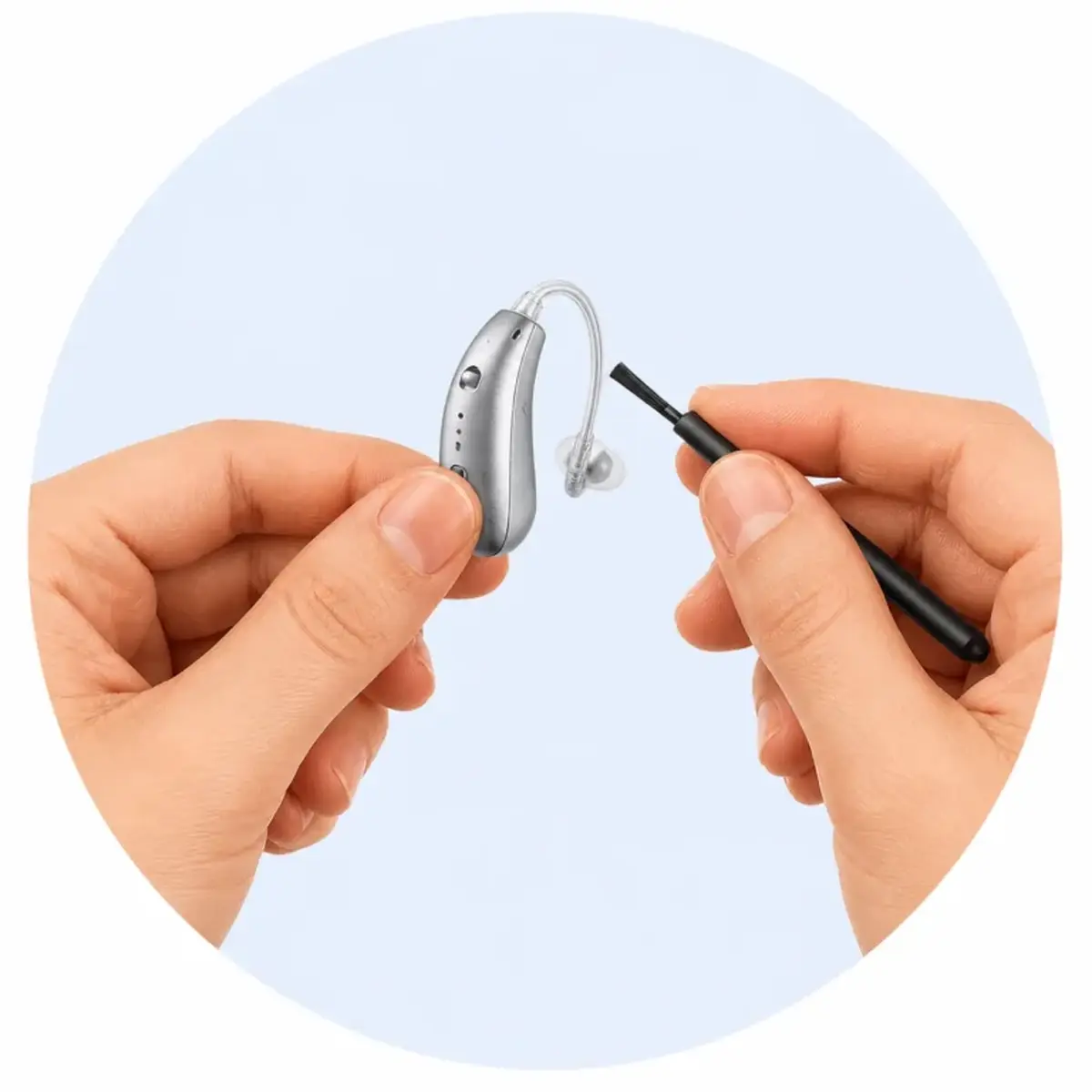
RIC looks like a slimmed-down BTE: a small case behind the ear, but instead of a tube it uses a thin wire to a tiny speaker sitting directly in the canal. Putting the speaker in the canal (rather than the case) gives RICs excellent sound quality in a discreet package. This is the most popular style in the world right now, and the default recommendation for most first-time buyers.
Choose RIC if: you have mild to severe loss and want the best blend of invisibility, sound quality, and features like Bluetooth streaming. Most premium OTC devices use RIC or RIC-like designs.
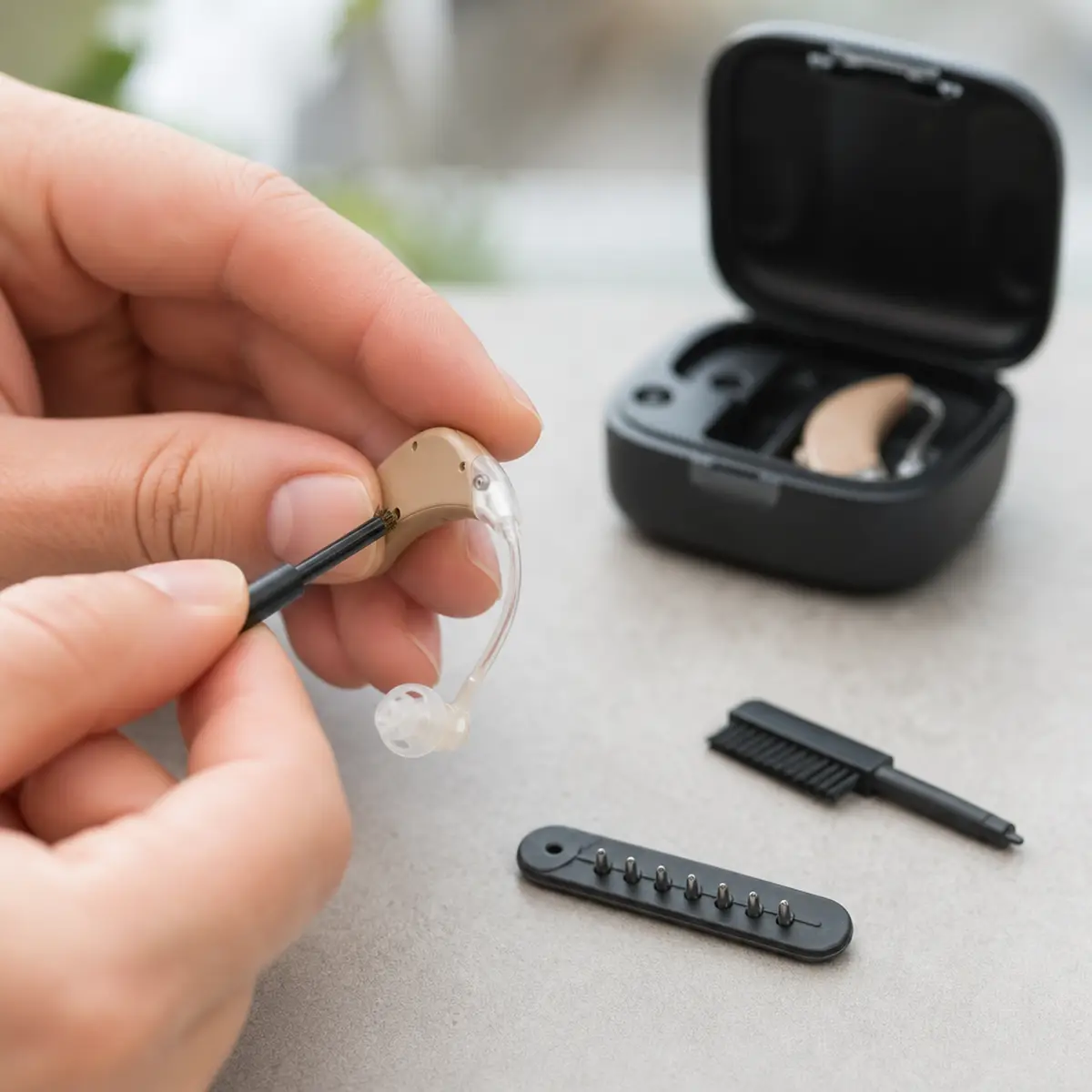
Downsides: the in-canal speaker is exposed to earwax and moisture, so wax guards need regular changing. See our detailed BTE vs RIC comparison if you are torn between the two.
3. ITE (In-the-Ear)
ITE aids are custom-molded to fill the bowl of your outer ear (the concha). Everything sits in one shell, no behind-the-ear case at all. They are easier to insert and handle than tiny canal styles, which makes them popular with older adults and anyone with arthritis or limited dexterity.
Choose ITE if: handling tiny devices worries you, or you want a single-piece aid with room for larger batteries and simple controls.
Downsides: more visible than canal styles, and the larger shell can pick up wind noise.
4. ITC (In-the-Canal)
A smaller custom shell that sits partly in the ear canal, leaving only a small portion visible in the outer ear. ITC splits the difference between ITE convenience and CIC discretion.
Choose ITC if: you want something discreet but still handleable, with mild to moderate (sometimes severe) loss. A good compromise style that does not force extreme trade-offs.
Downsides: smaller battery than ITE, so shorter life between changes; fewer room for advanced features than RIC/BTE.
5. CIC (Completely-in-Canal)
The stealth option. CIC aids sit deep in the canal, essentially invisible to others. Many pull out with a tiny removal string. The Eargo line made this form factor famous in the OTC world.
Choose CIC if: invisibility is your top priority and your loss is mild to moderate. They also use the ear’s natural shape for sound collection, which some wearers find more natural.
Downsides: smallest batteries (shortest life, fiddliest changes), most susceptible to earwax and moisture, no room for Bluetooth in most models, and not powerful enough for severe loss. They also require enough canal space, so very small ear canals may not fit them.
Pros of small (CIC/ITC) styles
- Nearly invisible
- Natural sound collection
- Less wind noise
- Work well with glasses and masks
Cons of small styles
- Shorter battery life
- Harder to handle and clean
- More wax and moisture issues
- Limited power and features
How to Choose Your Style
Start with your audiogram: severe loss narrows the field to BTE, RIC, or ITE. Then be honest about your priorities. If you will skip wearing an aid because it is fiddly, choose the bigger, easier style. Vanity fades; the aid sitting in a drawer helps no one.
Also consider lifestyle: heavy Bluetooth streaming favors RIC/BTE (room for the radios), while battery preferences matter too, since tiny CIC batteries need changing every few days. Your provider should discuss all of this at the fitting appointment, and rechargeable vs disposable is worth deciding alongside style.
Specialty Styles Worth Knowing
Beyond the big five, a few specialty designs solve specific problems:
CROS/BiCROS systems are for single-sided deafness: a microphone on the deaf side wirelessly sends sound to an aid on the hearing ear. Nothing can restore the deaf ear, but CROS eliminates the “blind side” problem where you miss everything from one direction. If one ear tests normal and the other profound, ask about this before buying a standard pair.
Bone conduction devices bypass the outer and middle ear entirely, vibrating sound through the skull to the inner ear. They suit conductive and mixed losses, chronic ear infections (nothing sits in the canal), and single-sided deafness. Options range from softband headbands to surgically implanted systems, a very different decision tree from standard aids.
Extended-wear deep canal aids (like Lyric) are placed deep in the canal by a professional and worn continuously for months, including sleeping and showering. They are invisible and hassle-free but require professional placement and replacement, and they are not cheap. A niche luxury, not a mainstream choice.
Most buyers will never need these. But if your hearing test shows an unusual pattern, knowing they exist keeps you from settling for a standard style that fights your anatomy. Bring your audiogram to the conversation and ask directly whether a specialty design fits better.
Frequently Asked Questions
Which hearing aid style is best for seniors?
RIC is the most common recommendation: discreet, comfortable, and full-featured. For seniors with dexterity or vision issues, BTE or ITE are easier to handle. The “best” style is the one the person will wear consistently, so comfort and handling beat spec sheets.
Are invisible hearing aids worse than bigger ones?
Not worse, just different. CIC aids perform excellently for mild to moderate loss in quiet and moderate noise. They give up battery life, power headroom, and features like Bluetooth to achieve invisibility. Match the style to your loss first, vanity second.
Can I switch styles later?
Usually yes, especially within your trial period. Many buyers start with RIC and move to BTE if they need more power, or try CIC and switch to ITC for easier handling. Ask your provider about the exchange policy before committing.
Do all styles cost the same?
Roughly, within a brand’s lineup, technology tier matters more than style for price. Custom-molded styles (ITE, ITC, CIC) sometimes carry a small premium for the custom shell work. Check our 2026 price breakdown for the full picture.
One last piece of advice: do not let perfect be the enemy of worn. Buyers who agonize for months over the ideal style often end up choosing nothing, while the person who picked a solid RIC in a week is already hearing better. The trial period is your safety net. Use it.
The Bottom Line
Five styles, one goal: sound you will actually wear. RIC suits most people most of the time, BTE wins on power and handling, and CIC wins on invisibility. Get your hearing tested, try the style your provider recommends during the trial period, and judge by real-world comfort, not the mirror. Next, learn how BTE and RIC compare head to head, the two styles you will most likely choose between.