

Hearing loss rarely announces itself. There is no sudden silence, no dramatic moment. Instead, it sneaks in over years: you nudge the TV volume up a notch, you start dreading noisy restaurants, you laugh along at jokes you did not quite catch. By the time most people admit something is wrong, they have been compensating for a long time.
These are the 10 early signs you might need hearing aids, or at minimum, a proper hearing test. If several sound familiar, do not file this under “getting older.” Get checked.
1. You Ask People to Repeat Themselves
The classic first sign. “What?” and “Sorry, say that again?” become your most-used phrases, especially with soft voices, children, or anyone speaking from another room. Occasional repeats are normal. Needing them daily is your ears sending a message.
2. Conversations in Noise Exhaust You
One-on-one in a quiet room, you are fine. Add background music, clattering dishes, or a busy office, and speech dissolves into mush. This happens because hearing loss usually hits high-frequency sounds first, the consonants (s, f, th, sh) that distinguish words from each other. Noise covers up exactly the frequencies you are already missing. Our guide to hearing loss types explains why this pattern is so common.
3. The TV Volume Keeps Creeping Up
You turn it up. Your partner turns it down. You turn it up again. If “normal” volume for you is uncomfortably loud for everyone else, that gap is measurable hearing loss, not a preference. Family complaints about volume are among the most reliable early indicators, precisely because the person with hearing loss adapts without noticing.
4. You Mishear Words (and It Is Embarrassing)
“Pass the salt” becomes “past assault.” You answer a question nobody asked. These mix-ups happen when your brain receives incomplete sound and guesses, filling gaps with the wrong words. Funny once or twice; a pattern worth investigating.
5. Phone Calls Have Become Difficult
Phones strip away lip-reading and visual cues you did not know you were using. If you now avoid calls, switch everything to speakerphone, or ask callers to text instead, your hearing may be the reason. Modern hearing aids stream calls directly, which is one of the most appreciated features among new wearers.
6. You Withdraw From Social Situations
This is the sign people underestimate. You stop going to the noisy restaurant. You dread the family gathering. You zone out at meetings. It feels like a personality change (“I am just not a people person anymore”), but it is often a hearing change wearing a disguise. Research consistently links untreated hearing loss to social isolation and loneliness, which is why the World Health Organization treats hearing care as a public health priority.
7. Others Mumble (Everyone, Suddenly)
When it seems like the entire world started mumbling at once, consider the common denominator. People do mumble sometimes, but a global decline in everyone else’s diction is statistically unlikely. This perception shift is one of the most reported early signs in audiology clinics.
8. You Have Ringing in Your Ears
Persistent ringing, buzzing, or hissing (tinnitus) often travels with hearing loss, since both can stem from damage to the inner ear’s hair cells. Tinnitus alone does not prove you need hearing aids, but the combination of ringing plus difficulty hearing is a strong prompt to get tested. Many hearing aids now include tinnitus-masking features.
9. You Are More Tired After Conversations
Listening effort is real cognitive work. When your ears deliver a degraded signal, your brain burns extra energy reconstructing it, leaving you drained after a dinner party that used to energize you. Partners of people with untreated loss often notice the fatigue before the hearing problem itself.
10. Your Family Has Staged an Intervention
Half-joking, but serious: if multiple people who love you say “you should get your hearing checked,” believe them. Outsiders notice hearing loss earlier because they experience its effects (repeats, volume, withdrawal) without the gradual adaptation that hides it from you. The average person waits seven years between noticing symptoms and seeking help. Do not be the average.
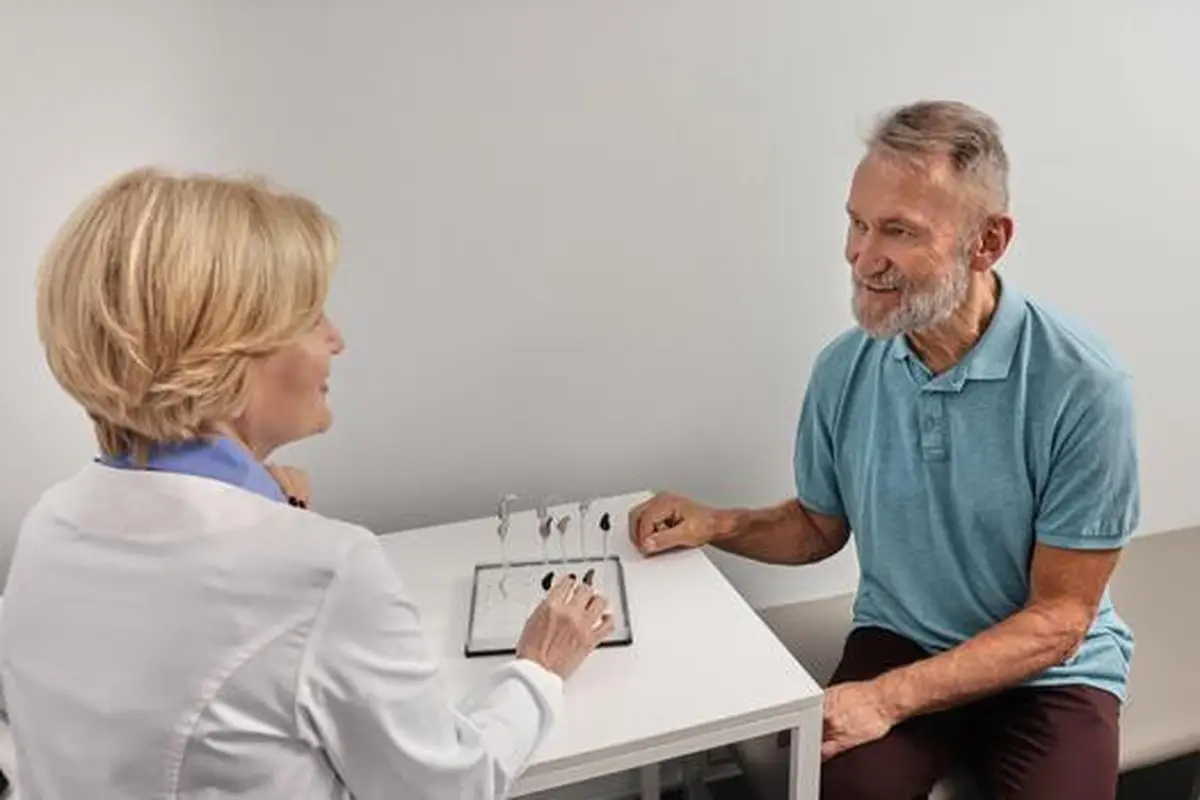
What to Do Next: Get a Hearing Test
Recognizing the signs is step one. Step two is simple: get a hearing test. Here is what to expect:
- It is quick and painless. About 30 to 60 minutes of listening to tones and repeating words in a quiet booth. No needles, no discomfort.
- It is often free or cheap. Many clinics, warehouse clubs, and community programs offer free screenings. Online hearing checks can also give a rough first read.
- The result is a clear answer. Your audiogram shows exactly which frequencies you hear well and which you do not, removing all guesswork.
If the test shows mild to moderate loss, you have options from OTC devices to full professional fitting. Learn what hearing aids cost in 2026 so sticker shock does not derail you, and read what to ask before buying before any appointment.
people in the US aged 12 and older has hearing loss in both ears, according to the NIDCD, yet most wait years before seeking help. Early action preserves the hearing you still have.
Spotting the Signs in Someone You Love
Sometimes you are not reading this for yourself. If you suspect a parent, partner, or friend has hearing loss, you face a delicate mission: they probably do not believe it, and saying “you need hearing aids” usually backfires.
What works better is observation plus gentle specifics. Instead of “your hearing is terrible,” try “I noticed you turned the TV up twice during the movie, and you asked me to repeat the story about work.” Concrete moments are harder to dismiss than general claims. Pick a calm, private time, never mid-argument about the volume.
Offer the test, not the device. “Would you get a hearing screening with me?” feels like healthcare; “you need hearing aids” feels like aging. Many clinics offer free screenings, which lowers the stakes to nearly zero. And frame it around what they are missing: the grandkids’ voices, the dinner conversation, the phone calls with old friends. People act to regain connection faster than they act to fix a deficit.
If they agree to look into options, our OTC vs prescription guide is a low-pressure starting point, and real 2026 prices remove the fear of the unknown. Patience wins here; the average delay is seven years, but a nudge from someone trusted shortens it.
Frequently Asked Questions
How do I know if I need hearing aids or just have earwax?
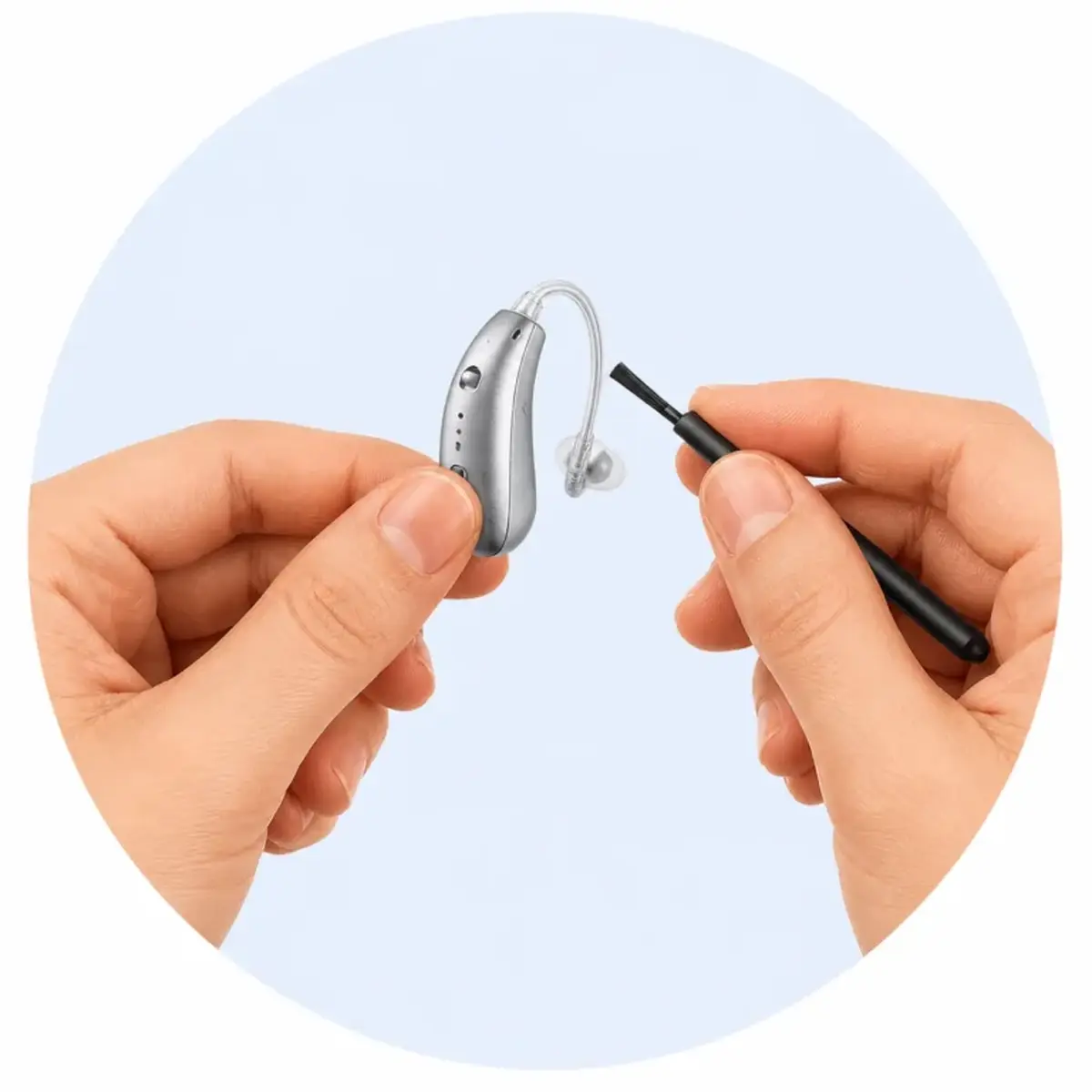
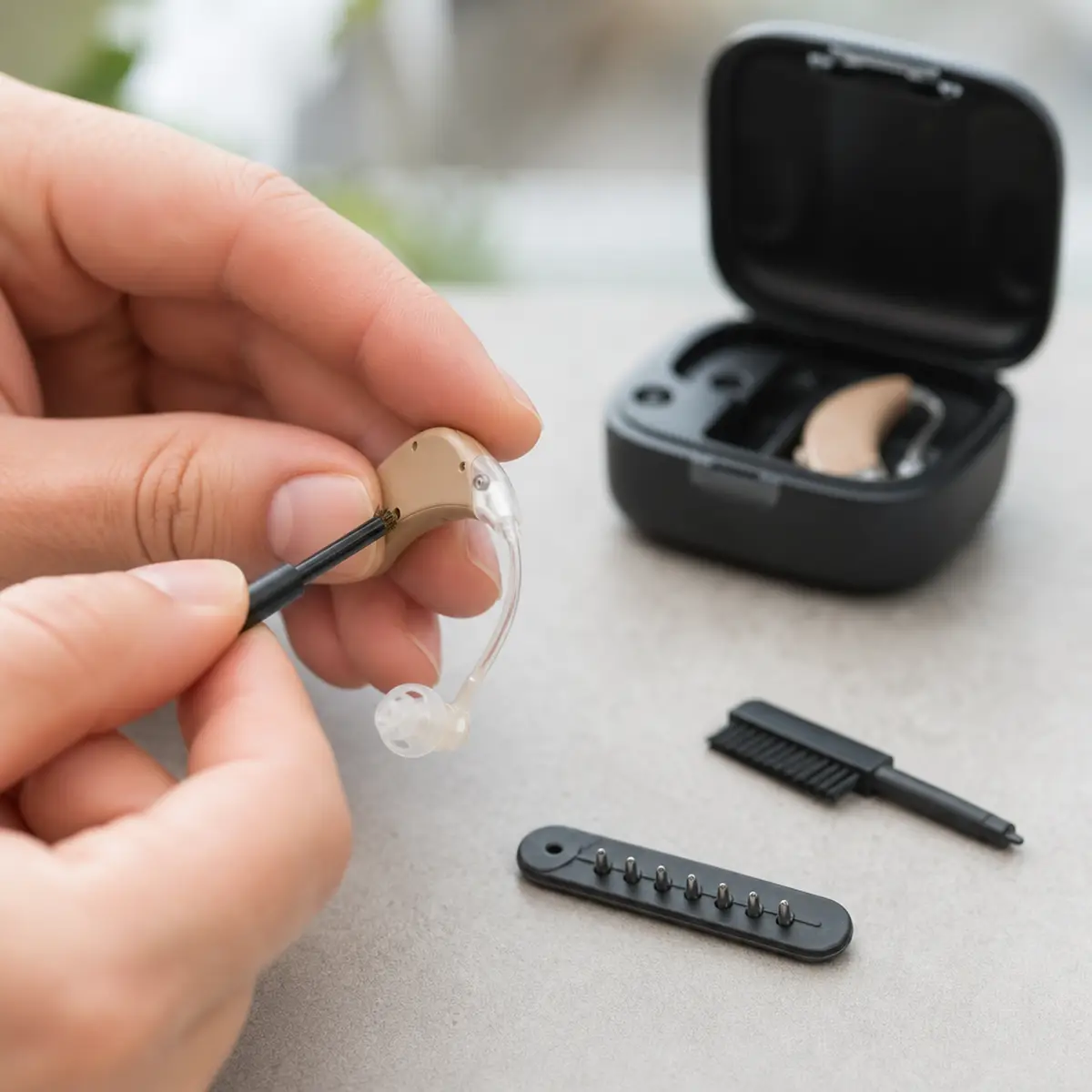
Earwax blockage can mimic hearing loss, causing muffled sound and fullness. A quick look in the ear (or a professional cleaning) answers this in minutes. Never probe your own ears with cotton swabs; see our cleaning guide for safe ear and device hygiene. If clearing wax does not restore hearing, get tested.
At what age should I get my hearing tested?
Adults over 50 should get a baseline test and recheck every few years, or sooner if symptoms appear. Younger adults with noise exposure (concerts, power tools, military service), ear infections, or a family history should test earlier. There is no “too early” for a baseline.
Will people judge me for wearing hearing aids?
Far less than you fear. Modern RIC styles are nearly invisible, and in-canal options disappear entirely. Meanwhile, constantly saying “what?” is far more noticeable than any device. Most wearers report wishing they had started sooner.
Can hearing loss get better on its own?
Sometimes, if the cause is temporary (wax, infection, fluid). But age-related and noise-induced sensorineural loss, the most common kinds, do not reverse. The NIDCD notes that while hearing aids do not restore normal hearing, they substantially improve communication. Do not wait for improvement that is not coming.
Getting Past the Cost Objection
“Hearing aids are too expensive” stops more people than any other objection, and it is worth confronting directly. Yes, prescription pairs cost thousands, but the range is enormous: quality OTC devices start near $100 per pair, warehouse clubs fit brand-name aids under $2,000, and insurance, VA benefits, and assistance programs help millions. Almost no one pays the scariest sticker price without options.
It also helps to price the alternative. Untreated hearing loss costs you the restaurants you stop enjoying, the conversations you fake your way through, and, according to growing research, measurable cognitive load. Divide any hearing aid price by five years of daily use and compare it to what you spend on coffee. The math usually favors hearing.
The Bottom Line
If three or more of these signs describe your daily life, stop debating and book a hearing test. It is fast, often free, and the only way to replace worry with facts. Hearing aids today are discreet, effective, and more affordable than ever, especially with OTC options available. Your future self, the one still enjoying dinner conversation, will thank you.