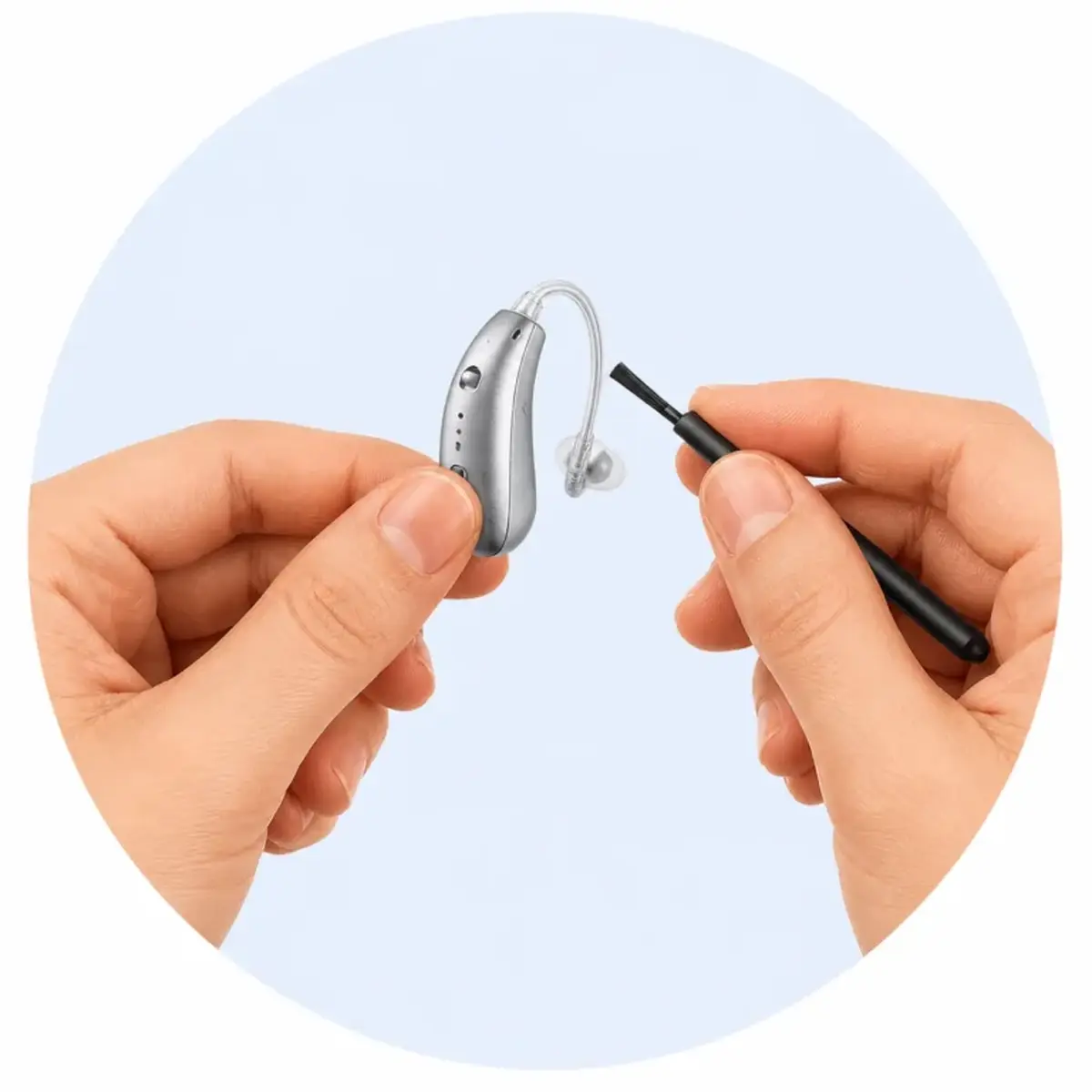
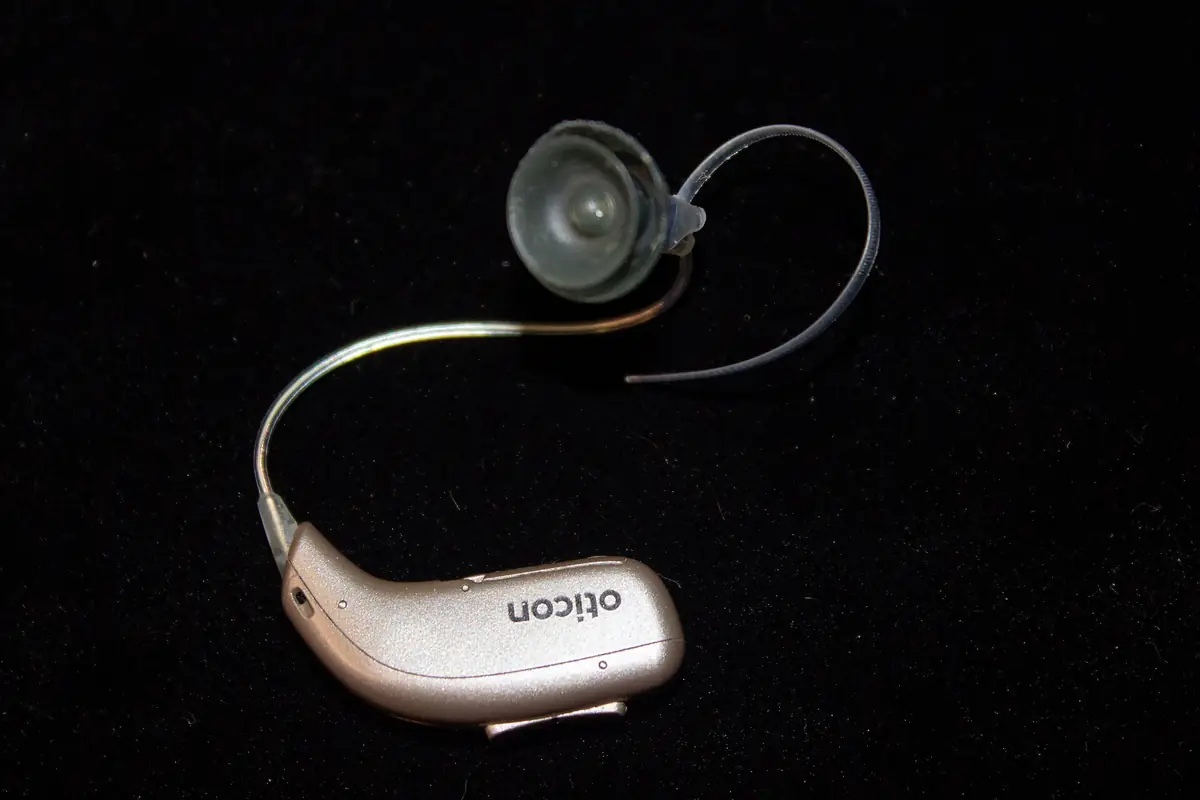

If you are buying prescription hearing aids, one decision comes before almost all others: BTE vs RIC. These are the two most popular styles in the world, and they look similar at a glance: both have a small case sitting behind your ear. But the engineering inside is different, and that difference affects sound quality, maintenance, and who each style suits.
This guide compares Behind-the-Ear (BTE) and Receiver-in-Canal (RIC) hearing aids head to head, so you can walk into your fitting appointment with a clear preference instead of a blank stare.
What BTE and RIC Actually Are
A BTE (Behind-the-Ear) aid houses all its electronics, microphone, amplifier, and speaker, in a curved case behind the ear. Sound travels from the case through a thin plastic tube into an earmold or dome in your ear canal. It is the traditional design, refined over decades.
A RIC (Receiver-in-Canal) aid splits the parts up: the case behind the ear holds the microphone and processor, but the speaker (the “receiver”) sits at the end of a thin wire, directly inside the ear canal. Moving the speaker into the canal is the key innovation, and it changes the sound in ways wearers notice immediately.
For context on the other styles, see our overview of the 5 types of hearing aids.
Head-to-Head Comparison
| Factor | BTE | RIC |
|---|---|---|
| Size and visibility | Larger case, more visible | Slimmer case, very discreet |
| Sound quality | Excellent; slightly less natural high frequencies | Excellent; speaker in canal gives natural, full sound |
| Power (severe loss) | Maximum power available | Strong, but ultra-power needs BTE |
| Battery life | Longest (larger battery) | Good; slightly shorter than BTE |
| Moisture/wax resistance | Speaker protected in case; very durable | Speaker in canal exposed to wax; needs wax guard changes |
| Feedback risk | Low (speaker far from microphone) | Low to moderate, well controlled in modern designs |
| Typical pair price | $2,000 – $6,000 | $2,000 – $6,000 |
Sound Quality: Where RIC Wins
Ask audiologists which style sounds more natural and most will say RIC. The reason is physics: with the speaker sitting in the ear canal, sound does not travel through a tube that can color or dampen high frequencies. Music sounds richer, voices sound fuller, and many wearers describe the difference as “less like a hearing aid, more like normal hearing.”
That said, modern BTEs sound very good too, especially with thin-tube designs that slim down the old bulky look. If your loss is severe, the power advantage of BTE matters more than the subtle naturalness edge of RIC.
Durability and Maintenance: Where BTE Wins
RIC’s in-canal speaker is its Achilles heel for maintenance. Earwax and moisture attack the receiver directly, which is why RIC wearers change wax guards regularly and why receiver failures are the most common RIC repair. BTE keeps its speaker sealed in the case behind the ear, making it the tougher, more forgiving design.
Practical implications: if you work outdoors, sweat heavily, or produce a lot of earwax, BTE (or disciplined RIC maintenance) is the safer bet. Our cleaning guide covers the routine either style needs, and troubleshooting fixes most day-to-day issues.
Who Should Choose BTE
- Severe to profound hearing loss: BTE offers the most powerful receivers made.
- Children: the earmold can be replaced cheaply as ears grow, and the durable case survives childhood.
- Challenging environments: heavy wax, moisture, dust, or rough handling favor BTE durability.
- Dexterity concerns: the larger case and earmold are easier to grip and insert than RIC’s slim wire and tiny dome.
- Maximum battery life: bigger battery, longer runtime, fewer changes.
Who Should Choose RIC
- First-time buyers with mild to severe loss: RIC is the default recommendation worldwide for good reason.
- Discretion matters: the slim case and thin wire nearly disappear behind the ear.
- Sound naturalness: music lovers and active listeners tend to prefer RIC’s in-canal sound.
- Glasses wearers: the slim profile competes less for space behind the ear.
- Bluetooth streaming: most RIC models include excellent phone and audio streaming.
Pros of RIC
- Discreet, modern look
- Natural, full sound quality
- Comfortable for glasses wearers
- Wide model and price selection
Cons of RIC
- Receiver exposed to wax and moisture
- Slightly shorter battery life
- Not ideal for profound loss
- More frequent maintenance
What About Price?
Within the same brand and technology tier, BTE and RIC cost about the same. Do not choose based on price; choose based on your ears. The real price questions are the technology tier and the service bundle, covered in our 2026 price breakdown and per-pair pricing guide. And before you commit to either style, decide rechargeable vs disposable batteries, since that choice interacts with style.
What Your Audiologist Will Recommend (and Why)
Walk into ten clinics with the same audiogram and you will hear “RIC” about eight times. That is not a sales script; it reflects how the industry has standardized. RIC is the default because it fits the widest range of losses, pleases the most wearers cosmetically, and gives manufacturers one platform to iterate on. When a professional recommends RIC without much discussion, they are usually playing good odds, not pushing inventory.
But defaults deserve questions. Ask why this style for your ears: “Given my audiogram and my wax buildup, would BTE’s protected receiver save me repairs?” A good provider will engage with the trade-off honestly. Be wary if they cannot articulate a reason beyond “this is what everyone gets,” or if they dismiss your lifestyle concerns (outdoor work, heavy streaming, dexterity) as irrelevant. The fitting appointment is a consultation, not a coronation.
Also ask about the receiver power level within RIC. RIC receivers come in standard, power, and ultra-power variants, and the choice affects both performance and battery drain. An underpowered receiver set too aggressively causes distortion and feedback; an overpowered one wastes battery. Matching receiver to audiogram is exactly the professional judgment you are paying for.
Frequently Asked Questions
Can I switch from BTE to RIC later?
Usually yes. Many clinics will exchange styles within the trial period if the fit is not working. After that, switching means buying new devices, so use the trial period seriously: wear the aids in your real life, not just the quiet clinic.
Which is better for severe hearing loss?
BTE, generally. It accommodates the most powerful receivers and custom earmolds that seal sound in, which severe loss demands. Some high-power RIC models handle severe loss well, but profound loss is BTE territory.
Do RIC hearing aids fall out easily?
No, when fitted correctly. The dome or custom tip anchors in the canal, and a tiny retention wire can add security. If your RIC feels loose, the dome size is probably wrong, a two-minute fix at your provider, not a style flaw. See troubleshooting if fit issues persist.
Which style lasts longer?
The devices themselves last a similar 3 to 7 years (see realistic lifespans). BTE has a slight edge in repair frequency because its receiver is protected. RIC receivers can be replaced quickly and cheaply when they do fail, often same-day at the clinic.
Trying Both During Your Trial Period
Here is an approach few buyers consider: trial one style, then swap. Most providers will let you start with RIC and switch to BTE mid-trial if maintenance or power becomes an issue, or vice versa. The trial period exists precisely for this kind of real-world comparison, and switching styles teaches you more in two weeks than any article can.
If you trial both, keep notes on the same five situations: quiet conversation at home, a noisy restaurant, phone calls, outdoor wind, and inserting/removing the aids with your morning routine. Score each 1 to 5. The pattern that emerges is usually decisive, and it is personal: one person’s “RIC sounds clearly better” is another’s “BTE is so much easier to handle.” Trust your scorecard over anyone’s recommendation, including this article’s. Comfort, clarity, and confidence in daily use are the only metrics that ultimately matter for your hearing.
The Bottom Line
RIC is the right default for most buyers: discreet, natural-sounding, and full-featured. BTE is the right choice when you need maximum power, maximum durability, or the easiest handling. Either way, the fitting quality matters more than the style badge. Go in knowing your preference, try it hard during the fitting and trial period, and switch if your ears disagree. And remember that style is only one decision among several: your battery choice and technology tier shape daily life just as much.