
That sudden squeal when you put your hearing aid in, the whistle when someone hugs you, the high-pitched tone that appears out of nowhere during dinner: all of it is acoustic feedback. It is the single most common complaint among hearing aid wearers, and it is also one of the best-understood problems in hearing science. This guide explains what feedback actually is, why it happens, and the full range of fixes, from the 10-second adjustments you can do yourself to the professional calibration that eliminates it for good.
What Hearing Aid Feedback Actually Is
Feedback is a sound loop. Your hearing aid’s microphone picks up sound, the processor amplifies it, and the speaker plays it into your ear canal. Normally that amplified sound travels inward to your eardrum. But if some of it leaks back outward and reaches the microphone again, it gets amplified a second time, then a third, then a fourth, growing with each cycle until it becomes the sustained whistle or squeal you hear. It is the exact same physics as a microphone placed too close to a speaker at a concert.
Feedback needs three ingredients: enough amplification (gain), a leakage path for sound to escape, and a microphone positioned to catch the leak. Change any one of the three and the feedback stops. Every fix in this guide works by addressing one of those ingredients. For the most common feedback symptom specifically, see our detailed guide on why hearing aids whistle.
Everyday Triggers You Can Fix Yourself
Before assuming anything is wrong with your devices, check these situational causes. They account for the majority of feedback complaints.
Insertion and fit
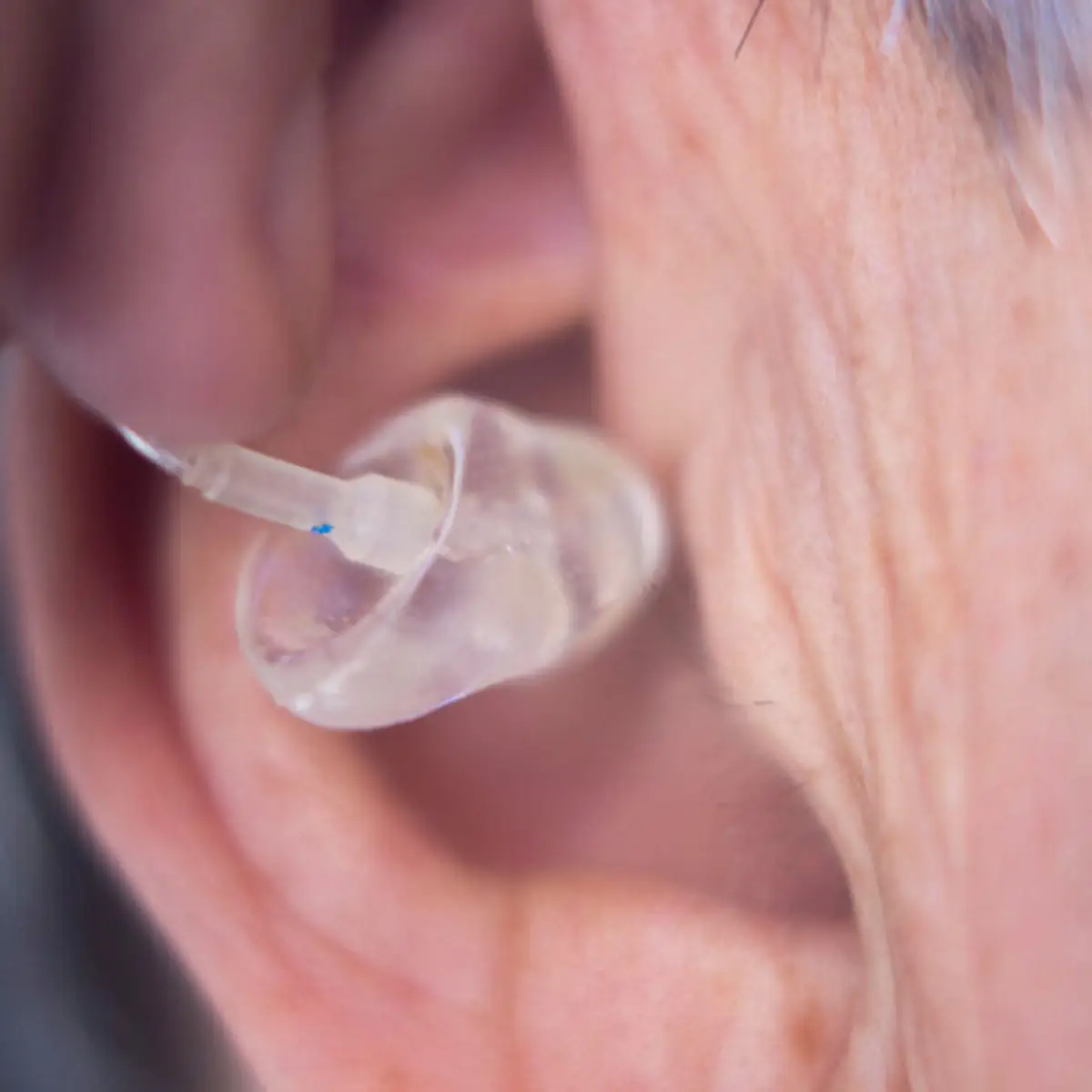
A hearing aid that is not fully seated is the top feedback trigger. Remove the device and reinsert it carefully, making sure domes sit snugly and earmolds lock into the ear’s contours. If you have to push it back in repeatedly throughout the day, the dome size is wrong; try the next size up or ask your provider about custom earmolds.
Hands, hats, and hair near the microphones
Cupping your hand near your ear, wearing a tight hat or headband, or tucking long hair behind the ear all reflect sound back into the microphones. Feedback that appears only in these situations is normal and needs no repair. Adjust the covering or accept the brief squeal during hugs; it happens with every hearing aid ever made.
Chewing, yawning, and jaw movement
Your ear canal changes shape when you move your jaw. That movement can momentarily break the seal around the dome, letting sound escape. Occasional brief feedback while eating is normal. Constant feedback while chewing suggests the dome is too small or too shallow, and a larger dome or deeper insertion usually fixes it.
Volume set too high
Higher gain makes feedback loops easier to start. If feedback began after a volume increase, back off a step or two. If you need that higher volume to hear properly, the fitting needs professional adjustment rather than brute-force volume; more gain without proper feedback management just buys you louder whistling.
Maintenance Causes: Wax and Wear
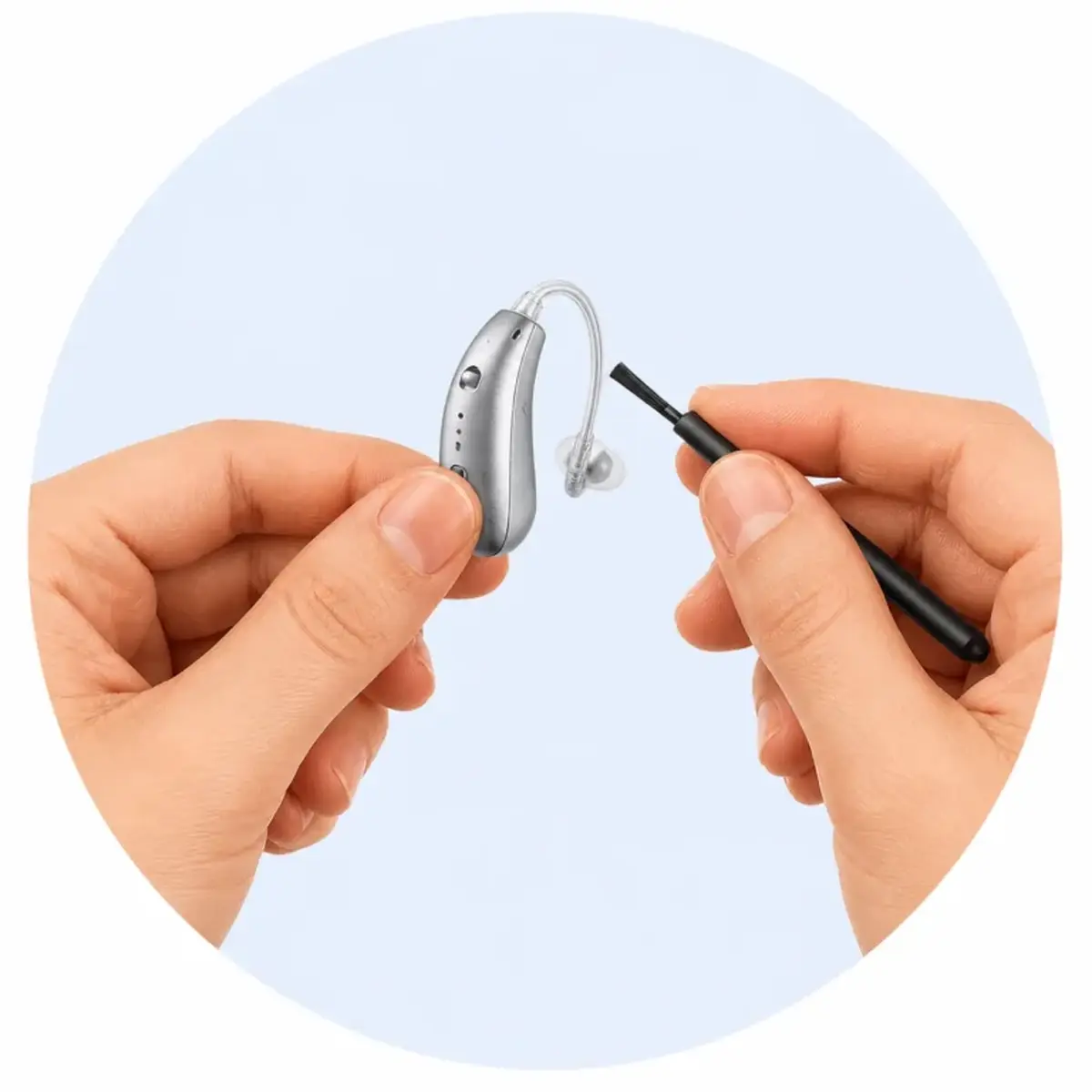
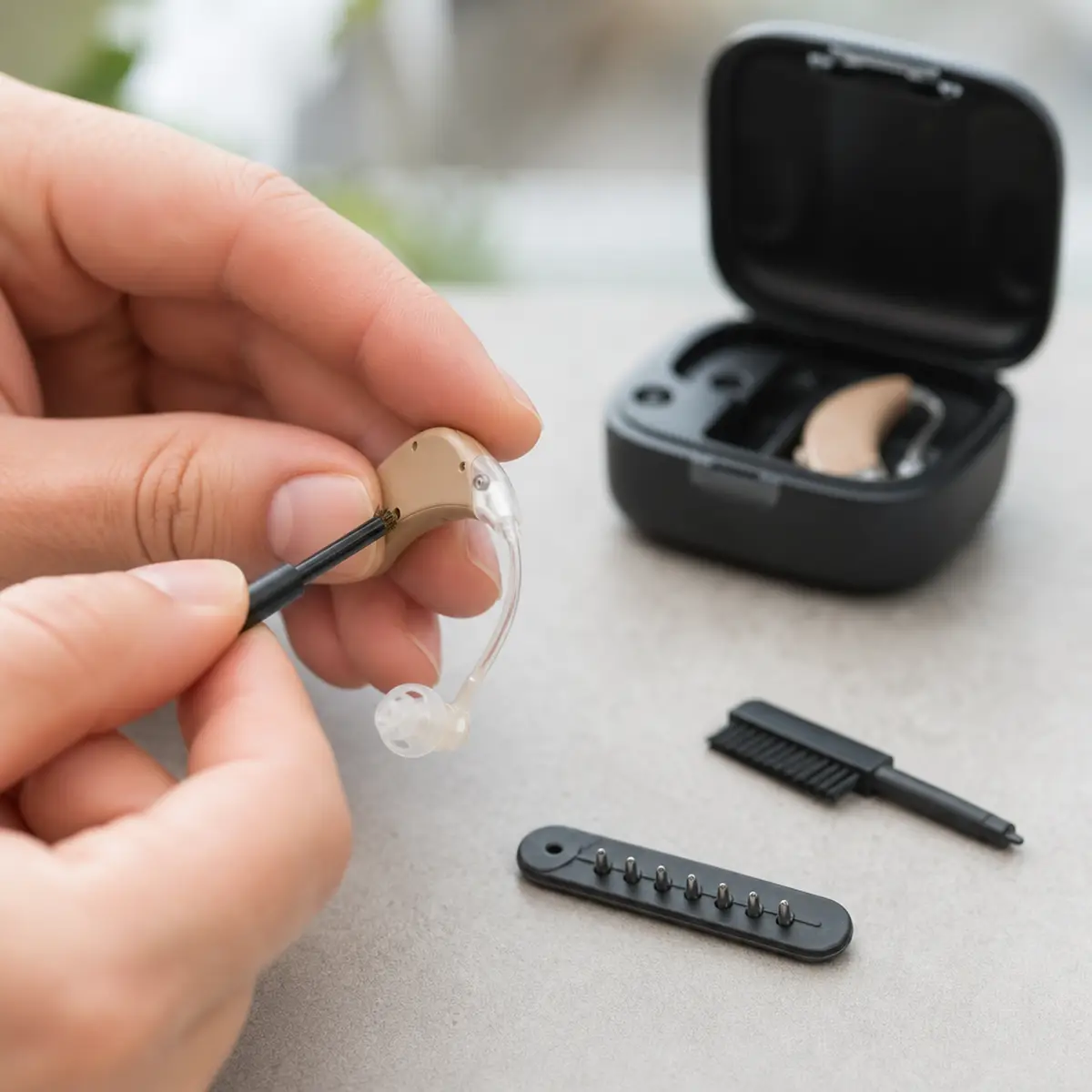
When feedback develops gradually over weeks, maintenance is usually the culprit. Earwax in the canal reflects amplified sound back toward the microphone. Wax clogging the hearing aid’s speaker port or wax guard changes how sound exits the device, disrupting the acoustic balance the fitting was built around. The fix is simple: replace wax guards regularly (see our wax guard guide), keep the devices clean following our cleaning guide, and get professional earwax removal if you are prone to buildup. Never use cotton swabs or sharp objects inside the canal.
Physical wear matters too. On behind-the-ear models, the sound tube hardens and micro-cracks with age, leaking sound at the damage points. On receiver-in-canal models, a kinked or frayed receiver wire does the same. Inspect tubing and wires monthly in good light. Fresh tubing is inexpensive and user-replaceable; damaged receiver wires should be replaced through your provider rather than repaired at home.
How Feedback Cancellation Technology Works
Modern digital hearing aids do not just hope feedback will not happen; they actively fight it. Feedback cancellation systems work by modeling the feedback path: the processor continuously estimates how much amplified sound is leaking back to the microphone and generates an inverted signal that cancels it out, similar to how noise-canceling headphones work. Advanced systems can suppress feedback by 20 decibels or more without you ever hearing a whistle.
But this technology must be calibrated. During a proper fitting, the audiologist runs a feedback test that measures your specific ear acoustics with the devices in place, and the cancellation system tunes itself to that measurement. If this calibration was skipped, rushed, or done with different domes than you now wear, feedback breaks through. This is the most common reason new hearing aids whistle: not defective hardware, but an uncalibrated feedback manager.
Professional Fixes That End Feedback for Good
When self-help steps are not enough, these are the tools your audiologist has. Knowing they exist helps you ask for the right thing at your appointment.
- Feedback recalibration. The audiologist reruns the feedback test with your current domes and settings. This alone resolves most persistent feedback.
- Gain adjustments by frequency. Feedback usually starts at specific frequencies. Reducing gain slightly at just those frequencies, or strengthening the feedback canceller there, stops the whistle without noticeably reducing overall hearing benefit.
- Venting changes. The vent is the small hole in the earmold or dome that lets air (and low-frequency sound) pass. Larger vents improve comfort and natural sound but increase feedback risk. Your audiologist can try a smaller vent or a different dome style to find the sweet spot.
- Custom earmolds. For stubborn cases, a custom-molded earpiece seals the canal precisely, removing the leakage path that makes feedback possible. This is the definitive fix when universal domes cannot seal reliably.
- Remote fine-tuning. Many OTC brands now offer video or chat appointments where a hearing professional adjusts your feedback settings remotely. Check whether your brand includes this; Jabra Enhance and Lexie both do.
Feedback vs. Other Strange Sounds
Not every odd sound is feedback, and misdiagnosis wastes time. Use this quick differential: feedback is a sustained whistle, squeal, or ringing tone that changes or stops when you press the device deeper into your ear. Static or crackling that does not change with position usually means a failing speaker, moisture damage, or a dying battery. Intermittent cutting out points to battery, moisture, or Bluetooth issues rather than feedback. Muffled sound without whistling suggests wax blockage or a clogged microphone port. If your aids have gone silent or sound wrong in other ways, work through our troubleshooting checklist or our muffled sound guide instead.
Preventing Feedback Long-Term
A few habits keep feedback from returning. Replace wax guards on schedule, not when whistling starts. Revisit your audiologist for a checkup if your hearing changes, since new gain needs new calibration. Replace aging tubing before it cracks. And resist the urge to crank the volume past your prescription; if the world sounds too quiet at your fitted settings, that is a fitting conversation, not a volume knob problem. Devices that are nearing the end of their lifespan also develop feedback more easily as components degrade, which is worth knowing when deciding between repair and replacement.
Frequently Asked Questions
Is some feedback normal with hearing aids?
Yes. Brief feedback during insertion, hugging, or when a hand covers the ear is normal and happens with all hearing aids. Feedback that occurs during normal wearing, talking, or chewing is not normal and should be fixed.
Can feedback damage my hearing?
Occasional brief squeals are startling but harmless. If feedback is frequent and loud, get it fixed promptly for comfort reasons, and avoid maxing out the volume to compensate.
Why do my hearing aids whistle more in the car?
Cars are small, reflective spaces. Sound bounces off windows and the roof back toward your microphones, and road noise may prompt you to raise the volume. Both factors make feedback more likely. A dedicated driving or noise program can help.
Do more expensive hearing aids have less feedback?
Generally yes, because premium devices have more sophisticated feedback cancellation and more fitting flexibility. But even basic modern aids handle feedback well when properly calibrated; price matters less than the quality of the fitting.
Can I turn off feedback cancellation to get more volume?
Some advanced software allows adjusting it, but disabling it is never advisable. You will get whistling instead of usable extra volume. If you need more amplification, discuss it with your provider.
The Bottom Line
Feedback is physics, not a defect, and it surrenders to methodical troubleshooting. Check fit first, then wax and maintenance, then volume, and finally professional calibration. The vast majority of feedback is eliminated somewhere in that sequence. If you have worked through this guide and the whistle persists, that is valuable diagnostic information for your audiologist, not a failure. Book the appointment, describe exactly when feedback occurs, and let the calibration tools do their job. For the seven most common whistling causes in checklist form, keep our whistling causes and fixes guide bookmarked.