

Hearing aids are expensive, and the tax code offers a small consolation: in most cases, you can deduct their cost as a medical expense. It will not make a $4,000 pair free, but for many buyers the deduction shaves hundreds off the real cost. The rules are simpler than they look. Here is how they work.
One important note up front: tax rules change, and your situation is your own. This guide explains the general rules as they stand, but it is not tax advice. If your return is complicated, a tax professional is worth the fee.
The Basic Rule: Hearing Aids Are Medical Expenses
The IRS allows you to deduct unreimbursed medical and dental expenses, and hearing aids clearly qualify. The IRS has long treated hearing aids, including batteries, repairs, and maintenance, as deductible medical care. This includes both prescription hearing aids fitted by a clinic and over-the-counter hearing aids you buy yourself, since both are medical devices for treating hearing loss.
Related costs generally count too: the hearing exam, fitting appointments, ear molds, replacement batteries, wax guards, and repairs. If you travel specifically for hearing care, mileage and related travel costs may also qualify under the medical travel rules. Keep receipts for everything.
The AGI Threshold: The Part That Matters
Here is the catch. You can only deduct medical expenses that exceed 7.5 percent of your adjusted gross income (AGI). This is the rule that determines whether the deduction actually helps you.
An example: if your AGI is $50,000, 7.5 percent is $3,750. Only medical expenses above that amount are deductible. So if you spent $4,500 on hearing aids plus $1,000 on other medical costs ($5,500 total), you could deduct $1,750. If your total medical spending was $3,000, you would get no deduction.
This threshold is why the deduction helps some buyers enormously and others not at all. Seniors with high medical spending in a single year, especially those who buy hearing aids in the same year as other procedures, are the most likely to benefit. Bunching medical expenses into one tax year is a legitimate and common strategy.
You Must Itemize to Claim It
The medical expense deduction is an itemized deduction, claimed on Schedule A. If you take the standard deduction, you cannot also deduct medical expenses. With the standard deduction at historically high levels, many taxpayers do not itemize, which means the hearing aid deduction does them no good.
Do the math both ways. Add up your potential itemized deductions: state and local taxes (subject to the SALT cap), mortgage interest, charitable gifts, and medical expenses above the 7.5 percent threshold. If the total beats the standard deduction, itemizing wins and the hearing aid deduction has real value. Tax software handles this comparison automatically.
| Your situation | Deduction outlook | What to do |
|---|---|---|
| High medical costs in one year, itemizing | Strong: hearing aids likely deductible | Track every receipt; claim on Schedule A |
| Moderate costs, itemizing anyway | Partial: amount above 7.5% of AGI | Add hearing costs to your medical total |
| Taking the standard deduction | No benefit from this deduction | Consider FSA/HSA funds instead (see below) |
| Self-employed | Possible additional options | Ask your tax pro about business medical deductions |
What Counts as a Deductible Hearing Expense
Keep the definition broad but honest. Generally deductible:
- Hearing aids themselves (prescription or OTC)
- Hearing exams and audiologist appointments
- Fittings, adjustments, and follow-up visits
- Ear molds and custom components
- Replacement batteries and charging accessories
- Repairs and maintenance
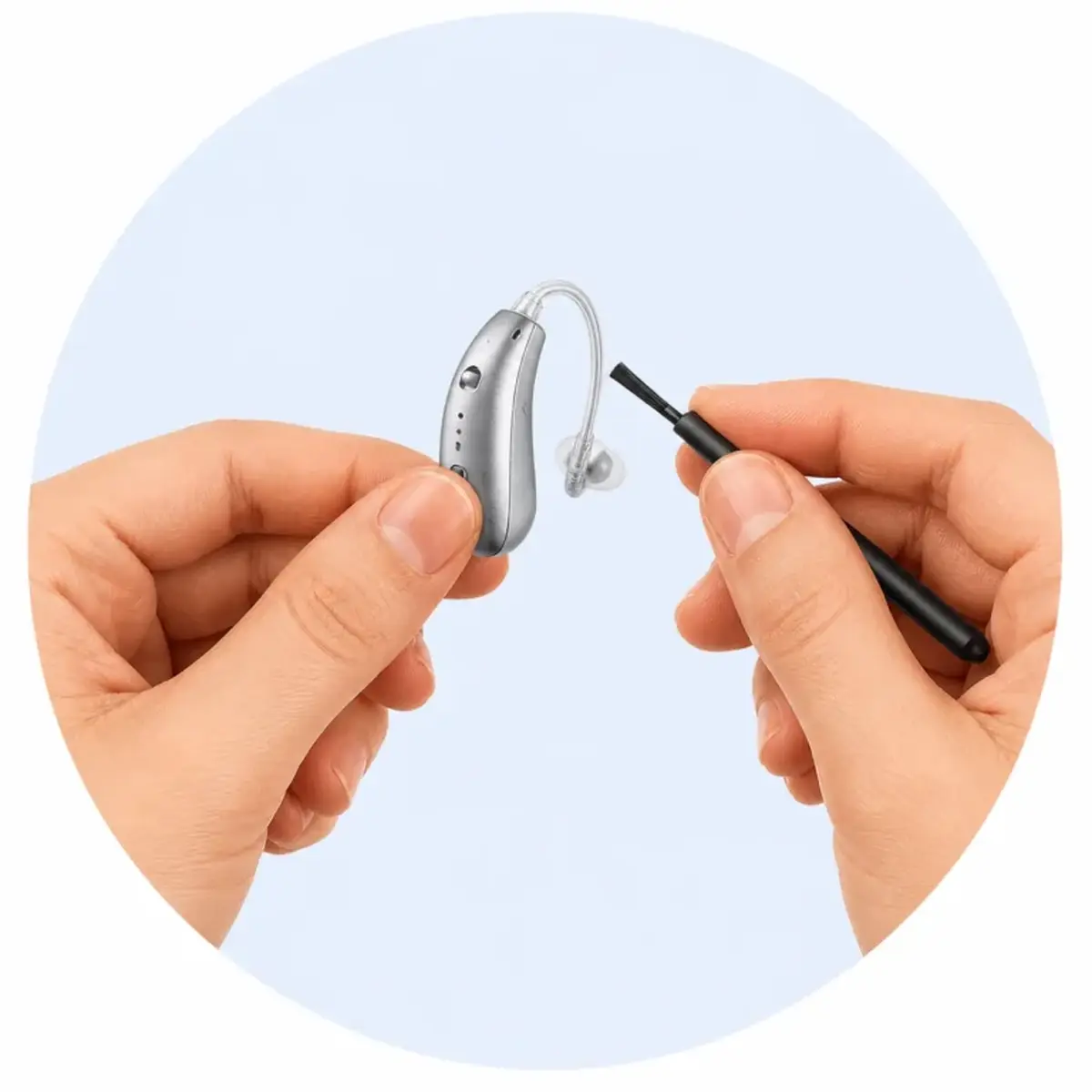
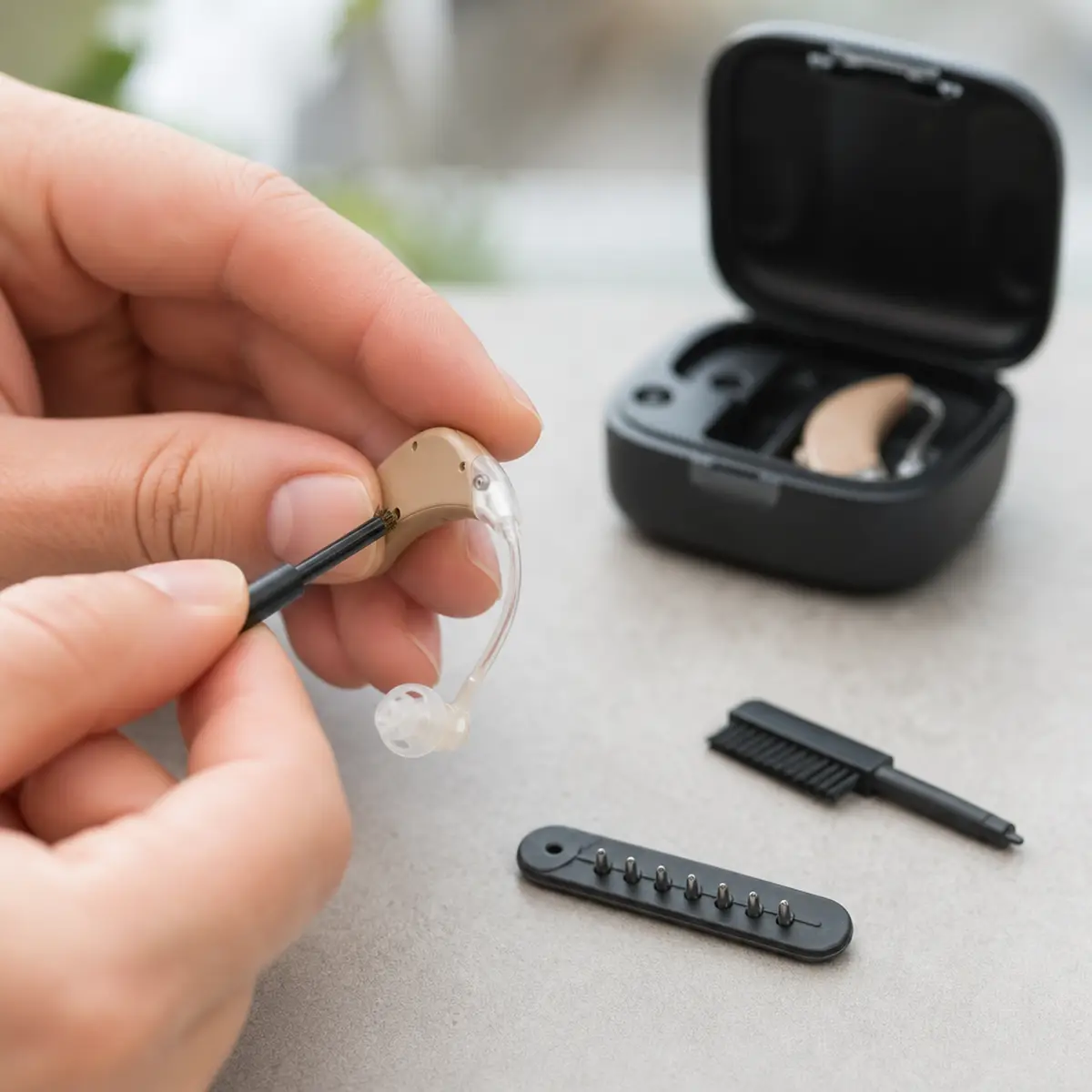
- Wax guards, domes, and cleaning supplies
- Hearing aid insurance or loss/damage warranties (as medical expenses, in many interpretations)
What does not count: cosmetic accessories with no medical purpose, and any portion reimbursed by insurance. You can only deduct what you actually paid out of pocket. If your Medicare Advantage plan covered $1,500 of a $4,000 pair, your deductible expense is $2,500.
The FSA/HSA Alternative
If you cannot benefit from the itemized deduction, tax-advantaged accounts may be the better play. Hearing aids are eligible expenses for Flexible Spending Accounts (FSAs) and Health Savings Accounts (HSAs), meaning you pay with pre-tax dollars. That is effectively a discount equal to your marginal tax rate, with no 7.5 percent threshold and no itemizing required.
Our FSA/HSA guide walks through the details, including how to time purchases with your account funding. For many buyers, especially those taking the standard deduction, the FSA/HSA route saves more than the itemized deduction ever could.
Record-Keeping: Your Audit Protection
The IRS does not require you to submit receipts with your return, but keep them for at least three years. For hearing aids, save:
- The purchase receipt showing the device cost
- Invoices for exams, fittings, and follow-ups
- Receipts for batteries, repairs, and supplies
- Insurance statements showing what was (and was not) reimbursed
- A copy of your hearing test, which documents medical necessity
If your hearing aids were partly covered by insurance, keep the explanation of benefits showing your out-of-pocket share. Clean records turn a stressful audit letter into a five-minute response.
State Tax Considerations
Federal taxes are only half the picture. Many states with an income tax allow their own medical expense deduction, sometimes with rules more generous than the federal ones. A few states have lower AGI thresholds or no threshold at all for medical deductions. Others conform to the federal rules exactly, meaning your state deduction mirrors whatever you claimed federally.
A handful of states offer no income tax, which makes the state question moot, while others do not allow itemized deductions at all. Because this varies so much, check your state’s department of revenue guidance or ask your tax preparer specifically about medical expense deductions. It takes one question and occasionally yields a pleasant surprise.
Also note that some states exempt hearing aids from sales tax as medical devices, while others do not. On a $4,000 purchase, the sales tax difference can be a few hundred dollars. If your state taxes the sale, ask the provider whether the devices can be billed in a way that qualifies for the medical exemption; some clinics handle this routinely and others never mention it unless asked.
Frequently Asked Questions
Are OTC hearing aids tax deductible too?
Yes. The IRS treats hearing aids as deductible medical expenses regardless of whether they required a prescription. Keep your purchase receipt just as you would for clinic-bought devices.
Can I deduct hearing aids I bought for my parent or child?
You can deduct medical expenses you paid for your spouse, dependents, or anyone you could have claimed as a dependent. If you paid for your mother’s hearing aids and she qualifies as your dependent, the cost generally goes on your return. Dependency rules are specific, so verify yours.
What if I bought hearing aids in December but was fitted in January?
Medical expenses are generally deductible in the year you paid them, not the year you received the care. If you paid in December, the expense typically belongs on that year’s return even if the fitting happened later. Keep the payment receipt as your proof of timing.
Does the deduction apply to hearing aid batteries and repairs?
Yes, these are generally deductible as part of your medical expenses for maintaining the devices. They are small individually, but they add to your total medical spending, which helps clear the 7.5 percent threshold.
Should I amend a past return if I forgot to deduct hearing aids?
You generally have three years from the filing date to amend and claim a missed deduction. If you bought hearing aids in a recent tax year and overlooked the deduction, filing an amended return (Form 1040-X) may be worth it. A tax professional can confirm quickly.
What records does the IRS expect for OTC hearing aid purchases?
The same as for any medical expense: proof of what you bought, what you paid, and when. Save the order confirmation or store receipt showing the device name and price, plus your payment record. Since OTC purchases lack a clinic invoice, the retailer’s receipt is your documentation. If audited, the receipt plus evidence of your hearing loss (a hearing test) establishes the medical purpose.
The Bottom Line
Hearing aids are deductible medical expenses, and for buyers with significant medical spending who itemize, the deduction meaningfully reduces the true cost. Run your numbers: total your unreimbursed medical expenses, subtract 7.5 percent of your AGI, and see what remains. If you take the standard deduction instead, route the purchase through an FSA or HSA for pre-tax savings. Either way, factor the tax benefit into your budget before you buy, using our 2026 price breakdown as your starting point.
Sources: irs.gov (medical expense deduction rules, Publication 502), IRS Schedule A instructions (itemized deduction mechanics).