

You are in the middle of a conversation when it starts: a thin, high-pitched whistle coming from your own ear. Everyone nearby can hear it too, which makes it ten times more embarrassing. That whistling is called acoustic feedback, and it happens when amplified sound leaks out of your ear canal and gets picked up by the hearing aid’s microphone again, creating a loop. The good news is that whistling is one of the most common hearing aid complaints and also one of the most fixable. Work through these seven causes in order, from simplest to least obvious, and most people silence the whistle within minutes.
1. The Hearing Aid Is Not Seated Properly
This is the number one cause, and the fix takes five seconds. If the earpiece has shifted, even slightly, amplified sound escapes around it and feedback begins. This happens constantly: you smile, chew, yawn, or hug someone, and the device migrates a millimeter out of position.
Try this first: remove the hearing aid completely, then reinsert it carefully following the proper technique for your style. For receiver-in-canal models, push the dome gently but firmly into the canal until it feels snug, then tuck the thin wire into the bowl of your ear. For behind-the-ear models with earmolds, twist the mold slightly as you insert it so it locks into the contours of your ear. The whistle should stop the moment the seal is restored. If whistling starts every time you chew or talk, your domes may be the wrong size, which brings us to cause number two.
2. The Dome or Earmold Is the Wrong Size
Hearing aid domes come in multiple sizes, and many people wear the wrong one without knowing it. A dome that is too small leaves a gap around its edge, and sound pours out through that gap. A dome that is too large folds or wrinkles on insertion, creating channels for sound to escape. Either way, you get whistling.
What to do: if your hearing aids came with multiple dome sizes, try the next size up. Insert it and check for whistling while talking and chewing. The right dome feels secure without pressure or soreness. If you only received one size, contact your provider or the manufacturer for a dome assortment kit; they are inexpensive and most brands ship them free during the trial period. Persistent whistling with every dome size is a sign you may need a custom earmold, which your audiologist can order. Custom molds seal the canal precisely and eliminate fit-related feedback almost entirely.
3. Earwax Is Blocking the Sound Path
This one surprises people. When earwax builds up in your ear canal, it reflects amplified sound back toward the hearing aid’s microphone instead of letting it travel to your eardrum. The reflected sound gets re-amplified, and the feedback loop begins. Wax can also clog the hearing aid’s own speaker port, which changes how sound exits the device and triggers whistling.
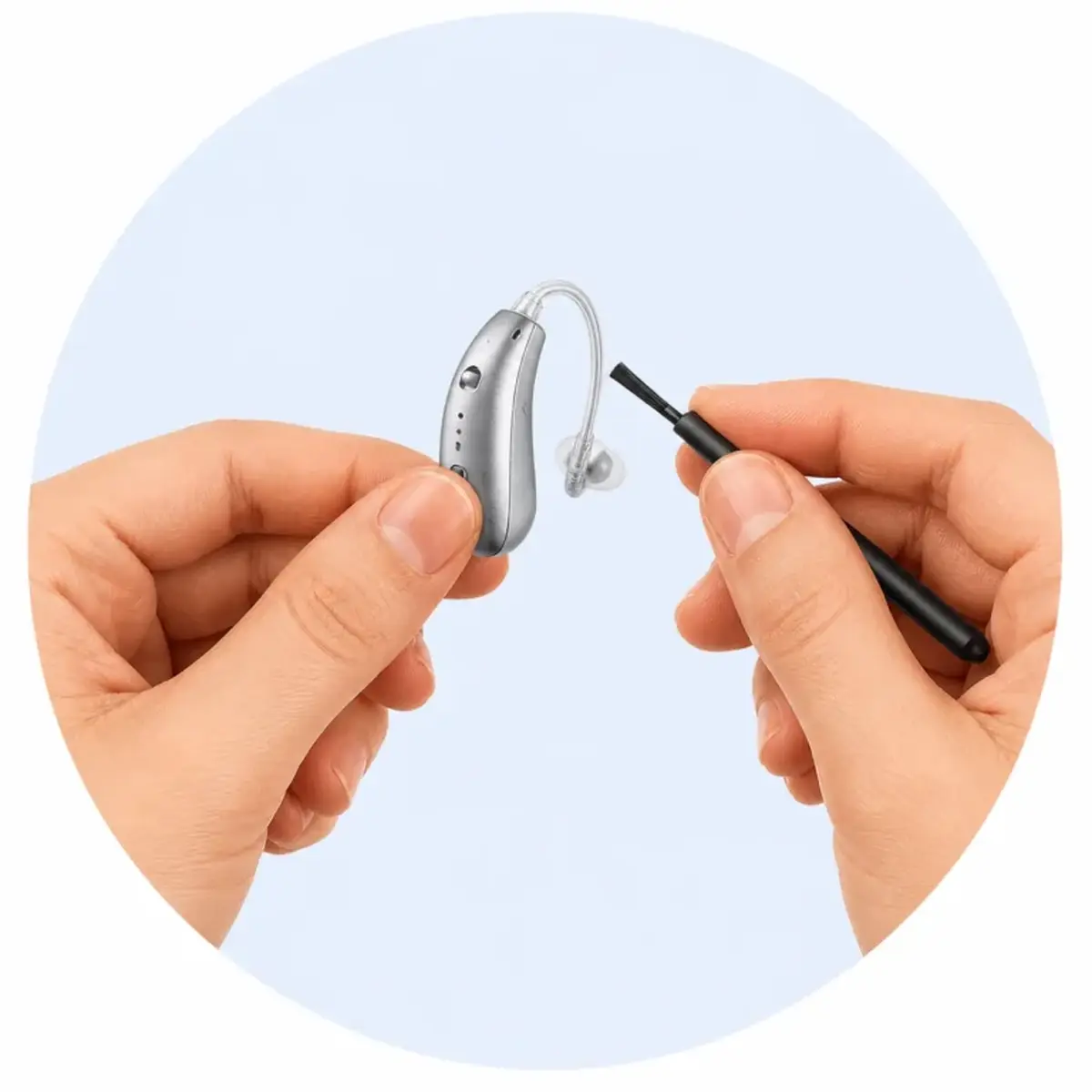
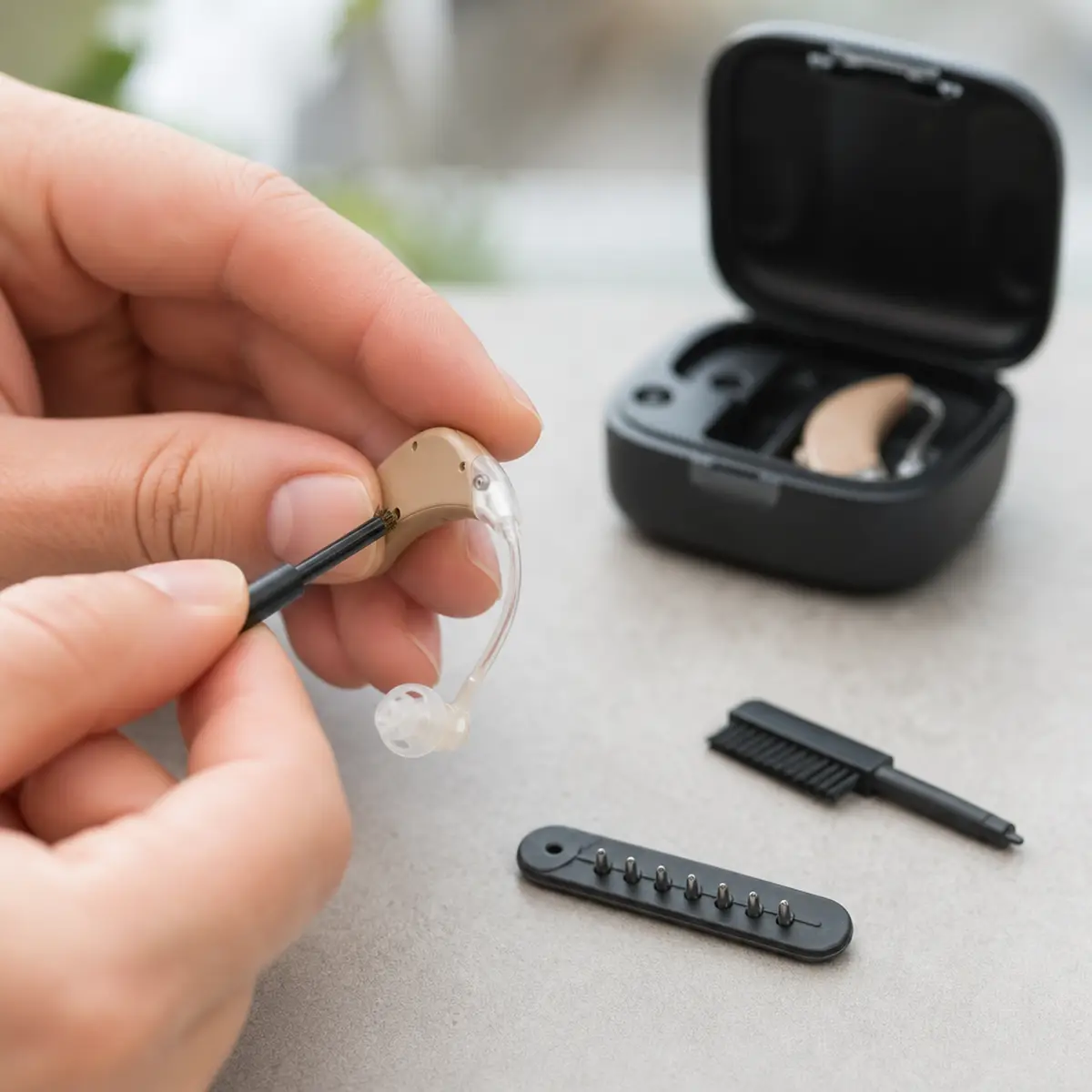
What to do: first, inspect the hearing aid. Look at the small speaker opening and the wax guard (the tiny white filter at the tip). If it looks clogged or discolored, replace the wax guard following the manufacturer’s instructions; most brands include a pack of replacements and the swap takes under a minute. Our wax guard guide walks through the process. Second, consider whether your ears themselves need attention. If you have a history of wax buildup, do not dig at it with cotton swabs, which push wax deeper. See your audiologist or doctor for safe professional removal. Never insert sharp objects into your ear canal.
4. The Volume Is Set Too High
Feedback is fundamentally a loop, and higher volume makes the loop easier to trigger. If you have recently turned your hearing aids up, or if your provider increased the gain at your last appointment, whistling may appear at the new settings even though everything was fine before.
What to do: turn the volume down one or two steps and see if the whistling stops. If it does, you have found your feedback threshold. This does not mean you must live with lower volume forever; it means the fitting needs adjustment. Modern hearing aids have feedback cancellation systems that can be tuned, and your audiologist can increase the feedback manager’s strength or adjust the gain at specific frequencies. If you self-fit through an app, look for a feedback or whistling calibration routine, which many self-fitting hearing aids include. If lower volume is the only thing that stops the whistle and you still cannot hear well, book a professional adjustment rather than straining.
5. Something Is Covering the Microphone
Hearing aid microphones sit on the outer body of the device, and anything covering them changes the acoustics. The usual suspects are hats, headbands, hoods, scarves, and long hair tucked behind the ear. Even cupping your hand near your ear to hear better, the instinctive move, can trigger a blast of feedback because your hand reflects sound straight back into the microphone.
What to do: notice when the whistling happens. If it only occurs with a particular hat or when your hair is tucked back, you have found the culprit. Adjust the covering so it does not press against the device, or switch to a looser style. This cause is purely situational and needs no repair, just awareness.
6. The Tubing or Receiver Wire Is Damaged
On behind-the-ear models, sound travels through a thin tube to your ear. On receiver-in-canal models, a thin wire carries the signal to the speaker in your canal. If the tube has hardened, cracked, or split with age, or if the wire is kinked or frayed, sound leaks at the damage point and feedback follows. Tubing naturally stiffens over months, so this cause creeps up gradually on older devices.
What to do: inspect the tube or wire in good light. Look for cracks, discoloration, stiffness, or sharp bends. Standard BTE tubing is a cheap, user-replaceable part, and your provider can show you how to swap it in minutes. Receiver wires are more delicate; if yours looks damaged, do not attempt to repair it yourself. Contact your provider or the manufacturer for a replacement receiver, which usually clicks or plugs into place without tools. If your aids are aging, our hearing aid lifespan guide can help you judge whether repair or replacement makes more sense.
7. The Feedback Cancellation Needs Professional Tuning
Every modern digital hearing aid includes a feedback cancellation system: software that detects the early signature of a feedback loop and cancels it before you hear a whistle. But this system must be calibrated to your ears, your domes, and your gain settings. If it was never properly calibrated, or if your hearing or ear acoustics have changed since the fitting, whistling breaks through.
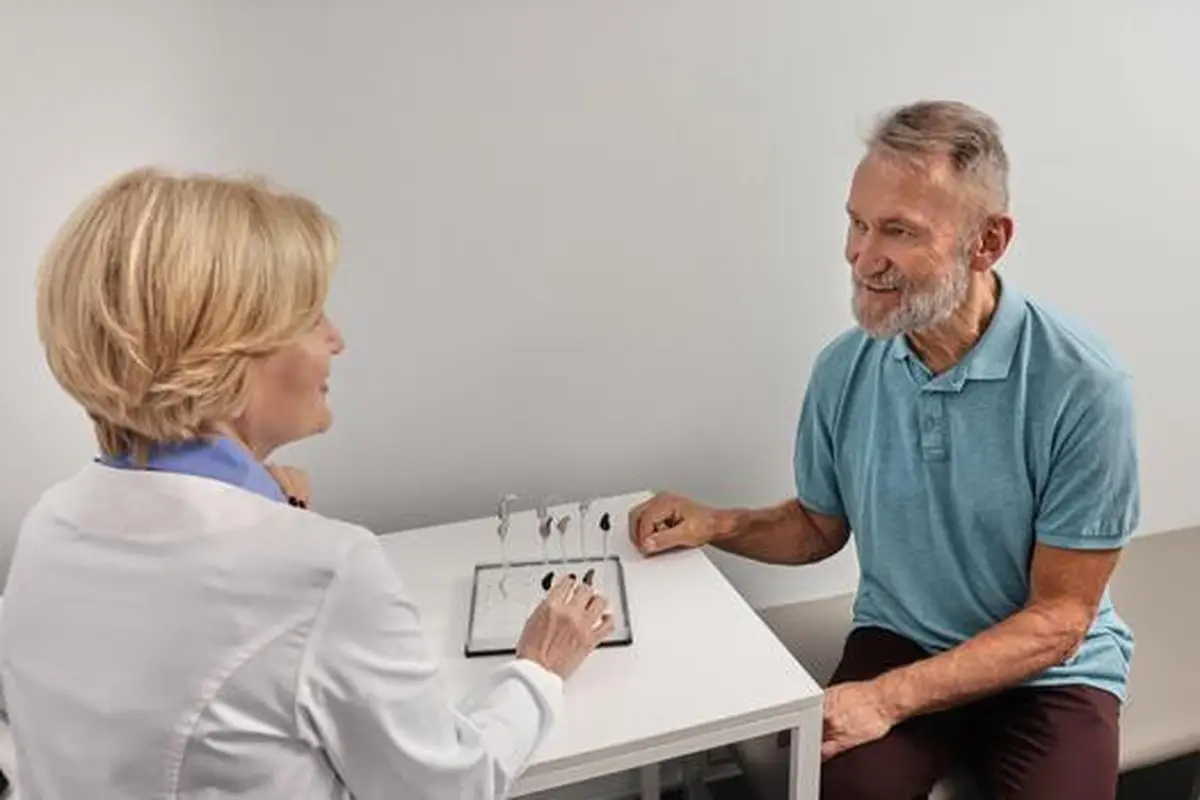
What to do: this one requires professional help, and that is perfectly fine. Book a follow-up with your audiologist and describe exactly when the whistling happens: during insertion, while chewing, at high volume, or constantly. They can rerun the feedback calibration, try a different dome or vent size, or adjust frequency-specific gain. If you bought OTC aids, check whether the brand offers remote support; companies like Jabra Enhance and Lexie provide video or chat appointments where a specialist can adjust your fitting remotely. Persistent whistling that survives all six previous fixes is, by definition, a fitting problem, not a user problem.
When Whistling Signals Something Else
Two situations deserve prompt professional attention rather than DIY troubleshooting. If whistling appears suddenly in a hearing aid that was fine for months, and none of the causes above apply, the internal speaker or microphone may be failing. And if whistling is accompanied by a sudden drop in hearing, pain, drainage, or dizziness, skip the troubleshooting and see a doctor or audiologist promptly; those symptoms can indicate ear infections or other medical issues that need treatment, not device adjustment.
Frequently Asked Questions
Is hearing aid whistling dangerous for my hearing?
Brief feedback squeals are startling but not harmful. However, chronic loud feedback at high volume is unpleasant and worth fixing promptly. If whistling is sudden and loud enough to cause pain, turn the device down or remove it and get it checked.
Why does my hearing aid whistle only when I hug someone?
Hugging presses the earpiece and reflects sound back into the microphone, momentarily breaking the acoustic seal. This is normal and happens with nearly all hearing aids. It stops as soon as the pressure is removed.
Can earwax really cause whistling?
Yes, it is one of the most common causes. Wax in the canal reflects sound back to the microphone, and wax clogging the device’s speaker port disrupts normal sound output. Regular wax guard changes prevent most of it.
Will a custom earmold stop the whistling?
In most fit-related cases, yes. Custom molds seal the ear canal far more precisely than universal domes, which eliminates the sound leakage that causes feedback. They are the standard solution when domes cannot achieve a stable seal.
My new hearing aids whistle but my old ones did not. Why?
New devices often have different dome sizes, venting, or gain settings than your old pair. The feedback cancellation also needs calibration to your ears. A follow-up fine-tuning appointment usually resolves it completely.
The Bottom Line
Hearing aid whistling is almost never a sign that your devices are broken. In the vast majority of cases, it is a fit, wax, volume, or calibration issue you can identify in minutes using the steps above. Start with reseating the device, check your domes and wax guards, and only escalate to professional help if the simple fixes do not work. For the deeper science of feedback and advanced solutions, read our companion guide on stopping hearing aid feedback. And if your aids have gone completely silent rather than whistling, our troubleshooting checklist will walk you through that instead.