
If you are shopping for hearing aids on a budget, two names come up more than any others: MDHearing and Audien. Both sell direct to consumers, both are FDA-registered OTC brands, and both promise to cut the clinic markup out of the equation. But they take very different approaches. Audien’s headline is a $99 price tag and radical simplicity. MDHearing’s headline is a $597 flagship with an app, Bluetooth, and professional support.
So which budget brand actually wins? Based on specifications, trial terms, support models, and independent testing, the answer depends on what you value most. This head-to-head breaks it down category by category.
Price Comparison
Price is where the two brands diverge most dramatically. Audien’s original Atom lists at $99 per pair, with step-up models at $189 (Atom 2), $289 (Atom Pro 2), and $389 (Atom X). MDHearing’s lineup runs from $197 (Air, Neo) through $297 to $497 (Volt series) up to $597 for the flagship Volt Max 2.
In other words, Audien’s most expensive model costs less than MDHearing’s cheapest mid-range option. If your budget has a hard ceiling under $200, Audien is the only game in town between these two. But the price gap buys real differences in capability, which the rest of this comparison will make clear. For the broader pricing landscape, see our 2026 hearing aid price breakdown.
Side-by-Side Spec Comparison
| Feature | Audien Atom ($99) | MDHearing Volt Max 2 ($597) |
|---|---|---|
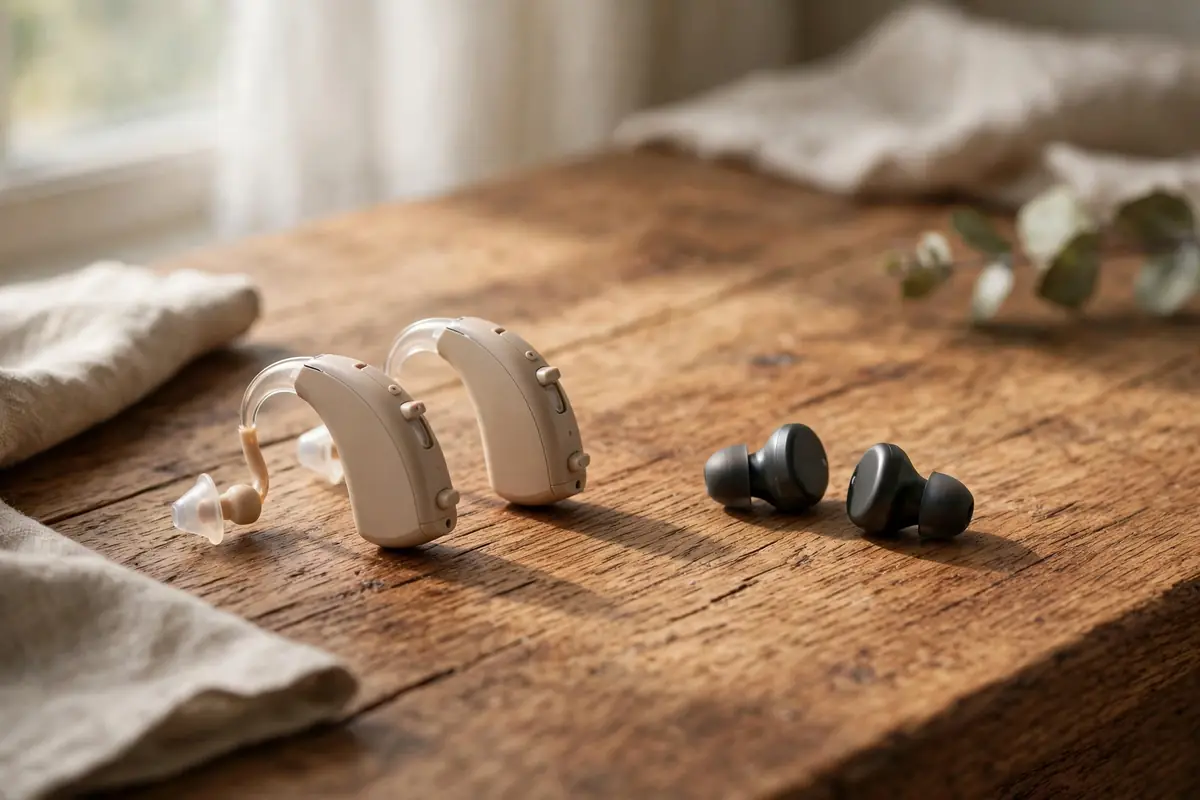
| Style | In-the-canal (nearly invisible) | Behind-the-ear |
| Battery | Rechargeable, ~20 hours | Rechargeable, all-day + case charges |
| Bluetooth / app | No | Yes |
| Listening programs | Basic volume adjustment | 4 programs, adaptive directional mics |
| Self-fitting | Manual | App-based hearing profile |
| Professional support | Customer service | Licensed hearing pros, free telehealth |
| Trial period | 45 days | 60 days |
| Warranty | Standard limited | 1 year (2 years with VIP Care) |
| Hearing loss range | Mild | Mild to moderate |
Sound Quality
This is the heart of the matter. Independent lab testing of the Audien Atom found excellent feedback control but below-average speech clarity, particularly in noisy environments. It makes things louder, which is enough for mild loss in quiet rooms, but it does not do much intelligent processing of what it amplifies.
The MDHearing Volt Max 2 operates at a different level. Its adaptive directional microphones focus on voices while reducing background noise, and the app-based fitting tunes amplification to your hearing profile rather than applying one-size-fits-all volume. Verified buyers consistently report clearer conversation and TV listening than entry-level devices deliver. It will not match a $4,000 prescription aid in a noisy restaurant, but the gap between it and the Atom is audible.
Bottom line on sound: MDHearing wins clearly. The Atom is basic amplification done well; the Volt Max 2 is actual hearing aid signal processing.
Ease of Use and Features
Audien’s simplicity is its superpower for the right buyer. No app, no Bluetooth pairing, no smartphone needed. Charge, insert, adjust volume. For an 85-year-old who finds technology stressful, that is a feature, not a limitation.
MDHearing asks more of you and gives more back. The app-based fitting takes some setup, Bluetooth pairing occasionally needs troubleshooting (see our phone pairing fixes if you get stuck), and you will interact with your phone to get the best sound. In exchange you get directional microphones, multiple programs, remote professional fine-tuning, and a device that adapts to environments automatically.
Neither approach is wrong. They serve different buyers. The question is which buyer you are.
Audien Strengths
- Unbeatable $99 entry price
- Nearly invisible in-canal design
- Zero learning curve, no app needed
- Excellent feedback control
- Rechargeable with wireless case
Audien Weaknesses
- Below-average speech clarity in noise
- No Bluetooth or app
- Best only for mild loss
- No professional fitting support
- Small devices can be fiddly
MDHearing Strengths
- App-based personalized fitting
- Directional mics and noise reduction
- Bluetooth connectivity
- Free licensed professional support
- 60-day trial, strong warranty options
MDHearing Weaknesses
- Costs 6x the Atom’s price
- Visible behind-the-ear style
- Requires a smartphone for best results
- Still not a prescription aid
Trial, Warranty, and Support
MDHearing wins this category on paper: a 60-day trial versus 45, free lifetime support versus standard customer service, and access to licensed hearing professionals for setup and fine-tuning. That professional backup is the single biggest structural advantage MDHearing holds. Buying hearing aids without any expert guidance is daunting, and MDHearing’s telehealth model meaningfully reduces the risk.
Audien’s support is fine for what the product is. A $99 device with no app does not need much troubleshooting, and the 45-day trial is adequate. But if you hit a wall, there is no audiologist on the other end of the line. For a detailed look at each brand individually, read our Audien Atom review and MDHearing review.
Who Should Choose Which
Choose Audien if your hearing loss is mild, your budget is under $200, you want the simplest possible device, you do not use a smartphone, or you want an ultra-discreet in-canal fit. It is also a reasonable low-risk first step if you suspect hearing loss but are not ready to invest more.
Choose MDHearing if your loss is mild to moderate, you can spend $300 to $600, you want app control and Bluetooth, you value professional support, or you spend time in noisy environments where directional microphones matter. The Volt Max 2 is the pick for buyers who want features; the cheaper Volt models work if you want MDHearing’s support model at a lower price.
Choose neither, and see an audiologist, if your loss is severe, you have single-sided deafness, or you have medical ear conditions like chronic infections or sudden hearing changes. Our OTC vs prescription guide explains exactly where the OTC category ends.
Long-Term Costs: Batteries, Repairs, and Upgrades
The sticker price is only the beginning of hearing aid economics. Over a typical 5-year lifespan, the extras add up, and the two brands differ here too.
Both brands use rechargeable batteries, so you will not be buying disposable cells every week. That is a genuine saving versus older prescription aids, easily $50 to $100 a year. The cost to watch is the battery’s lifespan. Rechargeable cells degrade over 2 to 4 years, and replacement means sending the device to the manufacturer. Ask both companies about out-of-warranty battery replacement costs before you buy, because a $150 replacement in year three changes the value math.
Repairs follow a similar logic. Both brands cover manufacturing defects under warranty, but accidental damage is a separate question. MDHearing offers an MDShield-style protection plan (around $10 a month on some models) covering defects and damage, and VIP Care extends the warranty to two years. Audien’s lower prices make its protection math different: at $99, many buyers simply replace rather than repair, which is practical but worth acknowledging as a cost.
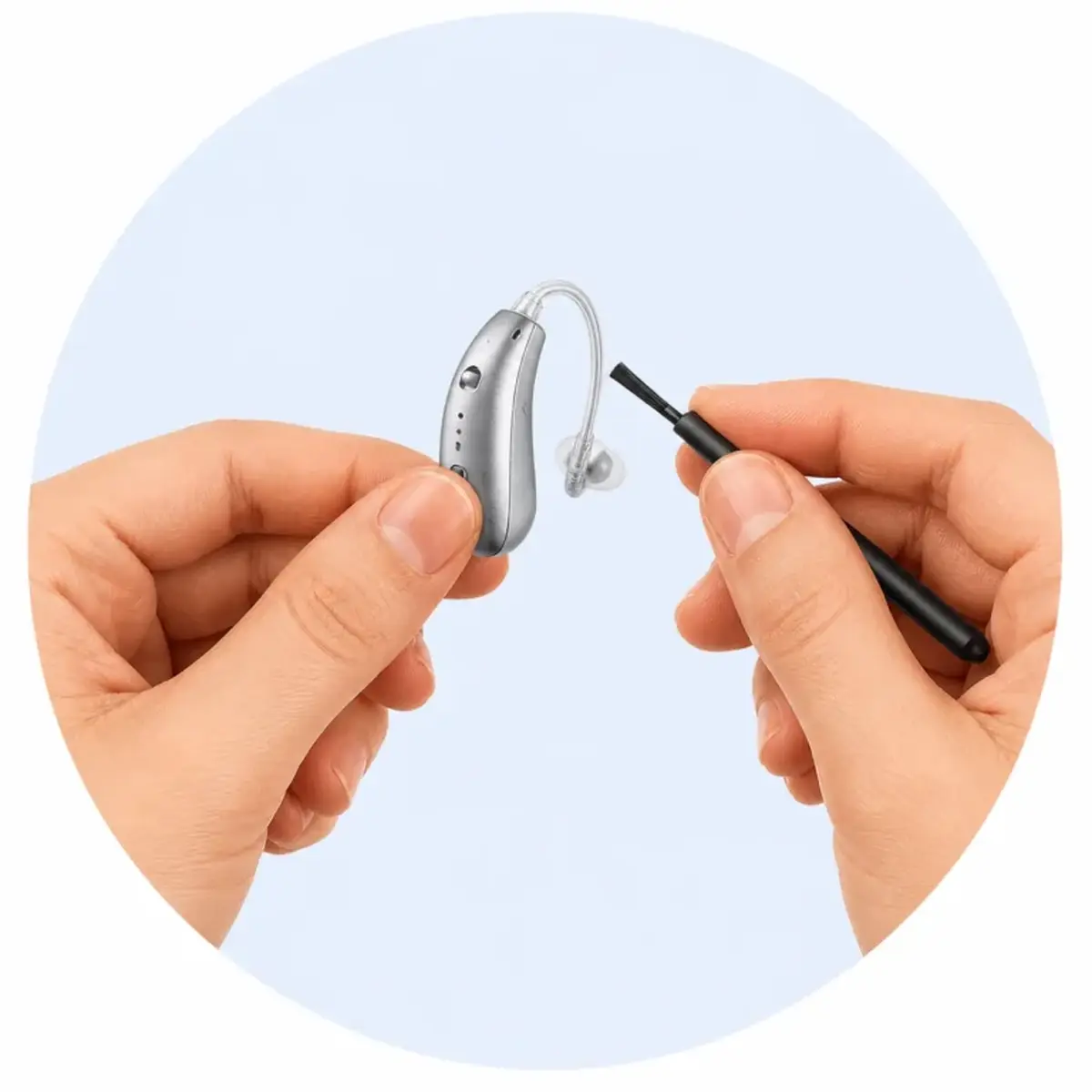
Then there are the consumables both brands share: replacement ear tips, wax guards, and cleaning tools. Budget roughly $30 to $60 a year. Not dramatic, but it belongs in the total. Our battery guide and cleaning guide keep these recurring costs as low as possible.
Finally, think about the upgrade path. Hearing aid technology improves every few years, and your hearing itself may change. A brand with a real support relationship, like MDHearing’s telehealth team, can re-tune your aids as your hearing shifts, extending their useful life. A $99 device you replace in three years and a $597 device you keep for five can end up costing nearly the same per year. Calculate cost per year of use, not just cost at checkout.
Frequently Asked Questions
Are both brands FDA registered?
Yes. Both sell FDA-registered OTC hearing aids for adults with mild to moderate hearing loss. You can learn how the category works on the FDA’s hearing aids page.
Can I use FSA or HSA money for either brand?
Yes. Both Audien and MDHearing accept FSA and HSA cards at checkout. Our guide to using FSA and HSA funds for hearing aids walks through the process.
Which is better for severe hearing loss?
Neither. Both brands target mild to moderate loss. Severe loss needs the power output and professional programming of prescription hearing aids fitted in person.
Do either offer financing?
Both offer payment plans at checkout. MDHearing’s higher prices make financing more relevant there. See our hearing aid financing comparison for the details.
Our Verdict
MDHearing wins this matchup for most buyers. The Volt Max 2’s app-based fitting, directional microphones, Bluetooth, professional support, and 60-day trial justify its $597 price several times over compared with the $99 Atom’s basic amplification. But Audien wins a different contest: nothing else touches $99 for a legitimate, rechargeable, FDA-registered hearing aid, and for mild loss with a tight budget, that matters more than any feature list. Match the brand to your hearing loss, your budget, and your comfort with technology, and you will choose correctly.