
It happens to nearly every hearing aid wearer sooner or later. You settle onto the couch after dinner, the news murmurs in the background, and your eyes get heavy. You wake up an hour later with your hearing aids still in, one of them whistling faintly against the cushion, and a sore spot blooming behind your ear.
Or maybe you have wondered about it deliberately. You live alone, and the thought of sleeping through the smoke alarm or the doorbell makes you uneasy. Would it really be so bad to just leave them in?
Short answer: most nights, it is a bad idea. Not because anything catastrophic happens the first time, but because small risks stack up night after night. Here is what can go wrong, what to do instead, and the one genuine exception.
The Short Answer: Take Them Out
Every major hearing care organization and just about every audiologist gives the same advice: remove your hearing aids before sleep. Guidance from groups like the National Institute on Deafness and Other Communication Disorders (NIDCD) consistently lands here too. Your ears need the overnight hours to breathe, and your devices need those hours to dry out and recharge. It is the simplest habit in hearing aid ownership, and it protects both your ears and an expensive piece of technology.
Think of it like contact lenses. You could technically sleep in some of them, but your eye doctor would rather you did not: the risks are the boring cumulative kind. Hearing aids work the same way.
What Can Go Wrong Overnight
The dreaded pillow whistle
Press a hearing aid against a pillow and you will likely hear it: a high-pitched whistle or squeal as sound leaks from the receiver, bounces off the pillow, and gets picked up by the microphone again. That loop is acoustic feedback, and lying on your side creates it almost on demand. If feedback plagues you during the day too, our guide to hearing aid whistling causes and fixes can help, but at night the fix is simply removing the cause.
Even back sleepers shift in the night, pressing an aid against bedding. Light sleepers wake up. Partners definitely wake up.
Discomfort and pressure sores
Hearing aids were designed for upright daytime wear, not eight hours sandwiched between your head and a mattress. Side sleepers wake with aching cartilage or a sore ear canal, and repeated pressure can cause skin irritation that makes the aids uncomfortable during the day too. A high price for a habit with no real benefit.
Wax buildup, moisture, and ear health
Wearing a device all night traps warmth and moisture against the skin, encouraging wax buildup and creating friendlier conditions for the bacteria behind outer ear infections. Night is also when ears do their natural self-cleaning, with wax gradually migrating outward, a process that works best unobstructed. If wax is already a battle, hearing aid wax guards help, but eight open hours help more.
Damage and loss
People toss in their sleep. Aids get dislodged, tangled in sheets, dropped on the floor, or in the worst case, hitch a ride into the washing machine via the pillowcase. Repairs for a crushed receiver or moisture-fried circuit board are not cheap, and “it fell out while I slept” is one of the most common loss stories providers hear.
Dead devices by morning
Leaving aids on all night burns battery for zero benefit. Disposables need more frequent changes (see how long hearing aid batteries last), and rechargeables wake up half-charged. Night is when your aids should be refueling, not working the graveyard shift. Still deciding on power type? Compare rechargeable vs disposable battery hearing aids.
A Better Bedtime Routine for Your Aids
Here is the good news: the alternative takes about two minutes and actually extends the life of your devices.
The two-minute nightly clean
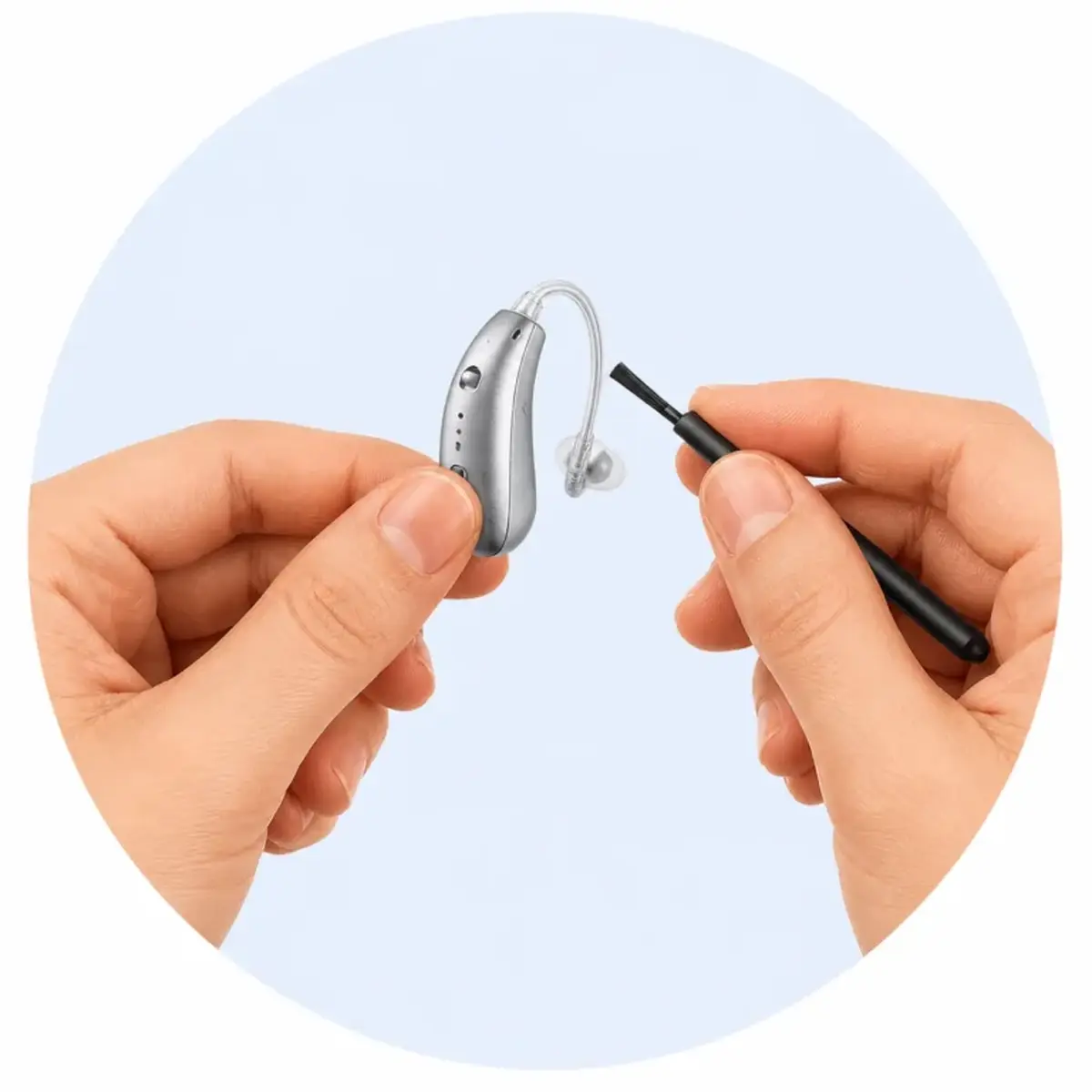
When the aids come out, wipe each with a dry cloth, then brush the microphone ports and receiver opening with the little brush from your kit, holding openings facing down so debris falls out. That is the whole routine. Our guide to how to clean hearing aids covers the weekly deeper clean, but the nightly wipe prevents most problems.
Dry them properly
Open the battery door on disposable-battery models: it stops the slow overnight drain and lets trapped moisture escape. Then park the aids in a drying case or inexpensive electronic dryer. These use gentle warmth or desiccant to pull moisture out overnight, and they are one of the best value purchases in hearing care.
Charge overnight
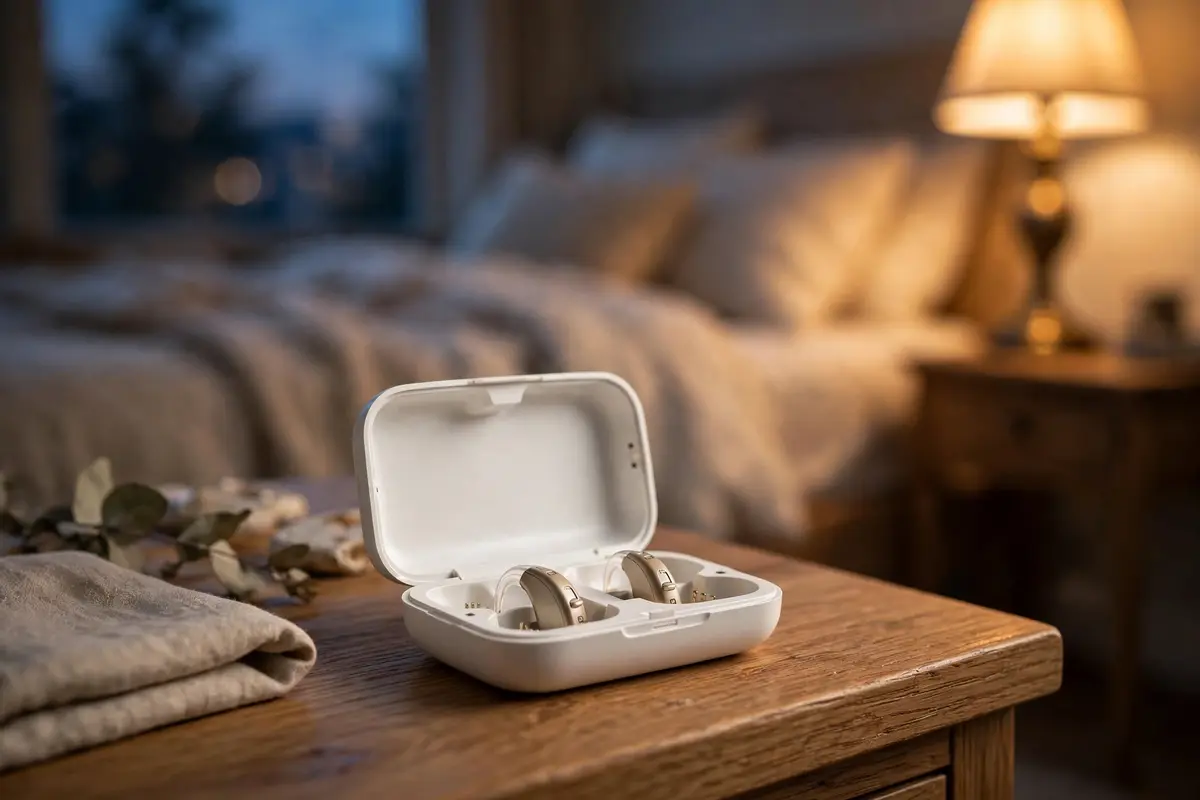
If your aids are rechargeable, bedtime is docking time. Drop them in the charger the way you plug in your phone. You will wake to a full day of power, every day, with no battery math required. Just keep the charger somewhere you will actually see it, like the nightstand, not buried in a drawer.
But What If You Need to Hear at Night?
This is the legitimate worry, and “just take them out” can feel dismissive if you live alone, have small children, or simply feel unsafe in silence. The answer is not to wear the aids to bed. It is to replace what the aids do at night with tools designed for sleeping.
Vibrating alarms and bed shakers
A bed shaker is a small vibrating disc that slides under your mattress or pillow and connects to an alarm clock. When the alarm goes off, the bed shakes you awake. They are inexpensive, reliable, and made exactly for people who cannot hear a standard alarm. Many deaf and hard-of-hearing people consider theirs non-negotiable, and honestly, even normal-hearing heavy sleepers swear by them.
Alerting systems for the important stuff
Beyond wake-up alarms, there are alerting systems for doorbells, smoke detectors, and even a baby crying. These typically use flashing lights, strong vibrations, or both. Some smoke alarms made for the hard of hearing combine an extra-loud tone with a strobe light and a bed shaker, which is arguably safer than relying on hearing aids you might sleep through anyway. If fire safety is your concern, check what your local fire department recommends; many areas have programs that provide specialized smoke alarms.
Your phone as a backup
Most smartphones have accessibility settings worth knowing about: flashing the camera LED for notifications, vibrating patterns for calls, and sound-recognition features that can notify you about doorbells, alarms, or a baby crying. They are not perfect, but paired with a bed shaker they cover the realistic nighttime scenarios well.
The One Exception
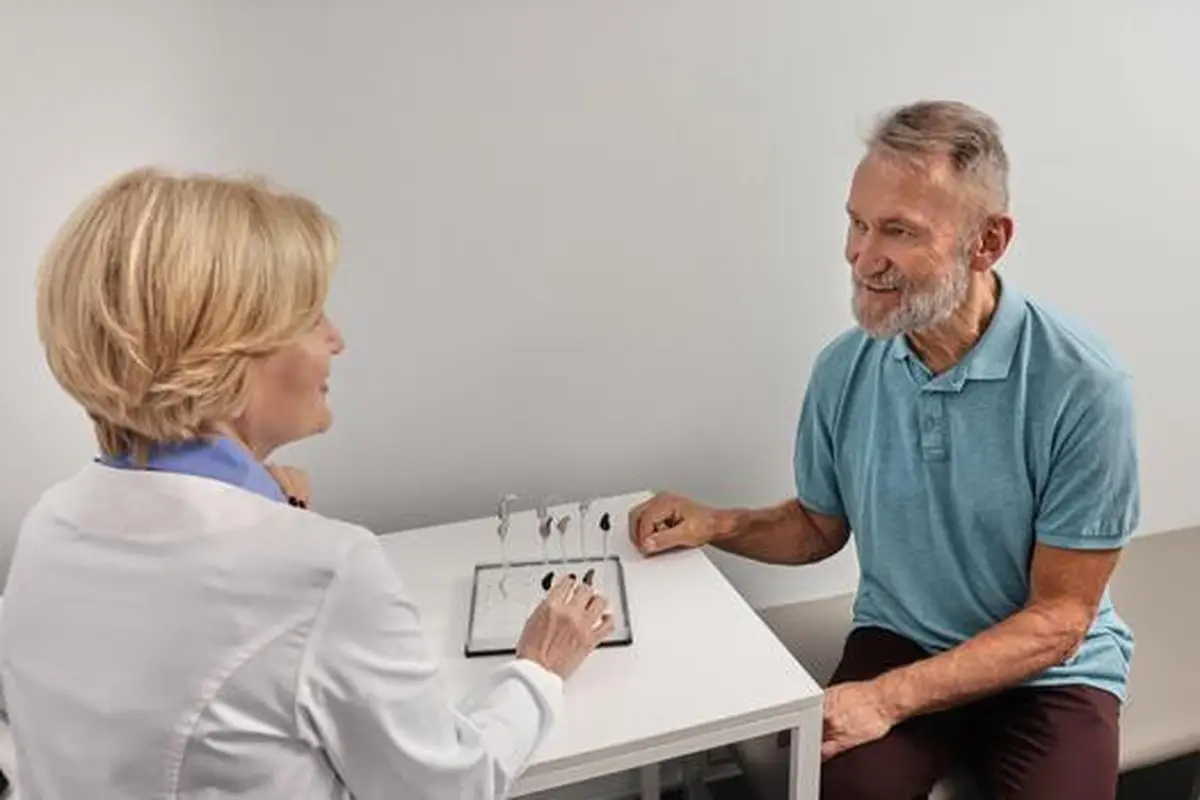
There is exactly one category designed to stay in around the clock: extended-wear devices like the Phonak Lyric, which a trained professional places deep in the ear canal. It stays in for months, through sleep, showers, and workouts, and only the provider removes and replaces it. These are prescription medical devices regulated by the FDA, not something you fit yourself. If never handling your aids appeals to you, ask your audiologist whether you are a candidate. It is a subscription-style service, and not right for every kind of loss, but it is the legitimate answer to “I want to hear while I sleep.”
You may also hear about people using a tinnitus masking program at night to fall asleep. Some clinicians do set up a soothing sound program for bedtime use, with the understanding that the aids come out once sleep arrives. That is a personal medical decision to make with your own provider, not a DIY experiment. If nighttime tinnitus is your issue, bring it up at your next appointment rather than improvising.
Frequently Asked Questions
I fell asleep with my hearing aids in once. Did I damage them?
Almost certainly not. Check they still sound normal, give them a quick clean, and put them in the dryer case. The risks are cumulative, from making it a habit, not from one accidental nap.
Can I wear my hearing aids for a short nap?
A short nap is lower risk than a full night, but the same annoyances apply on a smaller scale: possible feedback against the pillow and some discomfort if you are a side sleeper. Many people doze with them in occasionally and it is fine. If you nap daily, though, consider it part of your routine to pop them out first; your ears will appreciate the break.
Will sleeping with hearing aids cause an ear infection?
Not guaranteed, but the odds rise over time. Trapped moisture and wax create conditions where outer ear infections thrive. If you notice itching, soreness, discharge, or fullness that does not clear, take the aids out and see your doctor or audiologist before wearing them again.
My hearing aids are rechargeable. Is it bad to leave them in the charger all night?
No, that is exactly what the charger is for. Modern hearing aid chargers are designed for overnight use and stop pushing charge when the batteries are full. Nightly charging is the intended routine, and it is far better for the devices than running them down while you sleep.
What should I do if my hearing aid stopped working after a night in bed?
Check for wax blocking the receiver, confirm the battery is fresh or charged, and look for moisture. Our hearing aid troubleshooting guide has the full checklist. If it still will not cooperate, take it to your provider, and let that night be your nudge to start the bedtime routine.
The Bottom Line
Your hearing aids work hard all day. Night is their off shift, and your ears’. Taking them out before bed avoids the whistling, the sore ears, the wax trouble, and the slow drip of avoidable damage, while a two-minute routine of wiping, drying, and charging keeps them running for years. If the reason you want to sleep in them is safety, a bed shaker and a flashing smoke alarm will serve you better than a whistling aid under your pillow ever could. And if you truly want round-the-clock hearing, ask your audiologist about extended-wear options that were actually built for it. Your ears, and your devices, will thank you every morning.