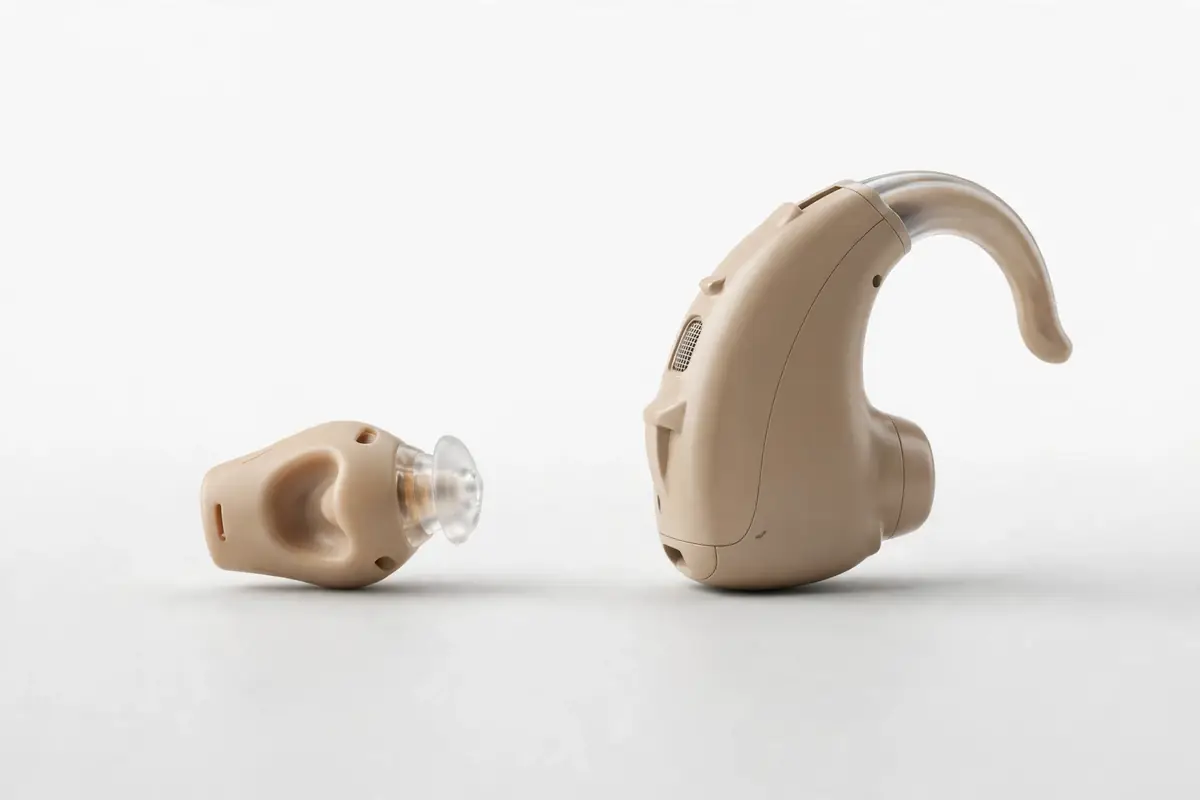

At the top of the OTC market, two philosophies compete for your money. Eargo bets everything on invisibility: hearing aids so small they disappear into your ear canal. Jabra Enhance bets on completeness: near-prescription sound, full Bluetooth streaming, and three years of professional audiology care bundled into the price. Both cost well over $1,500 a pair. Both are excellent at what they do. They just do very different things.
This comparison puts them head to head on design, sound, features, support, and value, so you can decide which premium is worth paying.
Price and Positioning
Eargo’s flagship Eargo 8 lists around $2,399 per pair, with the simpler Eargo SE around $1,699. Jabra Enhance Select ranges from $1,195 (50R) to $1,695 (300) to $1,995 (700). So Jabra’s top model costs less than Eargo’s flagship, and Jabra’s mid-range 300 costs about the same as Eargo’s budget SE.
That pricing tells you something important before we even get to features. Eargo charges a premium for miniaturization. Jabra charges for capability and care. Keep that framing in mind, because it explains nearly every difference below. For the full pricing context, see our 2026 hearing aid price breakdown.
Side-by-Side Spec Comparison
| Feature | Eargo 8 (~$2,399) | Jabra Enhance Select 300 ($1,695) |
|---|---|---|
| Style | Completely-in-canal (invisible) | Mini behind-the-ear |
| Battery | Rechargeable, ~16 hours; case holds 14 charges | Rechargeable, ~30 hours; case holds 3 charges |
| Bluetooth streaming | No | Yes, calls + media, hands-free on iPhone |
| App control | Yes (adjustments only) | Yes (full control + remote audiology) |
| Directional microphones | Limited by in-canal placement | Advanced, highly rated in noise |
| Professional care | Phone/app support | 3 years of licensed audiologist appointments |
| Trial period | 45 days | 100 days |
| Warranty | 2 years | 3 years + loss/damage coverage |
| Water resistance | IP68 | Standard (varies by model) |
Design: Invisible vs Discreet
Eargo wins the design category without contest. Its completely-in-canal devices sit deep in the ear canal and are effectively invisible in normal social interaction. For buyers whose main barrier to hearing aids is appearance, this is not a minor perk. It is the entire reason the product exists, and it works.
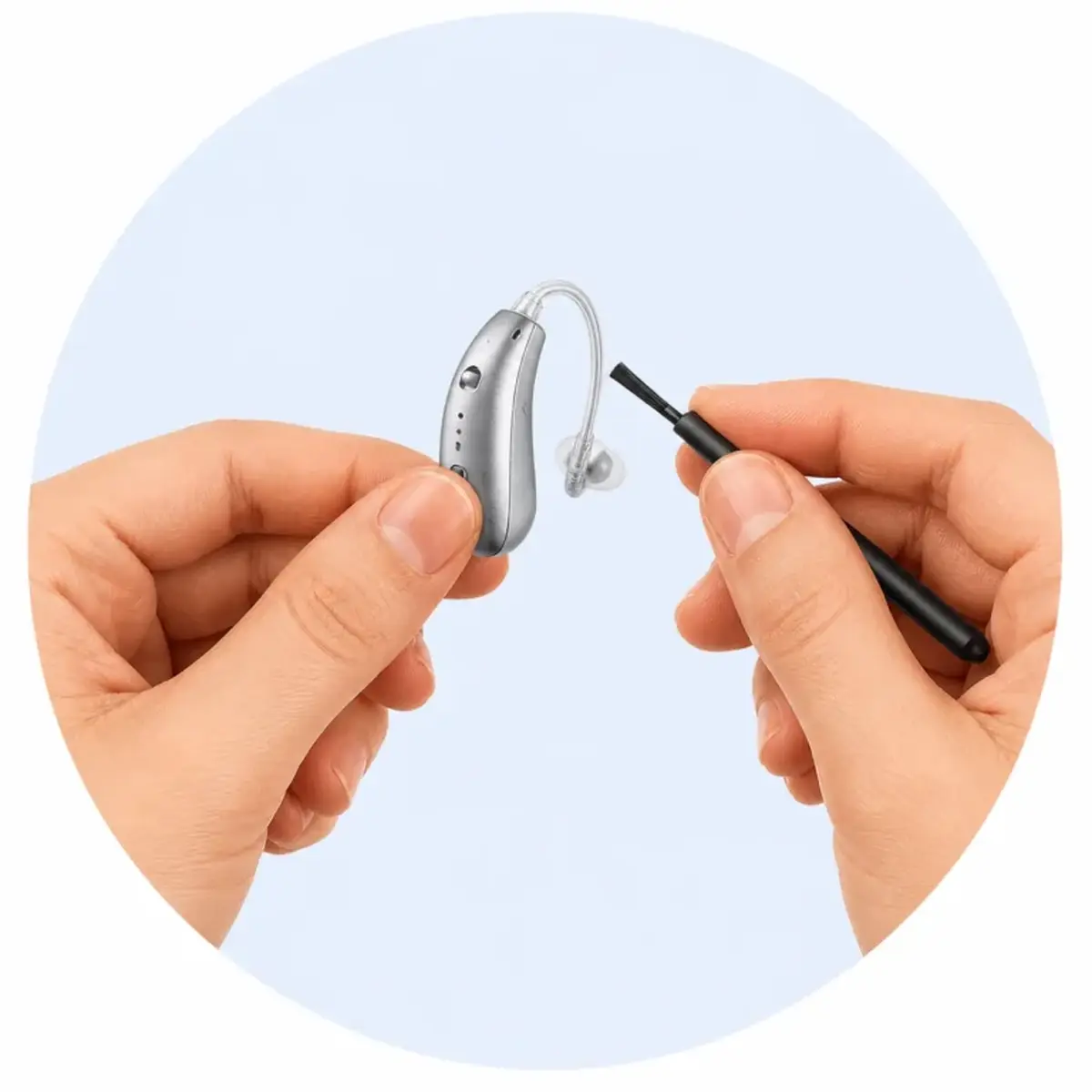
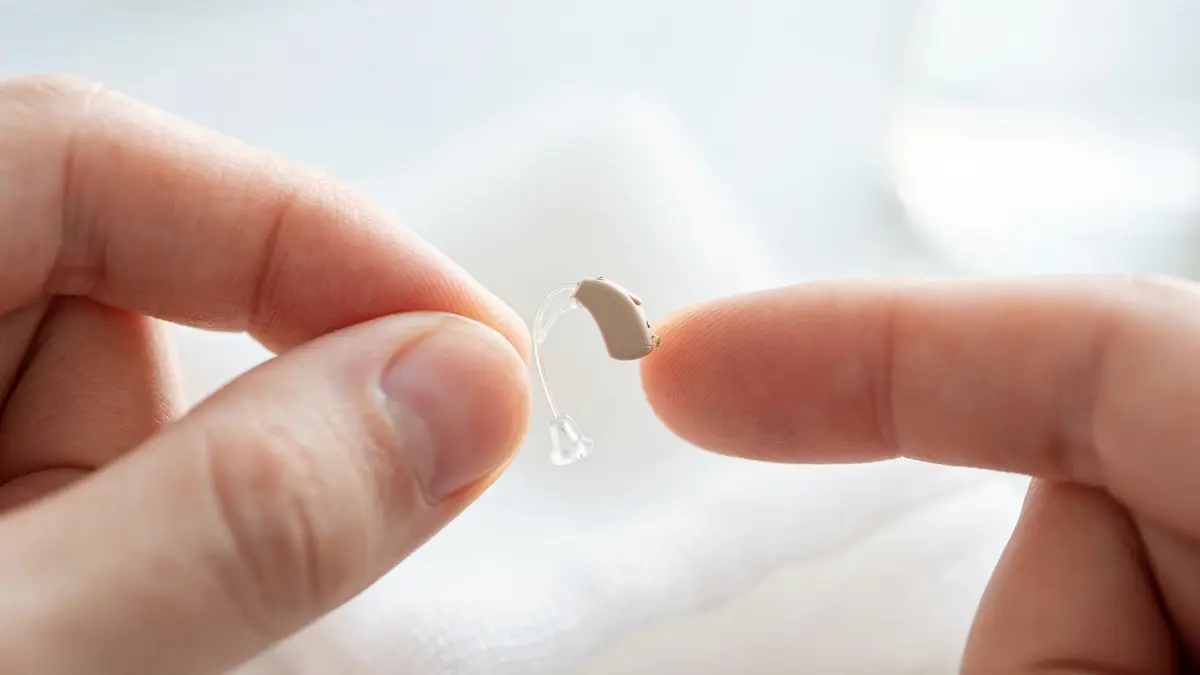
Jabra’s mini behind-the-ear design is discreet but not invisible. A small unit sits behind the ear with a thin wire leading into the canal. Most people will not notice it, but it is there if someone looks. The practical upside of the larger form factor is room for bigger microphones, a bigger battery, and a Bluetooth antenna, which is exactly why Jabra outperforms Eargo on nearly every technical measure.
This is the fundamental trade-off of the comparison, and it is worth stating plainly: physics favors Jabra’s form factor. An ear-level microphone hears the world the way your ear was designed to hear it. A microphone buried in the canal does not. No amount of software fully closes that gap.
Sound Quality
Independent lab testing favors Jabra decisively. The Eargo 8 earned a respectable B grade overall, with above-average speech-in-quiet performance but well-below-average speech in noise. The Jabra Enhance platform is consistently rated among the best-sounding OTC devices available, with strong noise management that reviewers describe as natural and effortless.
In real-world terms: in a quiet living room, both sound good. In a busy restaurant, a family gathering, or a windy parking lot, the Jabra pulls ahead clearly. If your hearing struggles happen mostly in noise, and for most people they do, the Jabra is the better hearing aid in the ways that count.
Eargo Strengths
- Effectively invisible design
- Excellent comfort, breathable tips
- IP68 water resistance
- Charging case holds 14 extra charges
- Good speech clarity in quiet
Eargo Weaknesses
- Weak speech-in-noise performance
- No Bluetooth streaming at all
- Highest price in the comparison
- Tricky insertion for dexterity issues
- Parent company wound down in July 2026; no support or warranty
Jabra Enhance Strengths
- Top-tier OTC sound quality
- Full Bluetooth streaming + hands-free calls
- 3 years of audiologist care included
- 100-day trial, 3-year warranty
- Lower price than Eargo 8
Jabra Weaknesses
- Visible behind-the-ear design
- Higher price than mid-range OTC
- Requires comfort with app and remote care
Support, Trial, and Warranty
Jabra dominates this category. Three years of remote audiology appointments, a 100-day trial, a 3-year warranty with loss and damage coverage, and financing from $39 a month. It is the most complete ownership package in the OTC market, and it is not close.
Eargo offers a 45-day trial, a 2-year warranty, and phone/app support. That was competitive a few years ago. Against Jabra’s bundle, and with questions around the parent company’s US operations, it feels thinner than the price suggests. Eargo is no longer available for purchase following its parent company’s July 2026 wind-down. We recommend the Jabra Enhance instead. Our individual reviews cover each brand in depth: Eargo review and Jabra Enhance Select review.
Who Should Choose Which
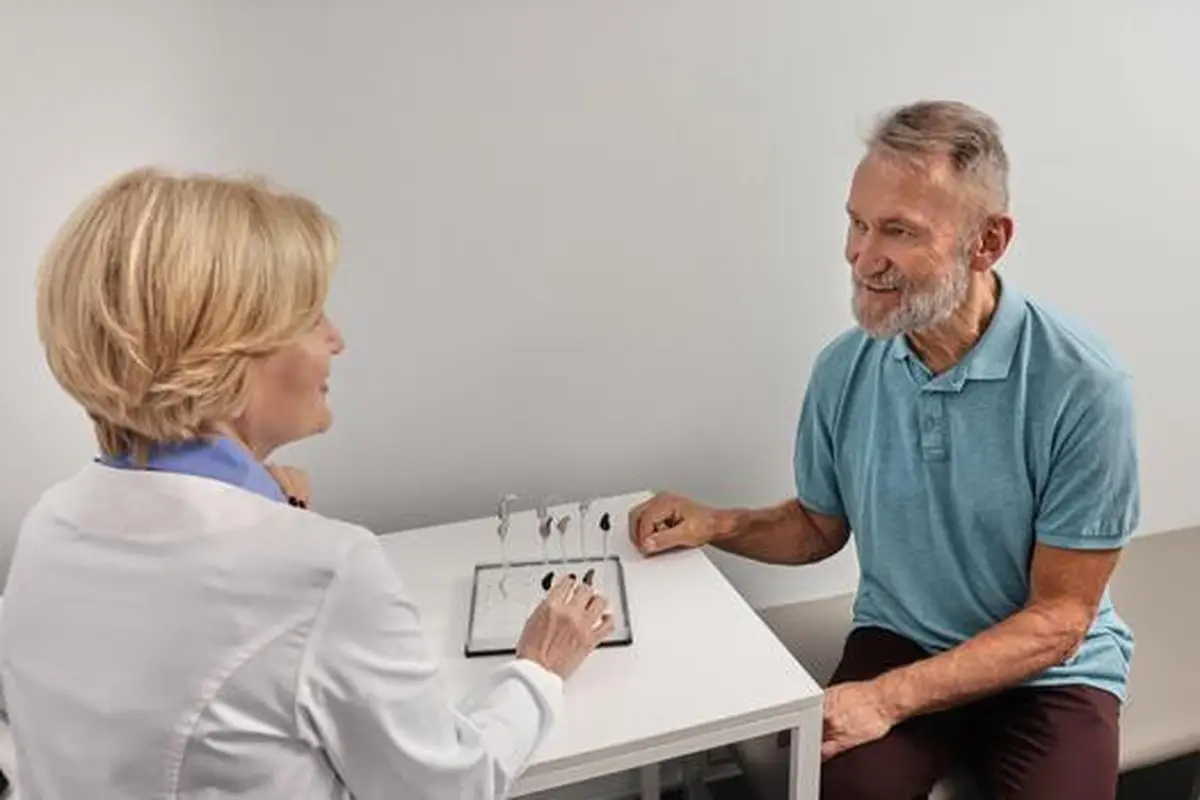
Choose Eargo if invisibility is your absolute top priority, your hearing loss is mild to moderate, your challenging listening happens in quieter settings, and you have verified current support terms. For the buyer who would otherwise wear nothing, Eargo’s discretion has genuine therapeutic value.
Choose Jabra Enhance if you want the best sound quality, need Bluetooth streaming and hands-free calling, want professional audiology care without clinic visits, spend time in noisy environments, or simply want more hearing aid for less money. For most buyers, most of the time, Jabra is the better purchase.
Choose neither and see an audiologist if your loss is severe, you have single-sided deafness, or you have medical ear issues. Our OTC vs prescription guide marks the boundary.
Total Cost of Ownership
The price tags tell only half the story. Over five years, a premium hearing aid accumulates secondary costs that differ meaningfully between these two brands.
Jabra’s 3-year warranty with loss and damage coverage is the standout here. Hearing aids are small, expensive, and easy to lose, and a single out-of-warranty replacement can cost several hundred dollars. Jabra’s included coverage effectively insures you through most of the device’s prime years. Add three years of free audiology appointments, worth hundreds at private rates, and the $1,695 price starts to look like a bundle rather than just hardware.
Eargo’s 2-year warranty is respectable but shorter, and its support story ended when parent company LXE Hearing entered an Assignment for the Benefit of Creditors in July 2026. Support and warranty claims were only guaranteed through September 15, 2026. Eargo is no longer a viable purchaseace of mind. Both devices use rechargeable batteries that will degrade over time, so factor in eventual battery service. And both qualify for FSA and HSA payment, which softens the blow considerably. See our FSA/HSA guide for how that works.
Which Is Easier to Live With Day to Day
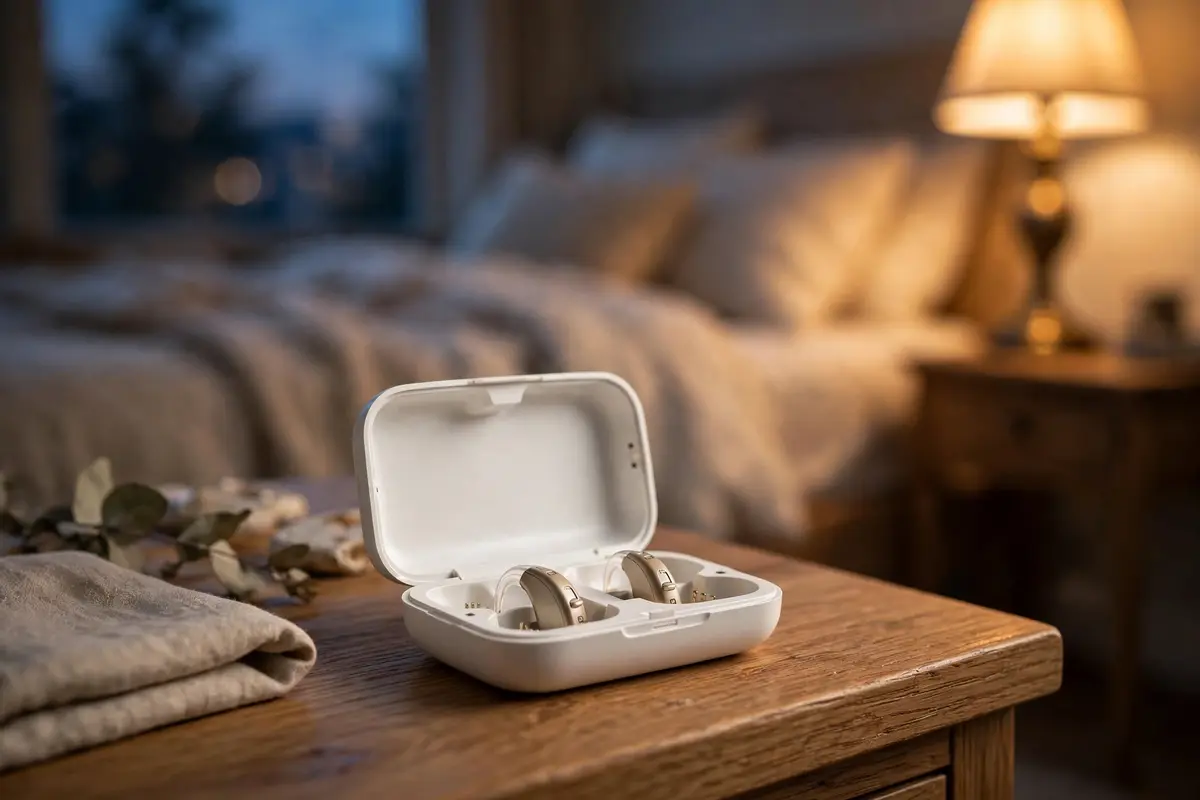
Beyond specs, consider the daily routine. Jabra’s aids are easier to insert, remove, and handle, with larger controls and a familiar behind-the-ear design. The 30-hour battery means you can occasionally skip a night of charging without consequence. Bluetooth streaming folds phone calls, video chats, and music into the same device, so you carry one less gadget.
Eargo demands more dexterity for less daily convenience: careful insertion deep into the canal, 16-hour battery life that requires disciplined nightly charging, and no streaming, which means keeping earbuds around for calls and music anyway. What it gives back is the freedom of forgetting you wear hearing aids at all. Owners consistently describe that psychological comfort as the reason they actually wear them every day, and the best hearing aid is the one you wear.
So the daily-living winner depends on your friction points. If tiny fiddly objects frustrate you, Jabra. If visible devices stop you from wearing aids at all, Eargo. Be honest with yourself about which friction is really yours.
Frequently Asked Questions
Which is better for severe hearing loss?
Neither is designed for severe loss. Both target mild to moderate hearing loss. Severe loss needs prescription devices with higher power output and in-person programming.
Can I stream phone calls with Eargo?
No. Eargo’s in-canal devices do not support Bluetooth audio streaming. Jabra Enhance supports call and media streaming, with hands-free calling on iPhone 12 and newer.
Which has the better trial period?
Jabra, by a wide margin: 100 days versus Eargo’s 45. A longer trial matters because adjusting to hearing aids takes weeks, and you want time to test them in your real life.
Are both FSA/HSA eligible?
Yes. Both brands accept FSA and HSA cards. See our FSA/HSA hearing aid guide for how to pay with pre-tax dollars.
Our Verdict
Jabra Enhance wins this comparison for the overwhelming majority of buyers. It sounds better, especially in noise, streams Bluetooth, includes three years of audiology care, offers a longer trial and warranty, and costs $700 less than the Eargo 8. Eargo’s invisibility is a genuine achievement, and for buyers who will not wear anything visible, it remains the answer. But as a hearing aid purchase judged on hearing, features, support, and value, Jabra Enhance is the clear choice.