
You have probably felt bone conduction without knowing it. Hum with your fingers in your ears and your voice sounds deeper and closer. That is vibration traveling through your skull straight to your inner ear, skipping the ear canal and middle ear. Bone conduction hearing aids are built on that shortcut, and for certain kinds of hearing loss they succeed where regular hearing aids cannot.
Most hearing aids work by making sound louder in your ear canal and letting your middle ear carry it inward, which assumes the outer and middle ear work properly. When they do not, because of chronic infections, a malformed ear canal, or a middle ear that never developed normally, extra volume just pushes more sound through a broken pathway. Bone conduction takes a different road. This guide explains how it works, who it genuinely helps, the four ways to wear one, and where its limits are. An audiologist and an ENT doctor should be part of the decision.
How Bone Conduction Actually Works
A bone conduction device has two main parts: a microphone that picks up sound and a transducer that turns it into vibration. The transducer sits against the skull, usually on the mastoid bone behind the ear, and the vibration travels through the bone directly to the cochlea. The cochlea does not care how the vibration arrived. It converts the movement into electrical signals for the auditory nerve the same way it always does.
Air conduction vs. bone conduction
Normal hearing is air conduction: sound waves travel down the ear canal, shake the eardrum, move the three tiny middle ear bones, and push fluid inside the cochlea. Bone conduction skips the first two steps. During a hearing test, your audiologist measures both pathways, and the gap between them tells the story. If bone conduction scores are much better than air conduction scores, your inner ear works fine and the problem sits in the outer or middle ear. If you have your test results, our guide on how to read your audiogram will help you see that gap.
Who Bone Conduction Hearing Aids Are For
Bone conduction is not for everyone. It serves specific situations where the outer or middle ear cannot do its job, or nothing can sit in the ear canal. Most hearing losses do fine with conventional aids; this technology serves the rest.
Conductive hearing loss
This is the classic case. Conductive loss means sound cannot get through the outer or middle ear efficiently, because of fluid, a perforated eardrum, otosclerosis, or damaged middle ear bones. The inner ear often works well. Bone conduction bypasses the blockage and delivers sound straight to the working cochlea. If your loss is conductive, understanding the main types of hearing loss will show you where yours fits and why a standard aid may have disappointed you.
Single-sided deafness
When one ear has little or no usable hearing and the other works well, a bone conduction processor worn on the deaf side sends vibration through the skull to the good cochlea, overcoming the head shadow effect. It works on the same principle as a CROS hearing aid system, just through vibration instead of a wireless signal. Our guide to the main styles of hearing aids covers how CROS compares if you are weighing the two.
Chronic ear infections and drainage
Some people cannot wear anything in the ear canal because of recurring infections, constant drainage, or skin conditions. A conventional hearing aid in that environment makes things worse: it traps moisture and irritates the canal. Bone conduction sits on the outside of the head and leaves the canal completely alone, which breaks that cycle. The National Institute on Deafness and Other Communication Disorders offers background reading on ear infections and hearing if you want to understand the underlying conditions.
Malformed or closed ear canals
Conditions like microtia and atresia, where the outer ear or ear canal did not fully develop, make conventional hearing aids physically impossible to fit. Bone conduction has been the standard answer here for decades and is often fitted in childhood. Parents facing this diagnosis should work with a pediatric audiologist and ENT, because timing matters a great deal for language development.
The Four Ways to Wear a Bone Conduction Device
All bone conduction devices do the same basic job. They differ in how the vibrating processor couples to your skull, which affects comfort, sound quality, cost, and whether surgery is involved.
Headband and softband
A band holds the processor against the head: no surgery, no commitment, and the standard way children are fitted before they are old enough for an implant. Downsides are pressure headaches and less efficient vibration transfer, since skin and hair sit between the processor and bone. Many adults use a band for the trial, then move on.
Adhesive adapters
Systems like the Med-El ADHEAR use a disposable adhesive pad behind the ear that the processor snaps onto. No surgery, no headband pressure, and the ear canal stays open. Pads last several days and need replacing, and efficiency sits between a headband and an implant.
Magnetic implants
A small magnet is implanted under the skin behind the ear, and the processor attaches magnetically through the skin. No open wound, no daily care of a site, and better vibration transfer than non-surgical options. The magnet strength needs balancing: too weak and the processor falls off, too strong and it causes soreness. Your surgical team tunes this after healing.
Abutment implants
The original approach, used in systems like the Cochlear Baha, places a small titanium post through the skin directly into the skull bone. The processor snaps onto the post, giving the most direct vibration path and the best sound transmission. The trade-off is a permanent skin site that needs daily cleaning. For people who need maximum performance, the abutment remains the benchmark other options are measured against.
Honest Limitations: What Bone Conduction Cannot Do
Bone conduction is not a better hearing aid. It is a different tool for different problems, and it has real limits you should know before getting excited.
First, it depends on a working cochlea. If your inner ear has significant sensorineural loss on top of the conductive problem, called mixed hearing loss, the device can only do so much. Vibration reaching a damaged cochlea still produces a damaged signal. Beyond a certain degree of inner ear loss, even the strongest processor cannot deliver enough vibration.
Second, sound quality is not identical to air conduction hearing. High-frequency detail can be softer, which matters for consonants in noise. For single-sided deafness, the same caveat as CROS applies: sound reaches the good ear, but you do not get true two-ear hearing.
Third, the practical annoyances are real. Headbands cause pressure. Adhesive pads are an ongoing cost and can irritate skin. Implants mean surgery, healing time, and for abutments, daily site care. None of this is a dealbreaker, but it should be part of an honest conversation with your provider rather than a surprise afterward.
Bone Conduction vs. Traditional Hearing Aids
The hearing test decides more than any preference. If bone conduction thresholds are normal or near-normal while air conduction shows a loss, your inner ear is fine and bone conduction is on the table. If both pathways show similar loss, the problem is sensorineural and conventional amplification is the answer.
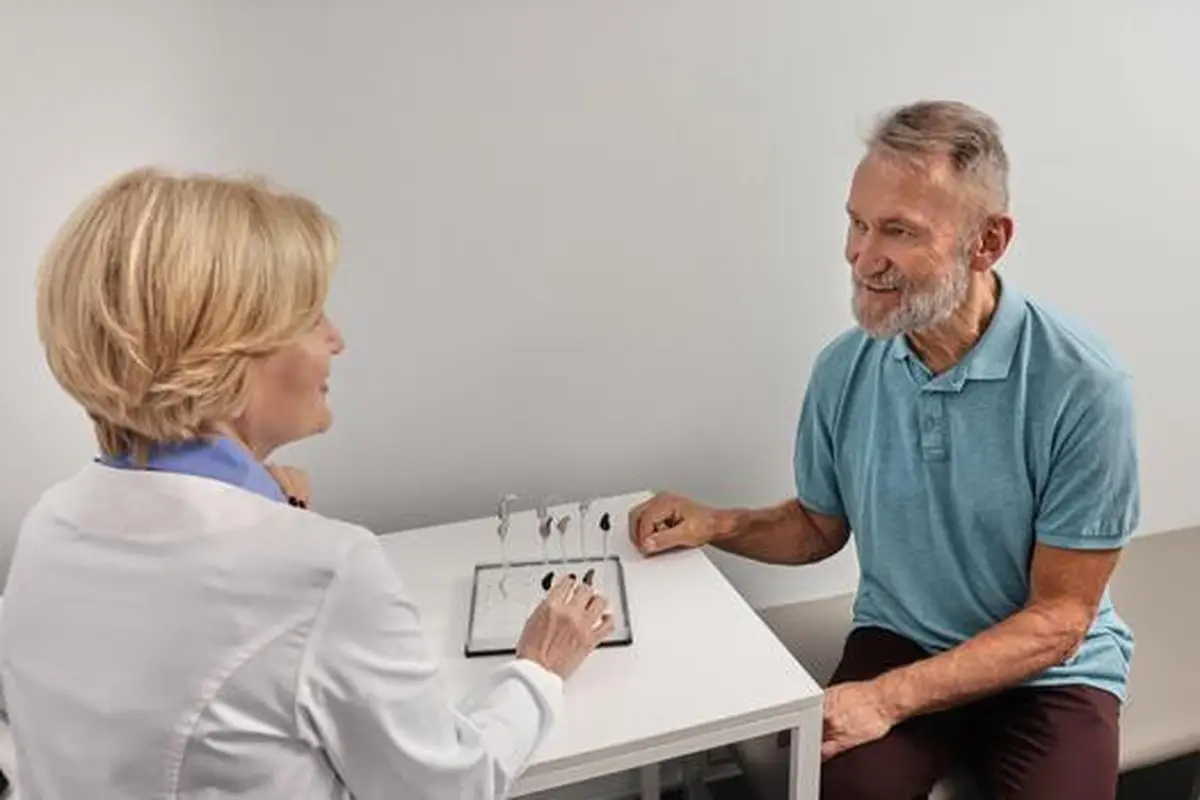
One practical note: fitting is a specialist job, and programming benefits from a provider who fits these systems regularly. If you are noticing signs you might need hearing aids and suspect conductive loss, look for a clinic with bone conduction experience. Ask how many they fit in a typical year.
Frequently Asked Questions
Do bone conduction hearing aids work for nerve-related hearing loss?
Only up to a point. They bypass the outer and middle ear but still rely on the cochlea and auditory nerve. With mild to moderate sensorineural loss on top of a conductive problem, a powerful processor can compensate. With severe sensorineural loss, it cannot.
Is the surgery for a bone-anchored implant painful?
Most patients describe a short outpatient procedure with soreness for a few days rather than serious pain. The implant then needs several weeks to integrate with the bone before the processor is attached. Your ENT surgeon will walk you through the specific technique they use, since procedures vary between abutment and magnetic systems.
Can children wear bone conduction devices?
Yes, and they often do. Softband systems are routinely fitted on infants and young children with conductive losses or ear malformations, keeping sound reaching the brain during the critical years for language development. Implants are usually placed once the skull is thick enough, with timing decided alongside a pediatric ENT.
Will a bone conduction device restore my hearing to normal?
No. It provides access to sound your ear was missing, often with natural sound quality, but it does not repair the underlying condition. Think of it as an excellent workaround rather than a cure.
Are bone conduction headphones the same thing?
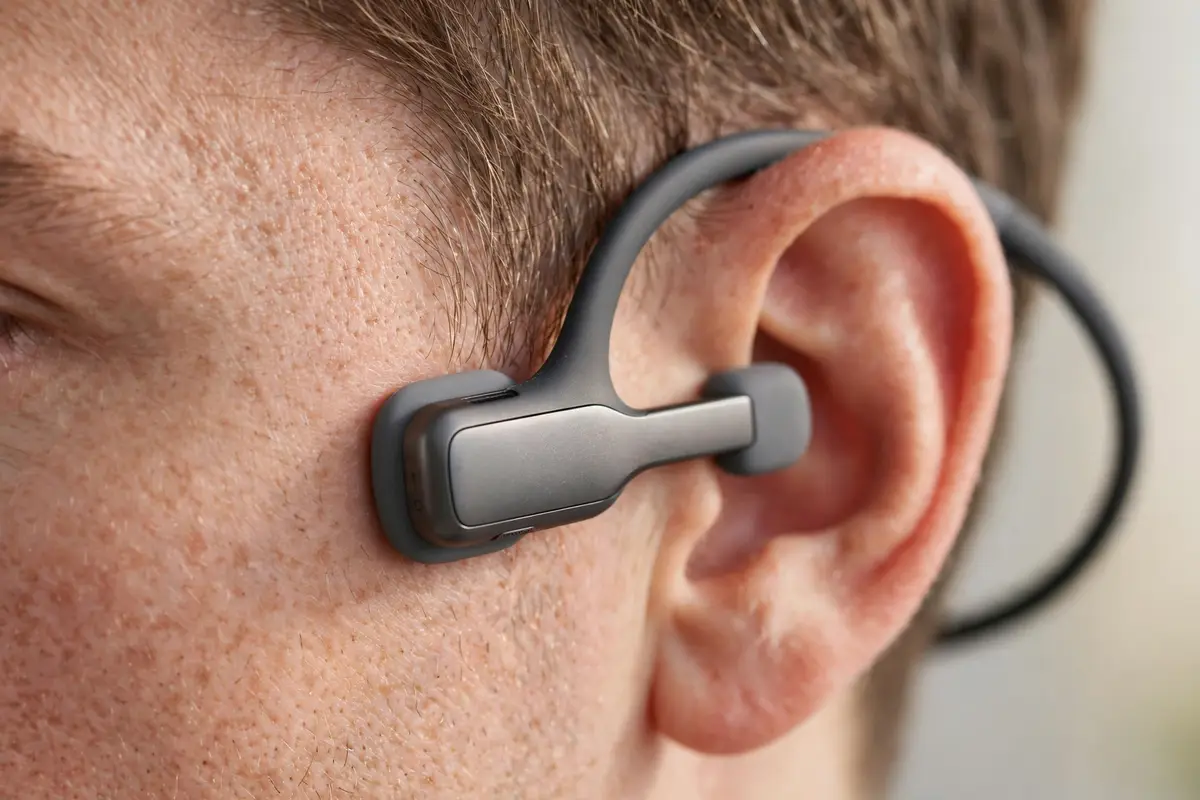
Not quite. Consumer bone conduction headphones use the same physics but are not medical devices: they are not programmed to your hearing loss and not fitted by an audiologist. They can be a fun accessory for normal hearing, but they are not a substitute for a prescribed system. Read more about the difference between proper devices and simple amplifiers in our guide to hearing aids versus personal sound amplifiers.
The Bottom Line
Bone conduction hearing aids are the right answer for specific problems: conductive hearing loss, single-sided deafness, chronic ear infections, and ear canals that cannot hold a conventional aid. They send vibration through the skull straight to a working inner ear, in forms ranging from a headband to a surgically implanted abutment. They cannot overcome a badly damaged cochlea, and they are not better than traditional aids in general. But when the outer or middle ear is the obstacle, skipping it entirely is the whole point. Start with a non-surgical trial before considering surgery, and find a provider who fits these systems regularly. Learn more at Cochlear, and bring your questions to an audiologist who can test both of your hearing pathways.