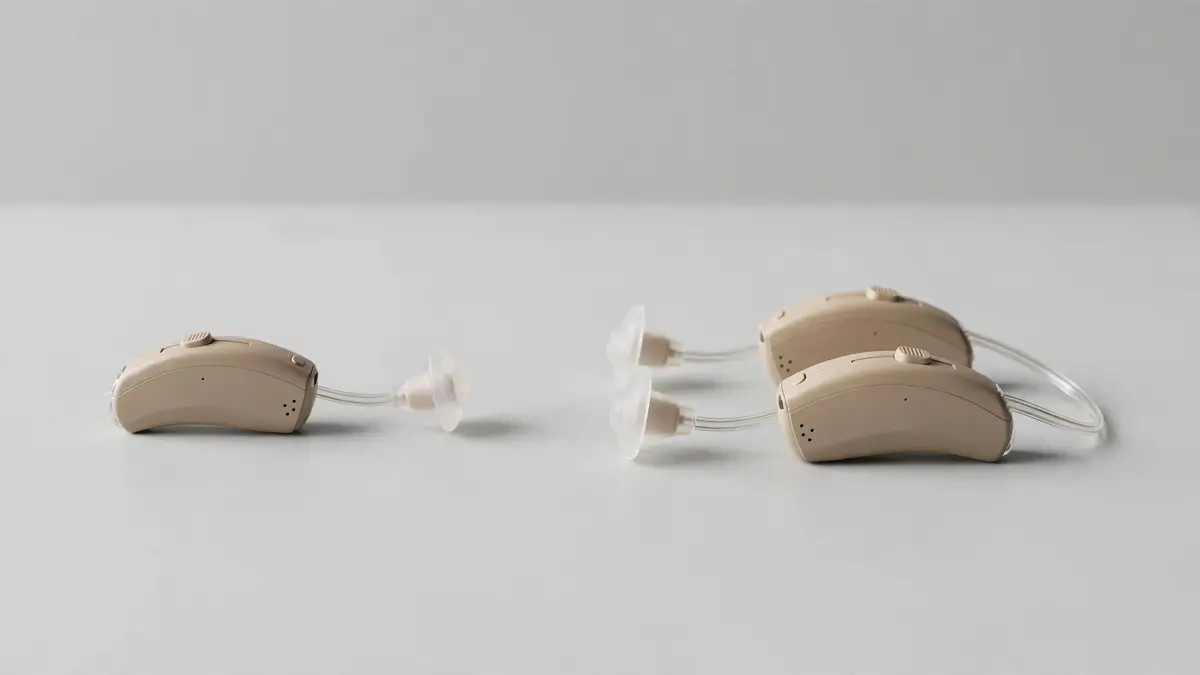

It is the question almost every buyer asks after seeing the price. If one hearing aid costs $2,500, do you really need two? Could you start with one and see how it goes?
Fair question. The honest answer: it depends on your hearing loss, but for most people the answer is two. Not because clinics want to sell more hardware, but because your brain is built to hear with two ears, and decades of research back that up. Still, there are real situations where a single aid is the right call. Let us walk through what two aids actually do for you, when one is enough, and how to think about the money.
What Your Brain Does With Two Ears
Hearing is not just volume. Your brain constantly compares the sound arriving at each ear. Tiny differences in timing and loudness tell you where sound comes from, help you focus on one voice in a noisy room, and make listening feel effortless. With only one aided ear, you lose most of that.
Sound localization
With two working ears you instantly know which direction a car horn came from. That instinct comes from your brain measuring the split-second delay between the sound hitting one ear and then the other. A single aid scrambles that comparison. Many single-aid wearers describe sounds feeling “flat” and find themselves turning their head to figure out who is talking in groups.
Speech in noise
The top complaint in hearing loss is understanding speech in background noise, and this is where two aids earn their keep. When both ears send clear signals, the brain separates the voice you want from the clatter you do not. Research consistently shows better speech understanding in noise with two aids than one, even with mild loss. If restaurants defeat you while home is fine, this is a big reason why. Our article on signs you need hearing aids helps sort normal aging from real loss.
Less volume needed, less fatigue
When both ears get amplified sound, the brain perceives it as louder than the same sound in one ear alone. This binaural summation means your provider can set each aid slightly lower while you hear just as well: less distortion, more comfort. There is also fatigue. Listening with one aided ear is work, and by evening you are drained in a way that is hard to explain. Two aids split the load, and many wearers who upgrade say the biggest surprise was feeling less tired, not just hearing better.
When a Single Hearing Aid Is the Right Choice
Two is the default, not a universal rule. Here is when one genuinely makes sense.
Single-sided hearing loss
If your test shows normal hearing in one ear and significant loss in the other, amplifying the good ear would be pointless. One aid, or sometimes a CROS system routing sound from the bad side to the good ear, is the standard recommendation. Your provider confirms this with your audiogram. If you have never had one explained, see our guide on how to read an audiogram.
A truly tight budget
One aid you actually wear beats two you cannot afford. If a pair would put you in debt or force you to skip the follow-up care that makes aids work, starting with one for your worse ear is reasonable. Just know you will likely struggle more in noise, and plan to add the second aid later rather than assuming one is permanently enough.
Before settling, check your options. Hearing aid financing plans can spread a pair across manageable monthly payments, and our rundown of 2026 hearing aid costs covers lower-cost alternatives you may have missed.
Medical reasons
Chronic ear infections, drainage, or recent surgery can make one ear temporarily unsuitable for an aid. These are medical calls, not preference calls. Your audiologist or ENT will tell you when waiting or going single-sided is the sensible path.
The Honest Cost Math
Two aids cost roughly twice what one costs. Be suspicious of any clinic that pretends otherwise. But the comparison that matters is not one versus two. It is the pair versus the cost of under-treating your hearing loss.
What a pair typically runs
Clinic-based prescription aids generally run $2,000 to $3,500 per aid, putting a pair at $4,000 to $7,000 before insurance or discounts. Our breakdown of average costs per pair shows where that money goes and what is negotiable.
Making a pair affordable
- Ask about technology tiers. A mid-level pair often beats a premium single aid in real-world noise, for less than one flagship device.
- Consider OTC options. For mild to moderate loss, compare OTC versus prescription aids. A quality OTC pair can cost less than one prescription device.
- Check your coverage. Some Medicare Advantage plans, VA benefits, and employer plans contribute toward pairs specifically.
- Time your purchase. New model releases push previous generations into discount territory.
The hidden cost of one
A single aid that leaves you struggling in noise often leads to buying the second one within a year or two anyway, sometimes at a higher per-aid price than the original pair discount. Clinics often discount pairs 10 to 20 percent versus two singles bought separately. Ask about pair pricing explicitly, and what adding the second aid later would cost versus buying the pair now.
What Your Type of Hearing Loss Tells You
Symmetrical loss: the classic pair case
Most age-related loss affects both ears fairly equally, which is the textbook case for two aids. Fitting only one ear when both need help also risks auditory deprivation: the unaided ear gradually gets worse at processing speech because the brain stops relying on it. The longer it goes without stimulation, the harder it is to bring back.
Asymmetrical loss: follow the test
When one ear is markedly worse, the answer is less automatic. Sometimes the worse ear benefits enormously. Sometimes its word recognition is so poor that amplifying it adds noise rather than clarity, and the recommendation is to aid only the better ear. Your provider should explain this using your actual test scores, not a sales script. Our overview of types of hearing loss explains the categories your audiogram might show.
For background on regulation and standards, the FDA’s hearing aid information at fda.gov is a solid starting point, and nidcd.nih.gov publishes plain-language explainers on hearing loss itself.
Frequently Asked Questions
Can I start with one aid and add a second later?
Yes. Just know the second aid later usually costs more than the pair discount upfront, and the unaided ear may need a longer adjustment after months without stimulation. Tell your provider your plan so they can fit accordingly.
Will one hearing aid damage my unaided ear?
No physical damage. The concern is auditory deprivation, where the unaided ear gets worse at processing speech because the brain stops using it. It is a use-it-or-lose-it effect on processing, and a strong argument for fitting both ears when both need help.
Do I need two aids if only one ear feels bad?
How ears “feel” is unreliable. Many people learn both ears show loss on a test even though only one seemed problematic. Get tested first, then decide from the results.
Are two OTC aids better than one prescription aid?
For mild to moderate symmetrical loss, a pair of well-reviewed OTC aids usually serves you better than one prescription aid, because you keep the binaural advantages. For severe loss or complex audiograms, a single properly fit prescription aid may still be the better clinical choice.
Do clinics push pairs just for sales?
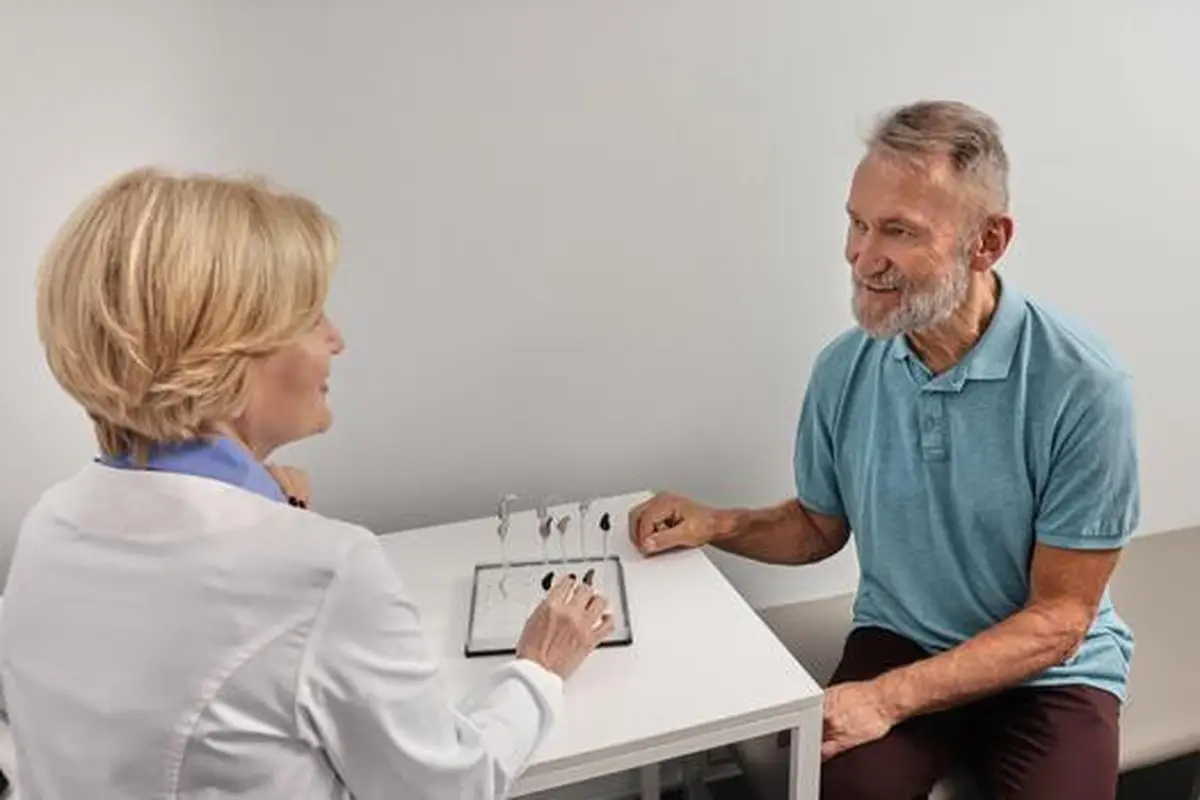
Skepticism is healthy, but the clinical evidence genuinely supports pairs for bilateral loss. A good provider should explain why two is better for your specific audiogram. If they cannot, get a second opinion.
The Bottom Line
For most people with loss in both ears, two hearing aids are worth it: better direction sense, clearer speech in noise, less listening effort, and protection for the unaided ear. The research here is consistent and decades deep. But single-sided loss, genuine budget limits, and medical constraints are all legitimate reasons to go with one. Decide from your hearing test and an honest look at your finances, not from sticker shock. And work with a provider who can explain the reasoning in plain language. That conversation tells you everything about whether you are in good hands.