
Most people get their eyes checked, their teeth cleaned, and their blood pressure measured on a schedule. Hearing rarely makes that list. It is easy to forget, because hearing loss usually arrives slowly, a little at a time, and the brain is good at filling in the gaps until the gaps get too wide. By the time conversations in a noisy restaurant feel impossible, the change has often been building for years.
That is why the question is not really whether you should get your hearing tested. It is how often, and what should make you go sooner than the schedule says. The answer depends on your age, your work, your family history, and whether you already wear hearing aids. This guide gives you the schedule that audiology groups actually recommend, explains why the recommendations differ between sources, and lists the signs that mean you should book a test now instead of waiting for your next routine check.
The Short Answer: How Often by Age
If you want one table to keep, this is it. These are routine intervals for healthy adults with no symptoms and no known hearing loss. The sections below explain the exceptions, because most people fall into at least one of them.
Adults 18 to 40: every 3 to 5 years for a full hearing test, or at least once every 10 years for a basic screening. The American Speech-Language-Hearing Association, known as ASHA, gives the 3 to 5 year figure for a full test in this age group, while its screening guidance is once a decade through age 50. A screening is a quick pass or fail check. A full test measures your hearing properly at each pitch and gives you an audiogram you can compare against later.
Adults 40 to 50: every 2 to 3 years. Hearing often starts to change in this decade, even when nothing feels wrong yet, and a test every couple of years catches the start of that change.
Adults 50 to 60: every 3 years at minimum, and every year if you work in noise, have a family history of hearing loss, or already notice difficulty in noisy places. ASHA recommends screening at 3 year intervals after age 50, and many clinics recommend a full test on the same schedule.
Adults 60 and older: once a year. Age related hearing loss, called presbycusis, becomes common after 60. About one in three people has it by age 65, and about one in two by age 75. Annual testing is the standard recommendation from age 60 onward, whether or not you have noticed symptoms.
Children: a newborn hearing screening in the first days of life, then yearly screenings at ages 4, 5, and 6, further screenings at ages 8 and 10, and at least three screenings during the teenage years. The American Academy of Pediatrics recommends this schedule because a child’s hearing can change as they grow, and undetected loss affects speech, language, and schoolwork.
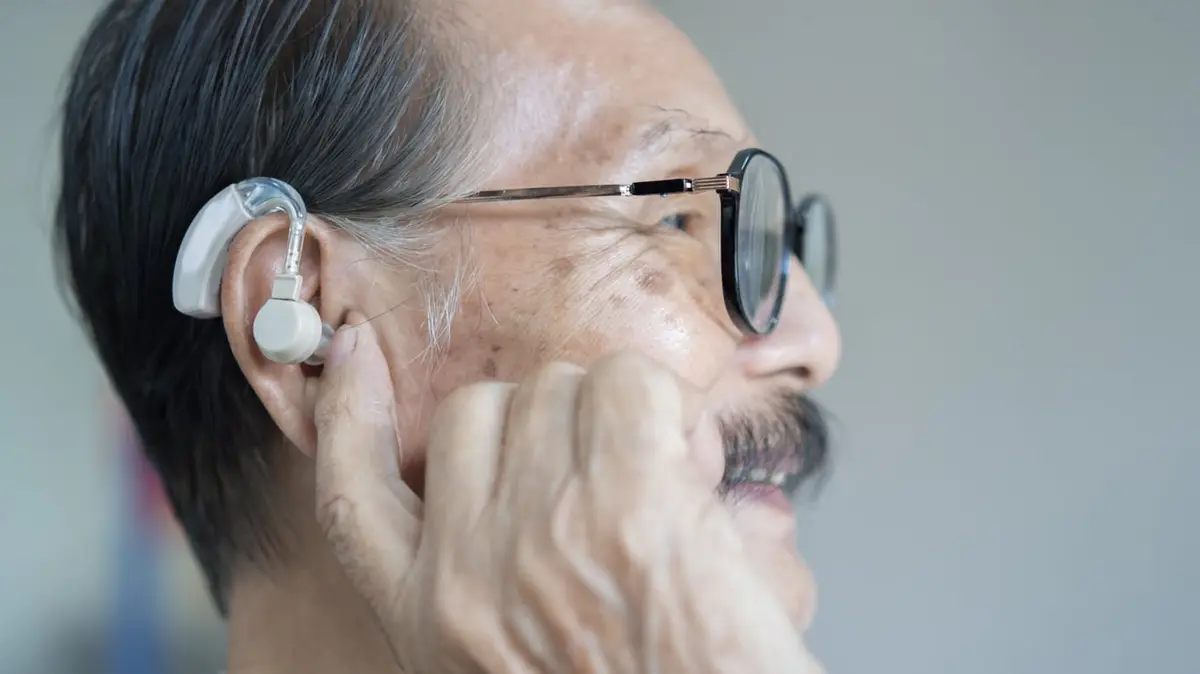
Anyone who wears hearing aids or has diagnosed hearing loss: once a year, at least. Your hearing can keep changing, and your hearing aids need reprogramming to match it. A yearly test also lets your audiologist check that the aids themselves are still working as they should.
Why a Baseline Test Matters More Than the Schedule
The first test you take as an adult is the most useful one you will ever have, even if the result is completely normal. That test is your baseline. Every test after it is compared against it, so a small change shows up clearly instead of hiding inside a vague feeling that things sound different than they used to.
Without a baseline, an audiologist can tell you where your hearing is today, but not how fast it is changing or when the change started. With one, a drop of 10 decibels at high pitches over three years is a fact, not a guess, and it is enough to act on. If you have never had a hearing test as an adult, book one now, whatever your age. After that, follow the schedule for your age group.
A baseline is also useful in a practical way. If you later need hearing aids, the fitting starts from your audiogram, and an older audiogram helps your audiologist see whether the loss is new, gradual, or sudden. Our guide to how to read an audiogram explains what those lines and symbols actually mean, so the result is not just a piece of paper you file away.
Adults Under 40: Every 3 to 5 Years, Unless Noise Is Part of Your Life
Healthy adults between 18 and 40 with no symptoms can go 3 to 5 years between full hearing tests. That is a long gap, and it is the reason many people in this age group never get tested at all. The gap is reasonable only if nothing in your life puts your hearing at risk, and for a lot of people, something does.
Noise is the main reason to test more often at this age. If you work in construction, manufacturing, agriculture, law enforcement, the military, or live music, or if you regularly go to concerts, ride a motorcycle, hunt, or listen to headphones at high volume for hours, test once a year. Noise induced hearing loss is almost as common as age related loss, and it is permanent. It also builds quietly. You do not feel it happening, and by the time you notice it, the damage is done.
OSHA, the US workplace safety agency, requires employers to run hearing conservation programs for workers exposed to noise at or above 85 decibels over an eight hour shift. If your job provides annual hearing tests, take them. They are not a formality. They are the one record that shows whether your hearing protection is actually working.
Other reasons to shorten the gap before 40 include frequent ear infections, a family history of early hearing loss, diabetes, and medicines known to affect hearing, called ototoxic medicines. If any of those apply, ask your audiologist for a schedule rather than relying on the general one. Every 1 to 3 years is a common recommendation in that situation.
Adults 40 to 60: The Years When Testing Starts to Pay Off
Between 40 and 50, test every 2 to 3 years. Between 50 and 60, test at least every 3 years, and every year if you have risk factors. The World Health Organization recommends screening every 5 years until age 65, then every 1 to 3 years after that, which is a more relaxed schedule than the ASHA based one. The difference comes down to screening versus a full test, and to how early you want to catch a change.
A screening is quick and cheap, and it answers one question: is your hearing normal right now, or does it need a closer look? A full test answers more: how much loss, at which pitches, in which ear, and whether it is the kind that hearing aids can help. If you are over 50, a full test every 3 years is a better use of your time than a screening every 5, because the result gives you a proper baseline for the years when loss accelerates.
This is also the age when many people first notice the classic early signs. You hear people, but you do not always understand them, especially women and children, whose voices are higher pitched. You ask people to repeat themselves in restaurants. You turn the television up a little more each year. You find group conversations tiring, not because you are tired, but because following them takes effort. If any of that sounds familiar, do not wait for the next date on the schedule. Our guide to the signs you need hearing aids lists the full set, and most of them are worth a test on their own.
Adults Over 60: Test Every Year
After 60, the recommendation is simple: a hearing test once a year, every year, whether or not you have noticed a problem. Presbycusis is gradual, and gradual loss is the hardest kind to notice in yourself. Family members often spot it first. They notice the television volume, the repeated questions, and the way you withdraw from group conversations before you do.
Annual testing after 60 also matters because hearing loss at this age is linked to more than hearing. Untreated loss is associated with social isolation, depression, and a higher risk of cognitive decline. Catching it early does not just mean hearing better. It means staying connected to the people around you, which is the part of hearing that matters most.
If you already wear hearing aids, the yearly test is even more important. Hearing aids are programmed to your audiogram. If your hearing changes and the programming does not, the aids slowly stop matching your ears. You may blame the aids, or your own hearing, when the real problem is that nobody has retested you since the fitting. A yearly test, plus a clean and check every 4 to 6 months, keeps the aids working the way they were meant to. Our guide to what happens at a hearing aid fitting explains what the first appointment covers and what the follow up visits are for.
Children and Teenagers: Test on Schedule, and Sooner If School Flags It
Children need hearing tests more often than adults, because their hearing is still developing and because even a mild loss can slow speech and learning. The American Academy of Pediatrics recommends a newborn screening within the first day or two of life, yearly screenings at ages 4, 5, and 6, screenings at ages 8 and 10, and at least three screenings between ages 11 and 21.
Parents should also watch for the signs teachers often spot first: a child who does not respond when called from another room, who watches faces closely to follow a conversation, who speaks loudly or in a flat tone, who struggles at school, or who asks for things to be repeated. Ear infections are common in childhood, and repeated infections can affect hearing, so a test after a run of infections is sensible even if the next scheduled screening is months away.
Teenagers deserve a mention of their own. Earbuds and headphones at high volume are now a normal part of teenage life, and noise induced loss in teenagers is rising. If your teenager listens at full volume for hours, or goes to concerts without ear protection, a baseline test in the teenage years is worth doing, and an online screening between clinic visits can be a useful check. Our guide to free online hearing tests covers which ones are worth your time and which ones are not, and it is clear about their limits: they screen, they do not diagnose.
When to Get Tested Sooner Than the Schedule Says
A schedule is for routine care. Some symptoms override it completely. Book a test right away, within days, if you notice any of these:
Sudden hearing loss in one ear. If your hearing drops noticeably over hours or a few days, especially in one ear, treat it as urgent. Sudden sensorineural hearing loss is defined as a loss of at least 30 decibels across three connected pitches within 72 hours, and treatment works best when it starts within that window. Do not wait to see if it clears on its own, and do not assume it is earwax. Seek same day medical care from an ENT doctor, an audiologist, or urgent care. Our guide to sudden hearing loss causes and treatment explains what happens next and why the timing matters.
Ringing in one ear that does not stop. Tinnitus in both ears after a loud concert usually fades. Ringing in one ear that persists for days, especially with hearing loss on the same side, needs a test.
Dizziness or vertigo with a hearing change. Hearing and balance share the inner ear. A new hearing change with spinning dizziness needs prompt medical attention.
Ear pain, discharge, or a feeling of fullness that does not clear. These can point to infection or fluid behind the eardrum, which a hearing test and an ear examination can sort out. They are also the kinds of problems an online test cannot detect at all.
A noticeable change after a loud event. A concert, a gunshot, a firework, or a workplace accident that leaves your ears ringing or your hearing muffled for more than a day deserves a test, even if your last routine test was recent.
Your hearing aids stop helping the way they used to. This is often a hearing change, not a device failure. Book a retest before you buy new aids.
Screening, Online Test, or Full Hearing Test: Which One Counts?
Not every hearing check is the same, and the schedule above means different things for each type. A screening, whether it is done in a clinic, at a health fair, or online, is a quick pass or fail check. It can flag a problem. It cannot measure it, diagnose its cause, or fit a hearing aid.
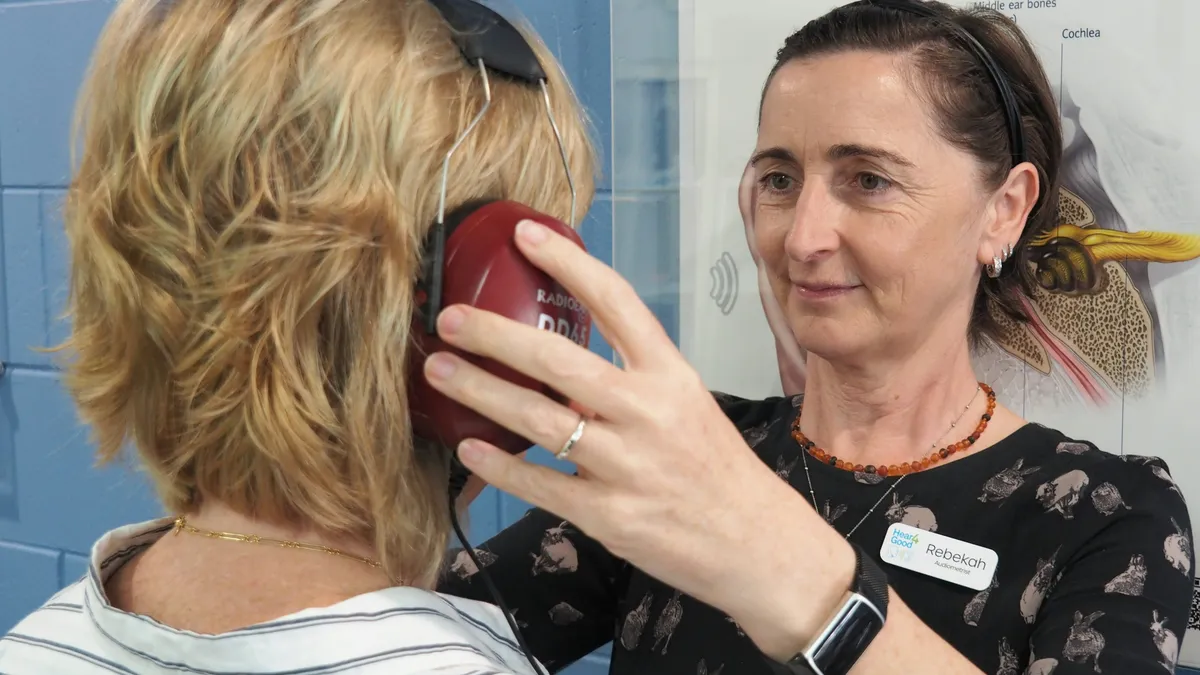
A full hearing test, done by an audiologist or a hearing care professional, usually takes 30 to 60 minutes. It includes a look inside your ears, pure tone testing through headphones, bone conduction testing that bypasses the outer ear, speech testing to see how well you understand words, and sometimes tympanometry, which checks how your eardrum moves. The result is an audiogram, a graph of the softest sounds you can hear at each pitch, for each ear.
An online test sits between the two. It is more convenient than a clinic visit and more informative than guessing, but it measures only air conduction, it cannot look inside your ear, and it cannot test bone conduction. Use it as a prompt, not a verdict. If it flags a problem, or if you already have symptoms, book a full test. If it says your hearing is fine and you have no symptoms, it is a reasonable check between routine clinic visits, but it does not reset your schedule.
How to Keep Track Without Thinking About It
The hardest part of a hearing test schedule is remembering it. A few simple habits fix that.
First, keep your last audiogram somewhere you can find it, with the date written on it. A photo on your phone works. Second, tie the next test to something you already do every year, like a birthday, a dental check, or an annual physical, and ask your doctor to add hearing to the list. Third, if you wear hearing aids, let your audiologist set the recall. Most clinics will remind you when a year has passed, and a clean and check every 4 to 6 months gives you a natural reason to be in the clinic anyway.
If cost is the barrier, check before you assume a test is expensive. Many clinics offer free screenings, and some offer a free full test as part of a hearing aid consultation. A screening that flags a problem is still useful, because it gives you a reason to book the full test. And if you are considering hearing aids, the trial period and return policy matter as much as the test itself. Our guides to hearing aid trial periods and hearing aid return policies explain both, so you know what you are agreeing to before you buy.
Frequently Asked Questions
How often should I get my hearing tested if I have no symptoms?
Every 3 to 5 years between ages 18 and 40, every 2 to 3 years between 40 and 50, at least every 3 years between 50 and 60, and once a year from age 60 onward. Those are the routine intervals for healthy adults with no symptoms. Noise exposure, family history, diabetes, and ear infections all shorten the gap.
Does an online hearing test count as my regular test?
No. An online test is a screening. It can flag a possible problem and it is a useful check between clinic visits, but it cannot diagnose hearing loss, measure bone conduction, or look inside your ear. It does not replace a full test on the schedule above, and a flagged result means you should book a full test.
How often should hearing aid wearers get tested?
At least once a year, with a clean and check of the hearing aids every 4 to 6 months. Your hearing can keep changing after a fitting, and your aids need reprogramming to match. If the aids stop helping the way they used to, book a retest sooner rather than waiting for the annual visit.
What if I have never had a hearing test as an adult?
Book one now, whatever your age. That first test becomes your baseline, and every test after it is compared against it. Without a baseline, small changes are much harder to spot, and you lose the most useful part of regular testing.
Is a hearing test covered by insurance or Medicare?
It depends on your plan and your country. In the United States, Medicare Part B covers a diagnostic hearing test when a doctor orders it for a medical reason, but it does not cover routine hearing exams or hearing aids themselves. Many private plans and Medicare Advantage plans do cover routine tests, so check your plan before you book. If you are choosing between prescription and over the counter aids, our comparison of OTC versus prescription hearing aids explains where a test fits into each route.
External sources: TriHealth, how often should I have my hearing tested, Fort HealthCare, how often should I get my hearing tested, American Academy of Pediatrics via HealthyChildren, hearing screening for newborns, children and adolescents, UCSF Audiology, sudden hearing loss, Waterville Audiology, World Health Organization screening recommendations, Bay Audiology, routine hearing and hearing aid check ups.