
Hearing aids are expensive, the technology is confusing, and the buyers are often older adults. That combination makes this industry a magnet for scammers. Every year, seniors lose money to fake discounts, miracle-cure claims, and high-pressure sellers pushing devices that are worthless or wildly overpriced.
The good news: hearing aid scams follow predictable patterns. Once you know the eight red flags below, you will spot them instantly, whether they show up in a Facebook ad, a phone call, or a strip-mall storefront. This guide also covers how legitimate sellers behave, so you know what “normal” looks like.
Red Flag 1: Miracle Cure Claims
“Restore your hearing to age 20!” “Doctors hate this trick!” “Cure your hearing loss naturally!” Any product claiming to cure hearing loss, restore perfect hearing, or work better than prescription devices for a tenth of the price is lying. Sensorineural hearing loss, the common age-related kind, cannot be reversed by any device, supplement, or ear drop. Legitimate hearing aids help you hear better. They do not cure anything. Our hearing loss types guide explains what is and is not treatable.
Red Flag 2: Extreme Time Pressure
“This price is only good today.” “We have one pair left at this discount.” “The government program ends Friday.” Legitimate hearing healthcare does not work on flash-sale logic. A provider who will not let you sleep on a multi-thousand-dollar medical decision is not offering you a deal; they are preventing you from thinking. Real trial periods run 30 days or more. Real quotes stay valid while you get a second opinion. If someone needs your signature today, the answer is no.
Red Flag 3: Prices That Make No Sense
Scams work in both directions. On one end: “$49 hearing aids, just as good as $4,000 ones!” Those are almost always simple amplifiers, not hearing aids, marked up from a few dollars of manufacturing cost. On the other end: inflated “regular prices” with dramatic discounts, like “$8,000 aids now $3,999, today only!” Real 2026 pricing is well documented in our cost breakdown. If a price is wildly outside those ranges in either direction, be suspicious.
Red Flag 4: No Hearing Test, No Problem
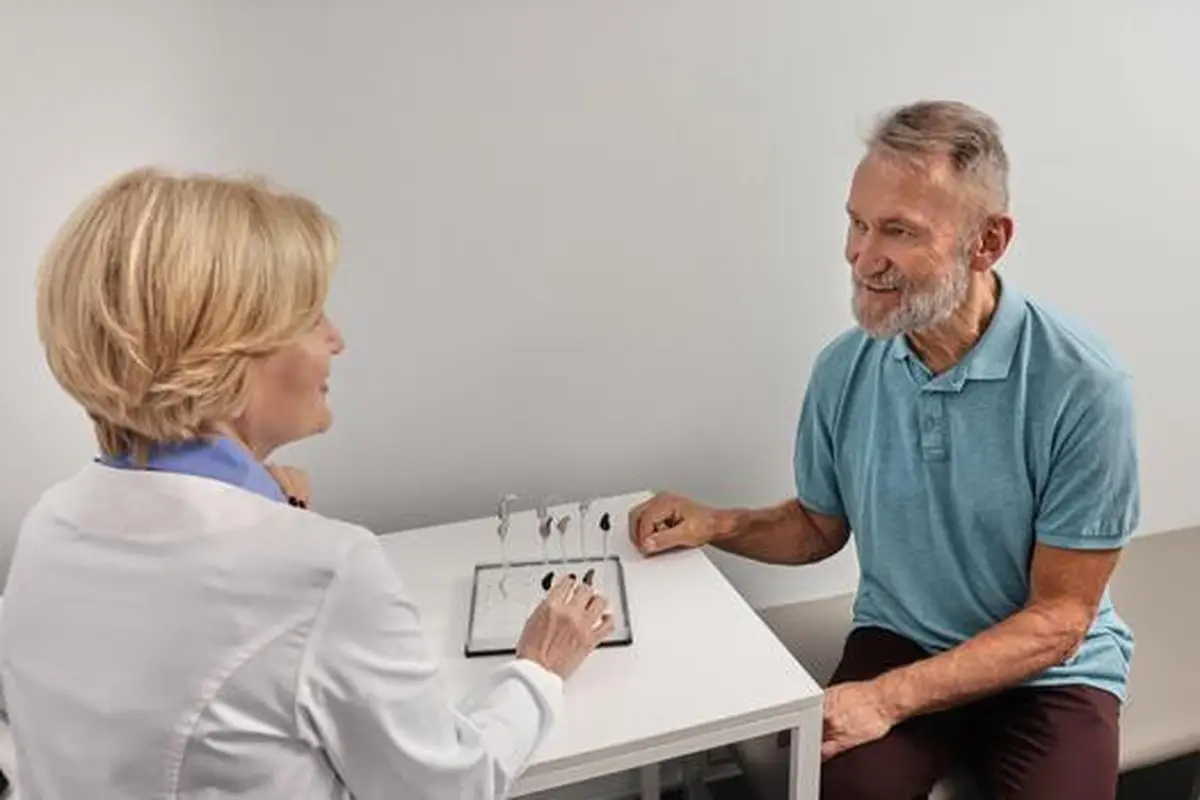
A legitimate prescription hearing aid fitting starts with a hearing test. Always. Any seller willing to program expensive devices for you without testing your hearing first is either selling you generic amplifiers at hearing aid prices or simply does not care whether the devices match your loss. (OTC hearing aids are the exception: they are designed for self-fitting without a test, but honest OTC sellers say so upfront and stay within the mild-to-moderate range. See our OTC vs prescription guide.)
Red Flag 5: Vague About What You Are Actually Buying
Ask for the brand, the exact model name, and the technology tier, and watch the reaction. Scam sellers dodge specifics because specifics can be looked up. They sell “digital hearing aids” or “the latest German technology” without ever naming a product you could research. Every legitimate device has a model name, published specifications, and reviews you can find independently. If you cannot Google what they are selling, do not buy it.
Red Flag 6: No Written Trial Period or Return Policy
This is the structural protection every buyer needs, and scammers hate it. A real provider offers at least a 30-day trial with a clear, written return policy. Scam operations use “all sales final,” restocking fees that eat most of the refund, or verbal promises that evaporate when you try to return. Before paying anything, get the trial terms in writing and read them. Our 15 questions to ask includes exactly how to pin this down.
Red Flag 7: Unsolicited Contact and Robocalls
Legitimate audiology practices do not cold-call seniors or blast robocalls about “free hearing aids from a government program.” These calls are a classic lead-generation scam: they harvest your information, schedule you with a high-pressure seller, or simply steal your Medicare number. The FTC’s consumer advice at ftc.gov covers robocall scams extensively. Rule of thumb: if they called you out of the blue about hearing aids, assume the worst until proven otherwise.
Red Flag 8: “Free” Hearing Aids With Hidden Strings
Genuinely free hearing aids exist through real programs: the VA for veterans, some state Medicaid programs, and charities like Lions Clubs. Our free hearing aids guide lists legitimate ones. But “free” in a sales pitch usually means something else: free with the purchase of an overpriced service plan, free trial that converts to a charge, or free aids that require a multi-year battery subscription at inflated prices. Always ask: free means I pay nothing, ever? Get the answer in writing.
How Legitimate Sellers Behave
Knowing the red flags is half the battle. Here is what the good guys look like, so you can recognize them too:
- They start with a hearing test and explain your results in plain language.
- They name specific brands and models you can research independently.
- They give itemized, written quotes that stay valid while you comparison shop.
- They offer a real trial period (30+ days) with a written return policy.
- They welcome second opinions and never pressure same-day decisions.
- They have verifiable credentials, a physical office, and a track record you can check.
None of this is exotic. It is just normal, professional healthcare commerce. If a seller meets all six, you are almost certainly dealing with a legitimate operation.
What To Do If You Have Been Scammed
If you already paid and now suspect fraud, act quickly. First, try to return the devices under whatever trial or return terms exist, in writing, keeping copies of everything. Second, dispute the charge with your credit card company if the seller refuses; you generally have 60 days from the statement date. Third, report the seller: file a complaint with the FTC at ftc.gov, your state attorney general, and if Medicare was involved, the Medicare fraud hotline. Reports from victims are how these operations get shut down.
How to Protect an Older Relative
Scammers disproportionately target older adults, often your parents or grandparents. If someone you love is shopping for hearing aids, offer to be their second opinion. Sit in on appointments, or at least review any quote before money changes hands. Help them set up call screening on their phone so robocalls never reach them, and check in if they mention a “great deal” someone offered.
Frame it as teamwork, not supervision. A simple “let us look at this together before you decide” defeats most pressure tactics, because scams rely on isolating the buyer from anyone who might ask questions. The AARP Fraud Watch Network offers free resources and a helpline specifically for families dealing with fraud targeting older adults.
Frequently Asked Questions
Are cheap online hearing aids always scams?
No. Legitimate budget OTC brands like Audien and MDHearing sell real devices at low prices with clear specifications and return policies. The difference is transparency: honest sellers name their product, publish specs, and offer returns. Scammers hide behind vague claims and pressure. Our amplifier scam guide digs into the cheapest end of the market.
Is it safe to buy hearing aids from Costco?
Costco is a legitimate, widely used seller with licensed dispensers, real trial periods, and competitive pricing. It is not a scam. The tradeoff is less personalized follow-up care than a private practice, which matters more to some buyers than others.
Someone offered me free hearing aids through Medicare. Is that real?
Be very careful. Original Medicare does not cover hearing aids at all, so anyone claiming “free hearing aids through Medicare” is misrepresenting something. Some Medicare Advantage plans include a hearing aid allowance, which is real but partial, not free. Read our Medicare coverage guide before believing any pitch.
How can I check if a hearing aid provider is legitimate?
Verify their license with your state’s hearing aid dispenser or audiology licensing board. Check reviews across multiple sites, not just testimonials on their own page. Confirm they have a real physical office. And run their device quotes past our cost guide to sanity-check the pricing.
Scammers rely on confusion, urgency, and politeness. Take away all three: research prices beforehand, refuse to decide on the spot, and remember that a legitimate provider will never punish you for asking questions. Bring our 15 questions to every appointment, and share this guide with anyone you know who is shopping for hearing aids. A warned buyer is a safe buyer.