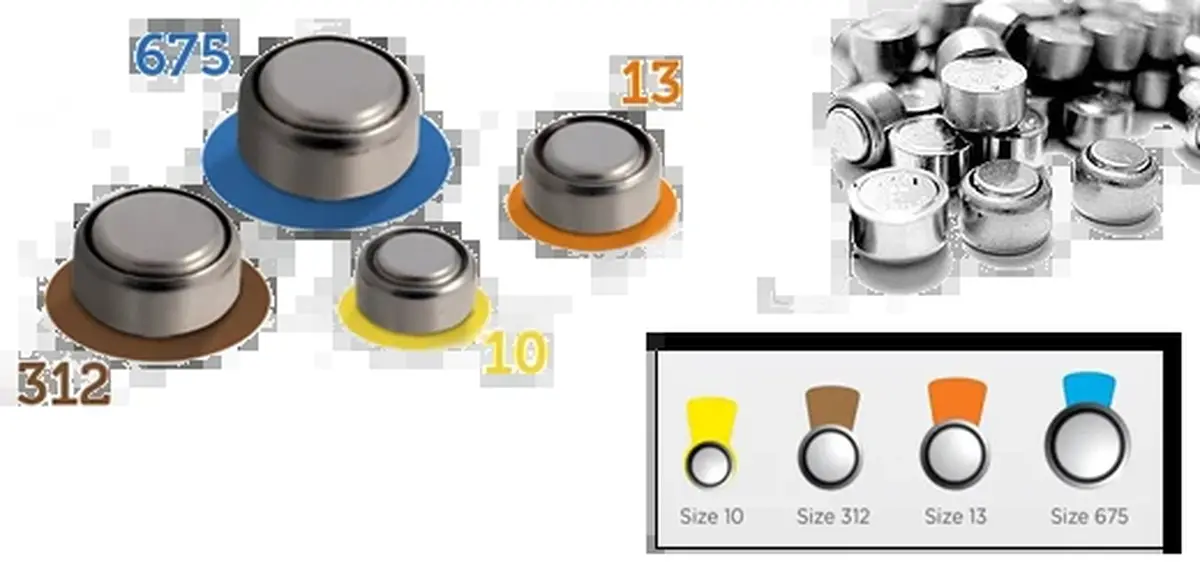

Open a pack of hearing aid batteries for the first time and you will face a small rainbow of colored tabs and three-digit numbers. Size 10, 13, 312, 675. Yellow, orange, brown, blue. It looks like a code, and in a way it is, but it is a simple one. Once you learn it, you will never be confused at the pharmacy shelf again.
This guide covers all four standard sizes, how to tell which one your hearing aid needs, how the batteries actually work, and how to get the most life out of every cell.
The Four Standard Sizes
Nearly every disposable hearing aid battery in the world follows the same IEC standard. Four sizes cover everything from tiny invisible-in-canal aids to powerful behind-the-ear models. The numbering is a little odd: size 10 is the smallest, 675 the largest. Here is the full breakdown:
| Size | Tab Color | Diameter | Typical Use | Rough Life |
|---|---|---|---|---|
| 10 | Yellow | 5.8 mm | Tiny CIC and ITE aids | 3 to 7 days |
| 312 | Brown | 7.9 mm | RIC and small ITE aids (most common) | 5 to 10 days |
| 13 | Orange | 7.9 mm | BTE and larger ITE aids | 7 to 14 days |
| 675 | Blue | 11.6 mm | Power BTE aids, cochlear implant processors | 2 to 4 weeks |
Notice that 312 and 13 share the same diameter. They are not interchangeable, though. Size 13 is thicker and holds more capacity, so it will not fit in a 312 compartment, and a 312 rattles loose in a 13 slot. Always match the exact number.
Size 312 is the workhorse of the industry and the one most first-time buyers encounter, since it powers the popular receiver-in-canal style. If you are unsure which size you need, check your hearing aid manual or the inside of the battery door, where the size is usually printed. Our battery life guide goes deeper on how long each size actually lasts in real use.
Understanding the Color Codes
The colored tab on each battery is not branding. It is a universal code set by the battery industry so you can identify size at a glance:
- Yellow tab: size 10
- Brown tab: size 312
- Orange tab: size 13
- Blue tab: size 675
Every major brand, from PowerOne and Rayovac to store brands, uses the same colors. That means you can switch brands freely as long as the size and color match. Brand loyalty buys you nothing here except possibly a slightly better price per cell.
How Zinc-Air Batteries Work
Modern hearing aid batteries are zinc-air cells, and they work a little differently from the batteries in your TV remote. The colored tab seals tiny air holes in the battery. The moment you peel it off, oxygen rushes in and starts a chemical reaction with the zinc inside. That reaction is what produces power.
This leads to the single most useful battery tip in existence: after peeling the tab, wait about one full minute before putting the battery in your hearing aid. That pause lets air fully activate the cell. Pop it straight in and you can lose a noticeable chunk of its total life, because the aid starts drawing power before the chemistry is ready.
Two practical consequences follow. First, never peel the tab until you are ready to use the battery. An unsealed battery starts draining whether it is in an aid or sitting on the counter. Second, do not try to “save” a battery by re-sticking the tab. Once activated, the process cannot be paused.
The FDA’s hearing aid information notes that proper battery handling is part of basic device care, and this one-minute wait is the easiest win available.
Which Size Does Your Hearing Aid Need
The short answer: whatever the manufacturer printed in the manual. But it helps to understand the logic. Smaller, more discreet aids need smaller batteries. A completely-in-canal aid that disappears into your ear simply has no room for anything bigger than a size 10. A full-size behind-the-ear aid driving severe hearing loss needs the capacity of a 675.
If you bought your aids from a provider, they almost certainly told you the size and may have handed you a starter pack. If you bought OTC aids online, the product page lists the battery size in the specifications. When in doubt, look inside the battery compartment: most manufacturers stamp the size number right there.
One more thing to know: many new hearing aids skip disposable batteries entirely and use built-in rechargeables instead. If you are choosing between the two systems, our rechargeable vs disposable comparison lays out the tradeoffs.
Storing Batteries the Right Way
Zinc-air batteries slowly self-discharge, and bad storage speeds that up. Keep them at room temperature in a dry place. Do not refrigerate them, despite the old advice you may have heard. Cold does not help, and condensation when they warm up can cause problems.
Keep batteries in their original packaging until use. Loose batteries rattling around in a drawer or pocket can short against keys and coins, and the tabs can peel off accidentally. Also, keep them away from metal objects for the same reason.
Buy in reasonable quantities. A card of batteries typically stays fresh for about three years unopened (check the date on the package), but there is no point stockpiling a five-year supply. Prices are stable and fresh cells perform better.
A Critical Safety Warning
This is the serious part. Button batteries, including all four hearing aid sizes, are extremely dangerous if swallowed. They can cause severe chemical burns to the esophagus within hours. This is a well-documented hazard for toddlers, who find the shiny discs fascinating, and for pets.
Store batteries where children and animals absolutely cannot reach them. Never leave a used battery on a nightstand or counter. Dispose of dead batteries promptly in a sealed container, because a “dead” cell can still carry enough charge to injure a child who swallows it. If you suspect someone has swallowed a battery, treat it as an emergency and seek medical help immediately. The NIDCD and poison control resources both emphasize this risk.
If you have grandchildren visiting or a curious dog, rechargeable hearing aids eliminate this particular worry entirely, since there are no loose cells to lose track of.
Getting the Most From Every Battery
Beyond the one-minute activation wait, a few habits stretch battery life meaningfully. Open the battery door every night when you take the aids out. This fully powers down the aid and lets moisture escape, which also helps the battery. Turn the aids off (or open the door) whenever you are not wearing them during the day.
Let the aids dry before closing them up in a case, since trapped moisture forces the battery to work in poor conditions. And if your aid streams a lot of Bluetooth audio, expect shorter life. Streaming is the single biggest power draw in a modern hearing aid. If your batteries seem to die unusually fast, our battery drain troubleshooting guide walks through every cause and fix.
Frequently Asked Questions
Can I use a different brand of battery than the one my audiologist gave me?
Yes. The sizes and color codes are standardized, so any brand’s size 312 works in any aid that takes 312. Buy on price and freshness date, not brand name.
Why do my batteries die even when I am not using the aid?
Once the tab is peeled, the zinc-air reaction runs continuously. An open battery door stops the aid from drawing power, but the cell still self-discharges slowly. Never peel tabs in advance.
Are rechargeable hearing aids better than battery ones?
It depends on your priorities. Rechargeables mean no tiny cells to handle and no ongoing battery cost, but you must charge nightly and the built-in cell eventually wears out. Our full comparison helps you decide.
How do I dispose of used hearing aid batteries?
Do not throw them in household trash if your area offers battery recycling, which most do. Many hearing aid providers and electronics stores collect used cells. Tape over the terminals or keep them in the original packaging so they cannot short during storage.
Do expired batteries still work?
They may work, but with reduced capacity and life. Zinc-air cells degrade even sealed. Check the date on the card and use older stock first.
Battery confusion ends here: match the number, match the color, peel the tab, wait a minute, and keep every cell away from kids and pets. Next, find out exactly how long each size lasts in real-world use, so you know when a battery is dying normally and when something is actually wrong.