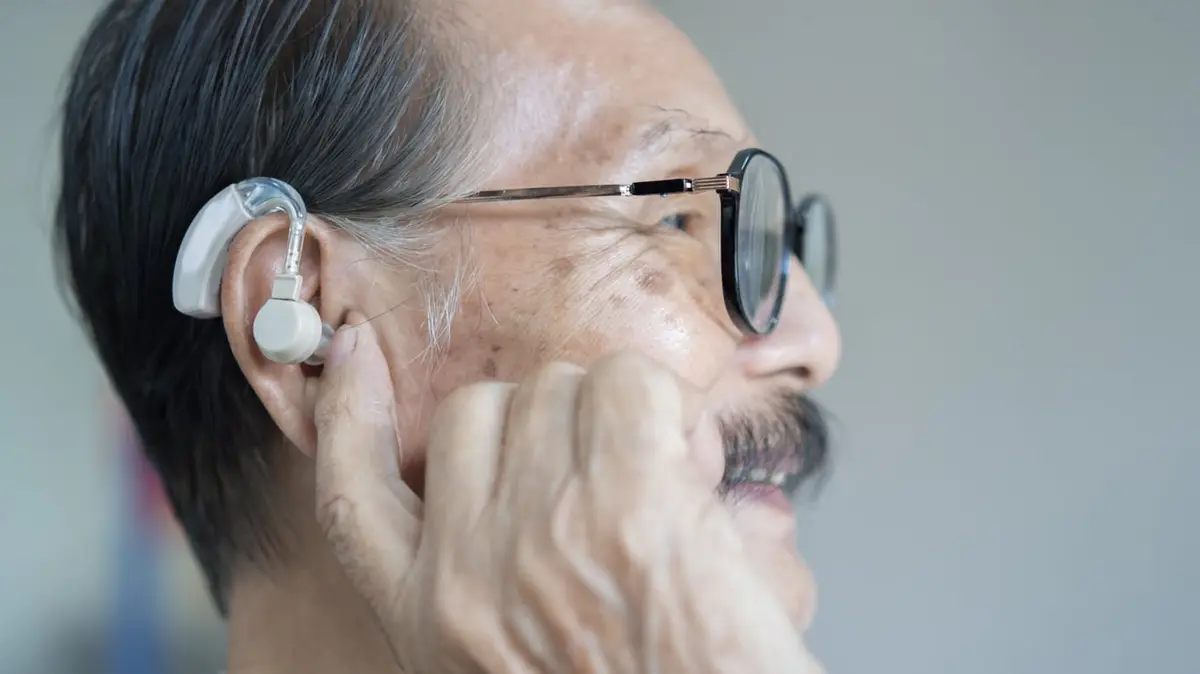


If your first flight with hearing aids is coming up, the questions start piling up before you even reach the airport. Will security make you take them out? Do you have to switch them off for takeoff? What happens to your ears when the cabin pressure changes, and what do you do if a battery dies at 35,000 feet?
The good news is that flying with hearing aids is mostly straightforward. You keep them in through security, you keep them on during takeoff and landing, and the pressure changes in the cabin affect your ears, not your devices. The rest is planning: packing the right kit in your carry-on, knowing how to handle cabin noise, and having a backup plan for announcements you cannot quite hear.
Can You Wear Hearing Aids on a Plane?
Yes. In most cases you should wear your hearing aids for the whole flight. Airports and airplanes are communication heavy places, and your aids help you catch gate changes, boarding instructions, safety announcements, and anything a flight attendant says to you directly. Taking them out for the flight means giving up the help exactly when announcements matter most.
Hearing aids are also exempt from the switch off rules that apply to other electronics. When the crew asks passengers to power down devices or switch to airplane mode for takeoff and landing, that instruction does not apply to your hearing aids. You can leave them on from the gate to the baggage claim.
There are a few good reasons to take them out for part of a flight, and we cover those below. But the default is simple: wear them.
Going Through Airport Security
You do not need to remove your hearing aids at airport security. The TSA states this plainly in its guidance for travelers with disabilities and medical conditions: you are not required to remove hearing aids or cochlear implant processors during screening. Hearing aids contain only tiny amounts of metal and they almost never trigger a walk through metal detector or a body scanner.
If a device does set off an alarm, the usual follow up is a pat down or a quick inspection of the device. That is a normal outcome, not a problem, and it happens to plenty of travelers. Simply tell the officer you are wearing hearing aids and follow their instructions.
The one genuine difficulty at a checkpoint is missing a spoken instruction while your back is turned in a noisy hall. Tell the officer up front that you are hard of hearing and may need instructions repeated or shown to you. If you travel often or want extra help, you can request support through TSA Cares, ideally at least 72 hours before your flight. Rules outside the United States vary, so check the local guidance before an international trip, but the same general approach applies almost everywhere: keep them in, and say so if anyone asks.
Takeoff and Landing: Do You Need to Turn Them Off?
No. Hearing aids have long been exempt from the power down rules for takeoff and landing, and you can leave them on while the plane climbs and descends. The Bluetooth link between your two aids, or between your aids and your phone, is very low power and only reaches a couple of feet from your head. The FAA permits low power Bluetooth during flight, and airlines treat hearing aids the same way.
Some hearing aids have a dedicated flight mode or airplane mode that switches off Bluetooth streaming while keeping normal amplification running. You almost certainly do not need it on a commercial flight. Audiologists who fly with their patients note that the only people who regularly need that setting work in secure government facilities or similarly regulated spaces. If your aids have the setting and you want to use it, check your manufacturer instructions first, because the steps vary by brand.
Your phone is a different story. When you switch your phone to airplane mode, your hearing aids usually stay connected, because airplane mode turns off the cellular signal but leaves Bluetooth running. If the connection does drop, turn Bluetooth back on from your phone settings. On an iPhone that means opening Control Center and tapping the Bluetooth icon, and on Android it means swiping down to Quick Settings and doing the same. If you want the full detail, our guides to connecting hearing aids to Android and pairing hearing aids with iPhone walk through each step.
Cabin Pressure and Airplane Ear
As a plane climbs or descends, the pressure in the cabin changes, and your ears have to equalize. Your Eustachian tubes do that job, connecting your middle ear to the back of your throat. When they cannot keep up, you feel pressure, popping, muffled hearing, or ear pain. Frequent flyers know it as airplane ear.
Here is the part people get wrong: cabin pressure affects your middle ear, not your hearing aid. Wearing a hearing aid does not cause the pressure change, and taking your aids out will not prevent airplane ear. If your ears feel blocked on descent, that is your middle ear adjusting, and the standard fixes still work. Swallow, yawn, chew gum, or sip water. Staying awake during descent helps too, because you keep swallowing naturally instead of sleeping through the pressure change.
If you are congested from a cold, the pressure can feel worse, and your aids may sound plugged or dull for a while after landing. That usually clears as your ears equalize. If you have recently had ear surgery or a perforated eardrum, check with your doctor before flying, because those are the cases where flying genuinely needs a second opinion.
One exception is comfort. If pressure or swelling makes an in ear device feel tight, you can take it out for takeoff or landing and put it back in once the cabin stabilizes, usually ten to fifteen minutes after reaching cruising altitude. This is most noticeable with completely in the canal or in the ear models, which seal the ear canal more tightly than behind the ear styles.
Cabin Noise and Hearing on Board
Aircraft cabins are noisy. The constant sound of engines and airflow makes speech harder to follow even for people with normal hearing, and hearing aids amplify that background noise along with everything else. A few adjustments make a real difference.
First, try your noise reduction or speech in noise program if your aids have one. It is built for exactly this situation and it usually works better than simply turning the volume up, which only makes the cabin roar louder and can cause feedback. Second, turn the volume down a notch if the amplified engine noise is tiring. Some travelers mute their aids or take them out once they are settled in, especially on long flights, and that is a fair choice if you are not expecting announcements.
Third, tell a flight attendant that you are hard of hearing when you board. Ask them to come to your seat for anything important rather than relying on the intercom, and let them know if you plan to sleep without your aids in. A short conversation at boarding saves a lot of missed information later.
If you want to listen to music or a film on your own phone, streaming it straight to your aids through Bluetooth is the cleanest option, and it is one of the reasons hands free streaming matters so much when you choose a model. Our guide to the best hearing aids for phone calls explains which models stream best, and the same Bluetooth features carry over to music and video on a plane.
In-Flight Entertainment and Bluetooth
Seatback entertainment is the one place where hearing aids do not connect easily. Most airplane screens do not offer open Bluetooth pairing, so your aids cannot link to them directly. A small Bluetooth transmitter that plugs into the seatback headphone jack solves this: it sends the audio to your aids wirelessly. Test it at home before you travel, because transmitters vary and some need pairing steps you do not want to work out at 35,000 feet.
The simpler backup is to download films, shows, and podcasts to your own phone or tablet before you leave, then stream them to your aids over Bluetooth. Captions help a lot on a noisy plane, so turn them on wherever the app offers them. Over ear headphones worn over your aids are another option, though they can press on behind the ear models, so try the combination at home first. If you wear glasses as well, headphones add a third thing behind your ear, and our guide to wearing hearing aids with glasses covers how to keep that combination comfortable.
What to Pack in Your Carry-On
Everything your hearing depends on goes in your carry-on, never in checked luggage. A checked bag can be delayed, lost, or opened, and a charger confiscated from a hold bag is a problem you cannot fix from your destination. Pack the case, the charger or spare batteries, spare domes and wax guards, a cleaning kit, and a drying container if you use one.
Batteries have rules of their own. Disposable hearing aid batteries are allowed in carry-on bags but not in checked luggage, and the same applies to spare lithium ion batteries and power banks. Your rechargeable aids themselves are fine on the plane, and the charger travels in the cabin with you. Bring more batteries than you think you need, because delays happen, and a dead aid on a long travel day is a miserable way to discover you packed exactly enough.
For international trips, add a plug adapter so you can charge at your destination, and a power bank for long travel days when you cannot reach an outlet. A small zip bag keeps the kit together and makes security screening faster if anyone wants a look. If you take your aids out at any point, put them straight into their case. Never leave them in a seat pocket or on a tray table, where they are easy to forget or knock to the floor.
Hearing Loops and Auracast at Airports
Some airports have hearing loop systems at gates, information desks, and help points. A loop sends announcements straight into hearing aids with a telecoil, marked by the blue ear and T sign. Switch your aids to the telecoil program and the announcement comes through clearly instead of fighting the terminal noise.
Loops are patchy, and not every traveler finds them useful. Auracast is the newer technology that can stream announcements directly to compatible hearing aids over Bluetooth, and adoption is still early. Frankfurt Airport became the first to test Auracast for gate announcements in January 2026, and more airports and hearing aid models are adding support as it rolls out. It is worth checking whether your aids support it before a trip, but do not count on it being available at your airport yet. The airline app on your phone is still the most reliable backup for gate changes and delays, because it does not depend on hearing an announcement at all.
Sleeping on the Plane
Many travelers take their hearing aids out to sleep, because a device pressed against a headrest or travel pillow gets uncomfortable fast. That is a reasonable choice on an overnight flight. Do two things first: tell the cabin crew you will not be wearing your aids while you sleep, so they know to wake you or come to your seat for anything important, and put the aids in their case in your bag, not in the seat pocket.
If you sleep with your aids in, a travel pillow with a cutout or a soft neck pillow puts less pressure on the devices than a flat headrest. Either way, set an alarm on your phone or watch for landing, and put your aids back in before descent so you can hear the arrival announcements.
If Something Goes Wrong
A few problems come up often enough to plan for. If an aid starts whistling on the plane, it is usually feedback from a poor seal or a blocked wax guard, so check the fit and swap the wax guard if you packed spares. If an aid dies mid flight, swap the battery or plug the case into your power bank, and keep the other aid in so you are not completely cut off. If moisture is the issue, from sweat, rain at your destination, or humidity, a drying kit or a dry, ventilated case overnight usually sorts it out.
If you lose an aid on the plane, tell the crew before you leave your seat. They can check the seat and the floor around it while you are still there, and the airline lost property process is much harder once you have left the airport. Knowing your model and serial number helps, so keep a photo of the box or the receipt on your phone before you travel.
Frequently Asked Questions
Do I have to remove my hearing aids for airport security?
No. The TSA does not require you to remove hearing aids or cochlear implant processors at screening, and the devices are too small to set off a walk through metal detector in most cases. If one does alarm, expect a pat down or a quick inspection of the device.
Do I need to turn off my hearing aids during takeoff and landing?
No. Hearing aids are exempt from the power down rules that apply to other electronics, so you can leave them on for the whole flight. Low power Bluetooth between your aids and your phone is also permitted in flight.
Will cabin pressure damage my hearing aids?
No. Cabin pressure changes affect your middle ear, not the device. Your ears may feel blocked or pop during ascent and descent, but the hearing aid itself is not harmed by the pressure change.
Can I use Bluetooth on the plane?
Yes, in most cases. The FAA permits low power Bluetooth during flight, and your aids will usually stay connected to your phone even when the phone is in airplane mode. Always follow crew instructions if they ask you to switch something off.
Where should I pack my hearing aid charger and batteries?
In your carry-on, never in checked luggage. Spare disposable batteries, lithium ion batteries, and power banks must travel in the cabin. Keep the case, charger, spare domes, wax guards, and cleaning kit together in one small bag.
How do I hear announcements at the airport?
Keep your aids in, use your airline app for gate and delay updates, and tell staff you are hard of hearing so they can give you information directly. Some airports have hearing loops for telecoil users, and Auracast streaming is starting to appear at a few airports, but the app is the reliable backup everywhere.
External sources: HearingTracker, flying with hearing aids, Healthy Hearing, air travel tips for hearing loss, Beltone, is it safe to fly with hearing aids, California Hearing Center, traveling with hearing aids, HearUSA, flying with hearing aids.